The Uruk Trough
- Audio guide stop: 391
- Gallery: Room 56
- Culture: Late Uruk
- Date: 3300BC-3000BC
- Object type: trough, drinking-vessel, cast
- Materials: limestone
- Museum number: 120000
- Museum: The British Museum
- Collection record: British Museum website
- Image © The Trustees of the British Museum, shared under a CC BY-NC-SA 4.0 licence.
Listen to the free audio guide
About this object
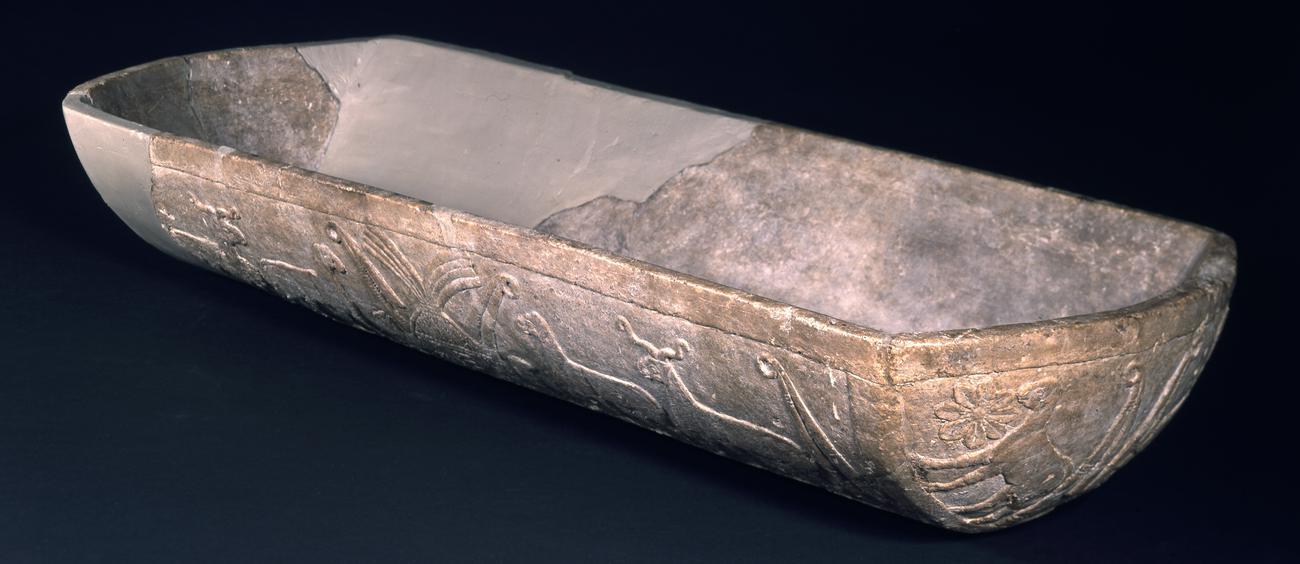
This is The Uruk Trough, a piece from the Late Uruk period, made around 3300 to 3000 BCE. It’s carved from limestone and has wide, convex ends that give it a distinctive shape.
Though it looks like a drinking trough, it’s not practical for use as one. If raised high enough to see its detailed relief decoration, it couldn’t function as a vessel. It was likely a cult image for a temple.
The decoration shows sheep approaching a reed hut, with lambs emerging from it—suggesting fertility and care. Rosettes and high volutes on the ends are believed to represent Inanna, the goddess of love and fertility.
This object was found in Warka, and the right side you see is a cast, based on the original in Berlin. It's an important reminder of early religious and artistic traditions in southern Mesopotamia.
See it in person
The Uruk Trough is on display in Room 56 at the British Museum on Great Russell Street, Bloomsbury, London — free to enter. Choose British Museum on audioguide.london and type its audio guide stop number, 391, from the gallery label, or take a photo of it, to hear this free audio guide in six languages — no app download needed.
New, in beta. British Museum support has just launched and is still improving: over 1,000 objects so far, with more added all the time.