The Standard of Ur
- Audio guide stop: 394
- Gallery: Room 56
- Culture: Early Dynastic III
- Date: 2550 BC - 2400 BC
- Object type: box
- Materials: shell; limestone (red); lapis lazuli; bitumen
- Museum number: 121201
- Museum: The British Museum
- Collection record: British Museum website
- Image © The Trustees of the British Museum, shared under a CC BY-NC-SA 4.0 licence.
Listen to the free audio guide
About this object
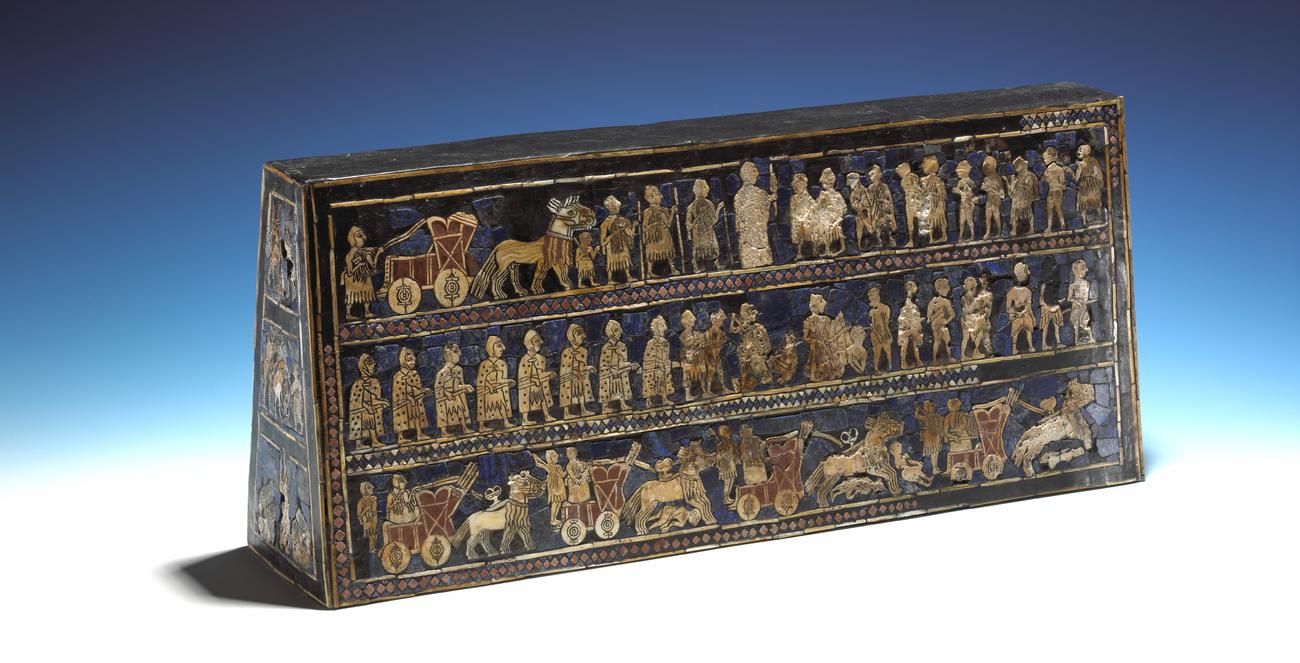
Before you is "The Standard of Ur," a richly decorated box from ancient Mesopotamia, dating to around 2550–2400 BC. The object is made of wood, long since disintegrated, and its surface is covered with an intricate mosaic of shell, red limestone, and lapis lazuli set into bitumen.
On one side, you’ll see a dramatic war scene: Sumerian soldiers advance in chariots pulled by wild donkeys, trampling defeated enemies. At the top, a mighty figure—likely a king—stands tall amid his captives, his own chariot waiting behind him. The visual rhythm moves from bottom to top, with increasing urgency in the action.
The reverse side shows celebratory scenes: men bring offerings of animals and goods, leading into a grand banquet. The king sits at the center, raising a cup—perhaps of beer—while a musician plays a lion-headed lyre.
This remarkable artifact was discovered at Ur in southern Iraq, in a royal tomb. Though its exact use remains mysterious, it may have been a ceremonial object carried in procession, offering a vivid window into the world of early Sumerian royalty.
See it in person
The Standard of Ur is on display in Room 56 at the British Museum on Great Russell Street, Bloomsbury, London — free to enter. Choose British Museum on audioguide.london and type its audio guide stop number, 394, from the gallery label, or take a photo of it, to hear this free audio guide in six languages — no app download needed.
New, in beta. British Museum support has just launched and is still improving: over 1,000 objects so far, with more added all the time.