The Royal Game of Ur
- Audio guide stop: 395
- Gallery: Room 56
- Culture: Early Dynastic III
- Made in: Iraq
- Date: 2600BC-2400BC
- Object type: game-board
- Materials: wood; shell
- Museum number: 120834
- Museum: The British Museum
- Collection record: British Museum website
- Image © The Trustees of the British Museum, shared under a CC BY-NC-SA 4.0 licence.
Listen to the free audio guide
About this object
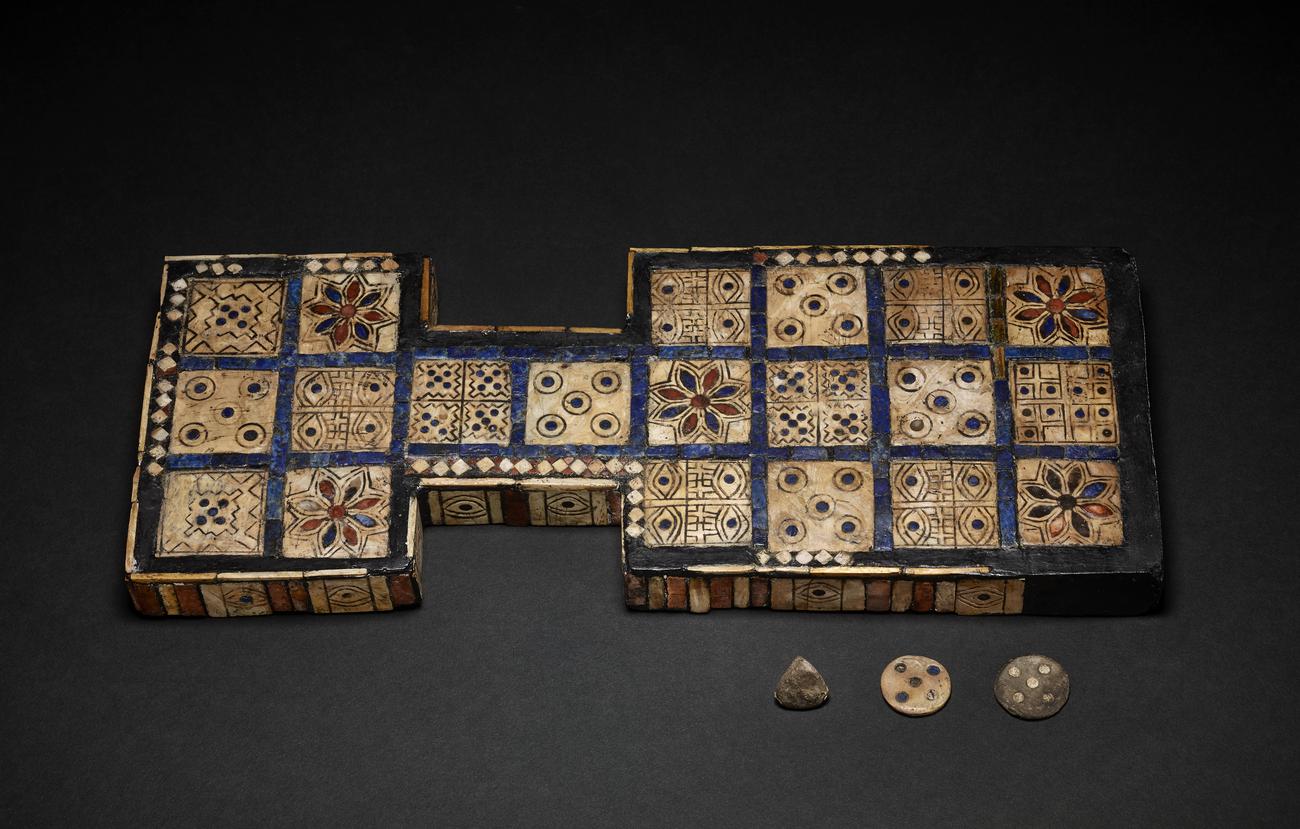
Before you lies "The Royal Game of Ur," a wooden game board created around 2600–2400 BC in what is now Iraq. The surface is inlaid with square shell plaques, some decorated with rosettes. Along the edges are smaller plaques and decorative eye-shaped motifs. On the back, triangular red shell inlays form three rows, as seen in the modern reconstruction.
This ancient board game once held its pieces inside – just like a hollow box – with the playing pieces and dice stored within its frame. The craftsmanship is remarkable, with delicate inlays that suggest it was more than just a game: possibly a symbol of status or ritual use.
"The Royal Game of Ur" was excavated from the Royal Cemetery at Ur, a key site from the Early Dynastic period. Its intricate design reveals the skill and artistry of ancient makers. Though many replicas exist today, this original remains a unique window into early civilization.
See it in person
The Royal Game of Ur is on display in Room 56 at the British Museum on Great Russell Street, Bloomsbury, London — free to enter. Choose British Museum on audioguide.london and type its audio guide stop number, 395, from the gallery label, or take a photo of it, to hear this free audio guide in six languages — no app download needed.
New, in beta. British Museum support has just launched and is still improving: over 1,000 objects so far, with more added all the time.