The Blau Monuments: tablet
- Gallery: Room 56
- Culture: Late Uruk
- Date: 3300BC-3000BC
- Object type: tablet
- Materials: schist
- Museum number: 86260
- Museum: The British Museum
- Collection record: British Museum website
- Image © The Trustees of the British Museum, shared under a CC BY-NC-SA 4.0 licence.
Listen to the free audio guide
About this object
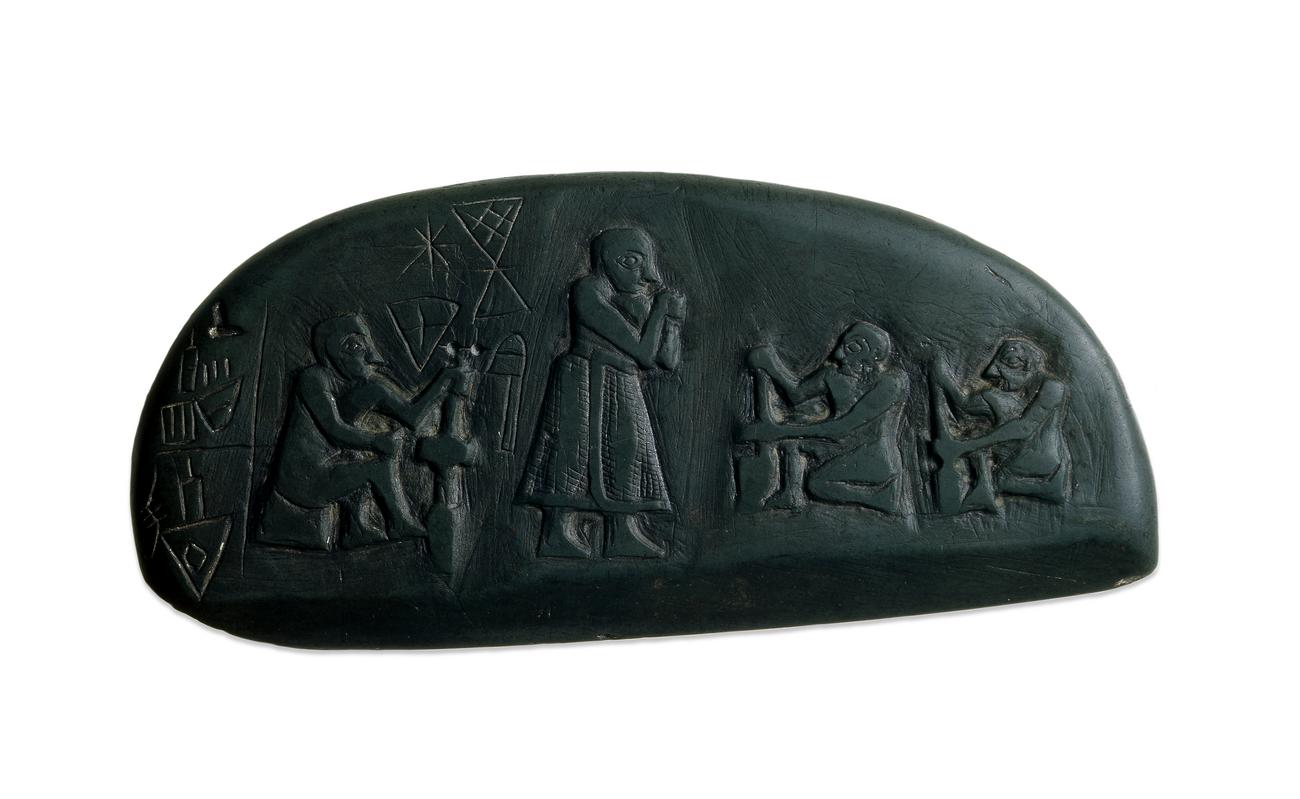
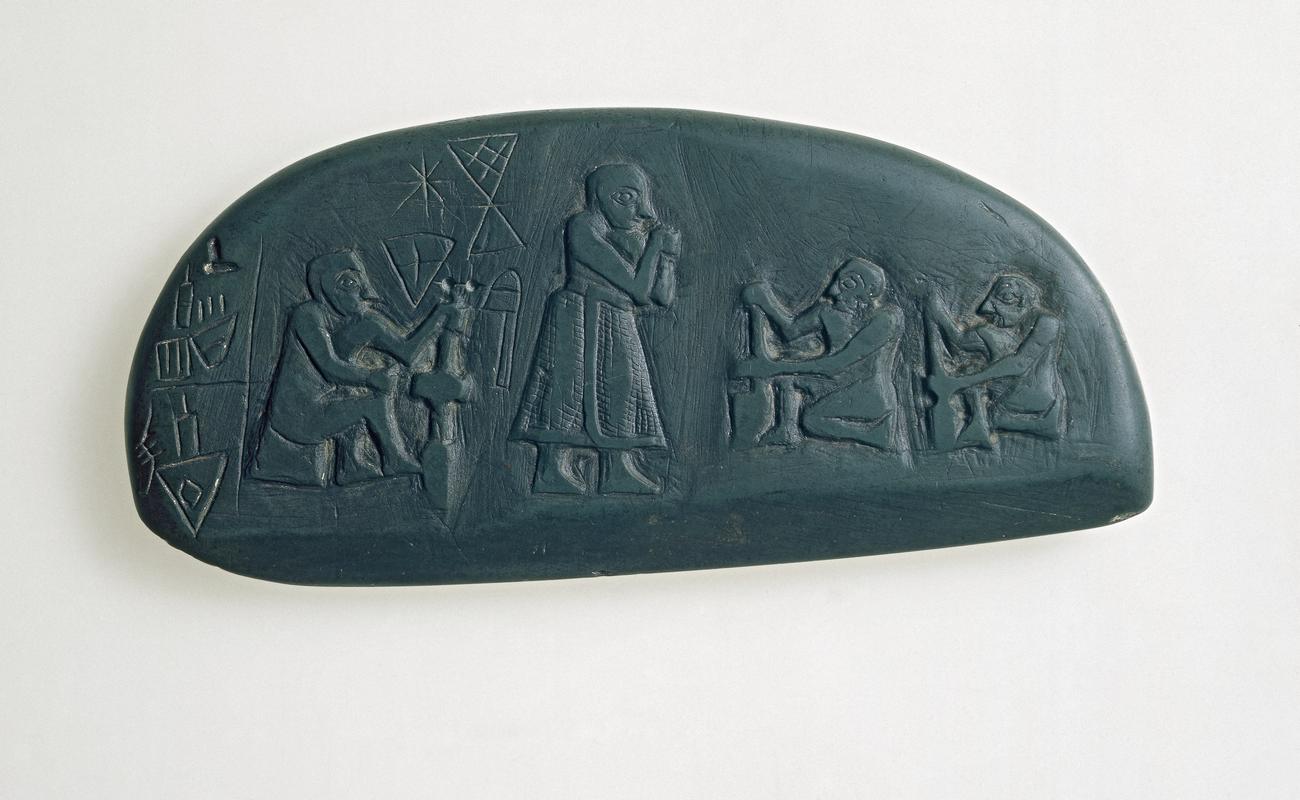
This is "The Blau Monuments," a green schist tablet dating to the Late Uruk period, around 3300 to 3000 BC. Created in ancient southern Mesopotamia, it's one of a pair of stone tablets inscribed with early cuneiform script—some of the earliest examples of this writing system, which was still mostly pictographic at the time. The inscriptions are not fully understood, but they may show a land transaction, with carved figures representing people involved.
Each tablet has carved figures on one side. The tablets were once dismissed as forgeries but are now accepted as genuine. Their past ownership is uncertain, and they are named after Dr. A. Blau, an earlier owner who lived in the region.
These tablets were presented to the British Museum in 1899. Over time, they were recognized as key artifacts from early Sumerian civilization. Looking closely at the inscriptions and figures can give insight into how ancient people recorded legal and economic exchanges.
See it in person
The Blau Monuments: tablet is on display in Room 56 at the British Museum on Great Russell Street, Bloomsbury, London — free to enter. Choose British Museum on audioguide.london and take a photo of it to hear this free audio guide in six languages — no app download needed.
New, in beta. British Museum support has just launched and is still improving: over 1,000 objects so far, with more added all the time.