The Blau Monuments: tablet
- Gallery: Room 56
- Culture: Late Uruk
- Date: 3300BC-3000BC
- Object type: tablet
- Materials: schist (slaty)
- Museum number: 86261
- Museum: The British Museum
- Collection record: British Museum website
- Image © The Trustees of the British Museum, shared under a CC BY-NC-SA 4.0 licence.
Listen to the free audio guide
About this object
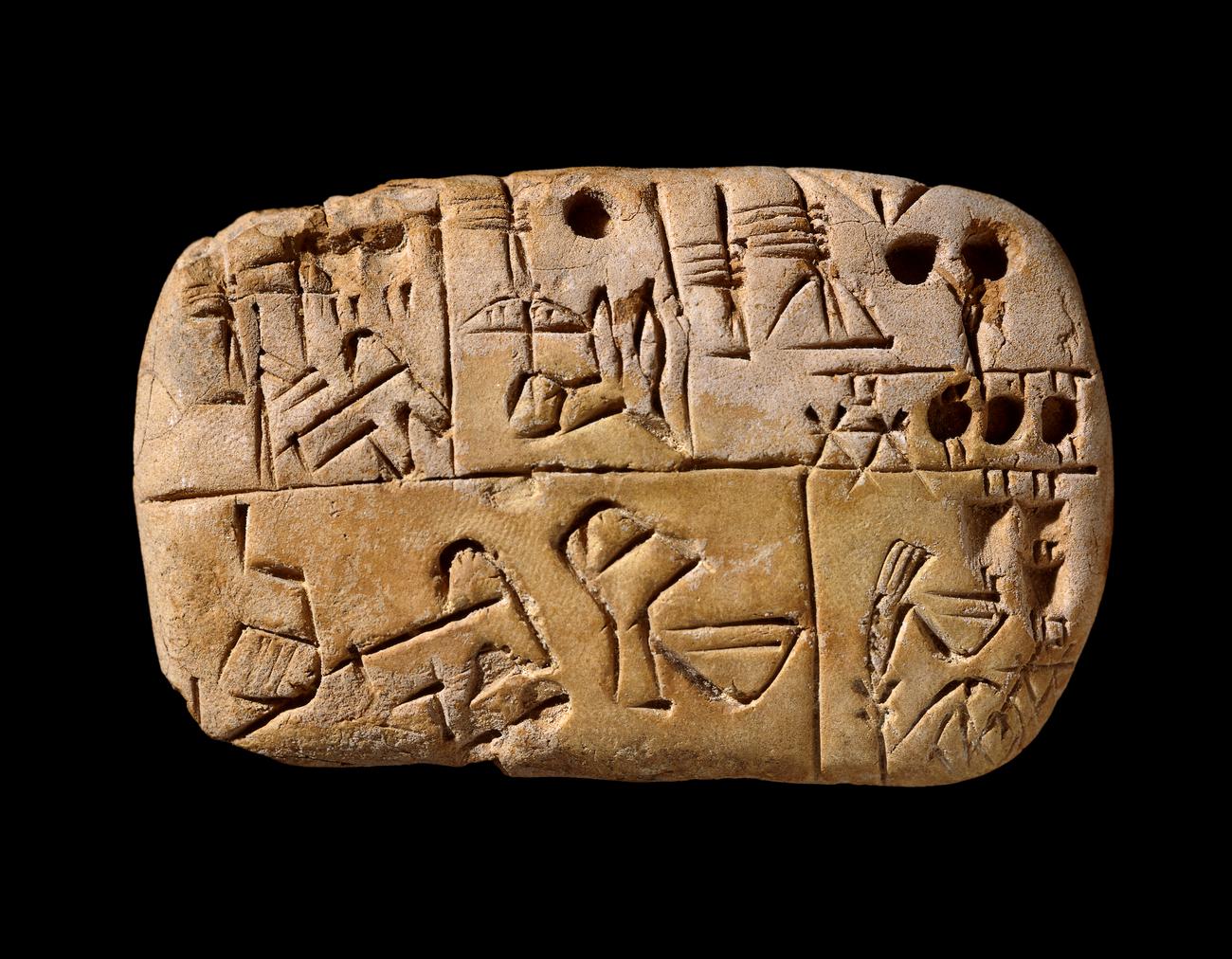
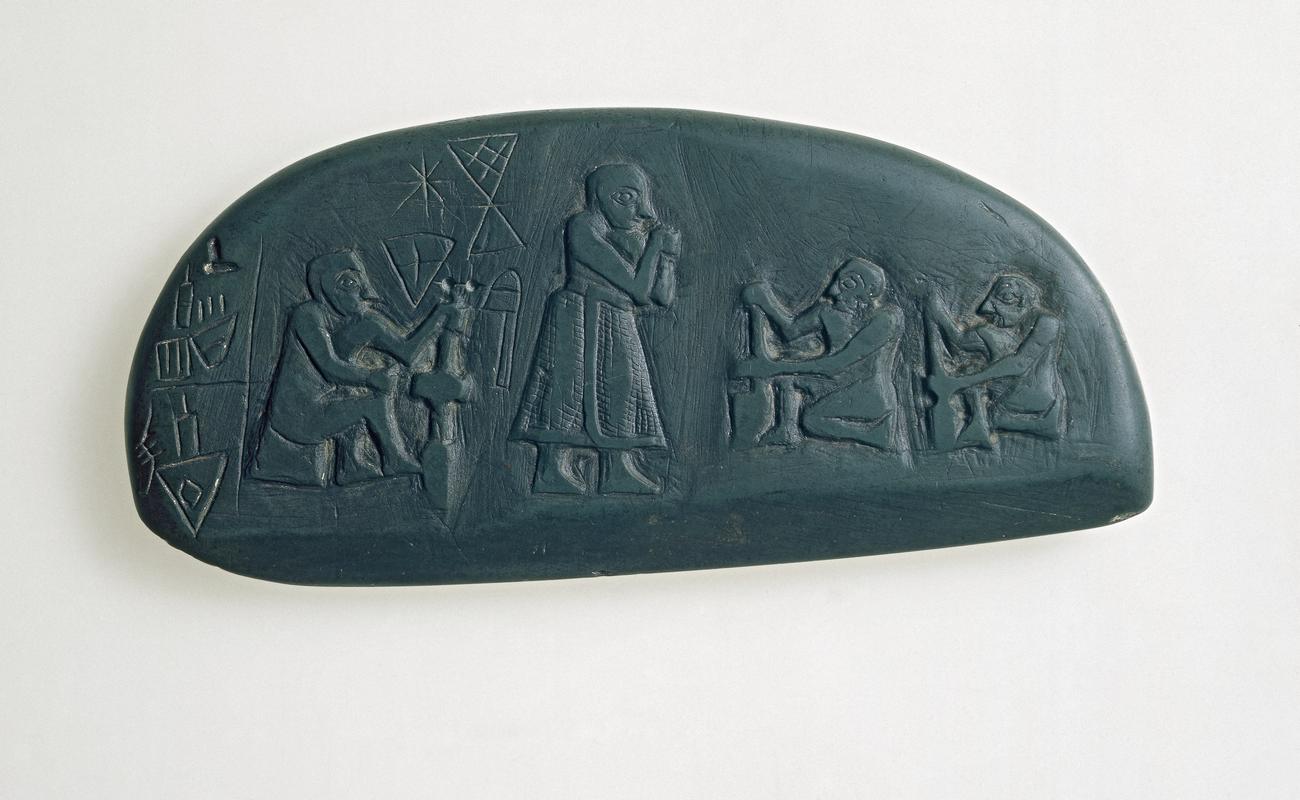
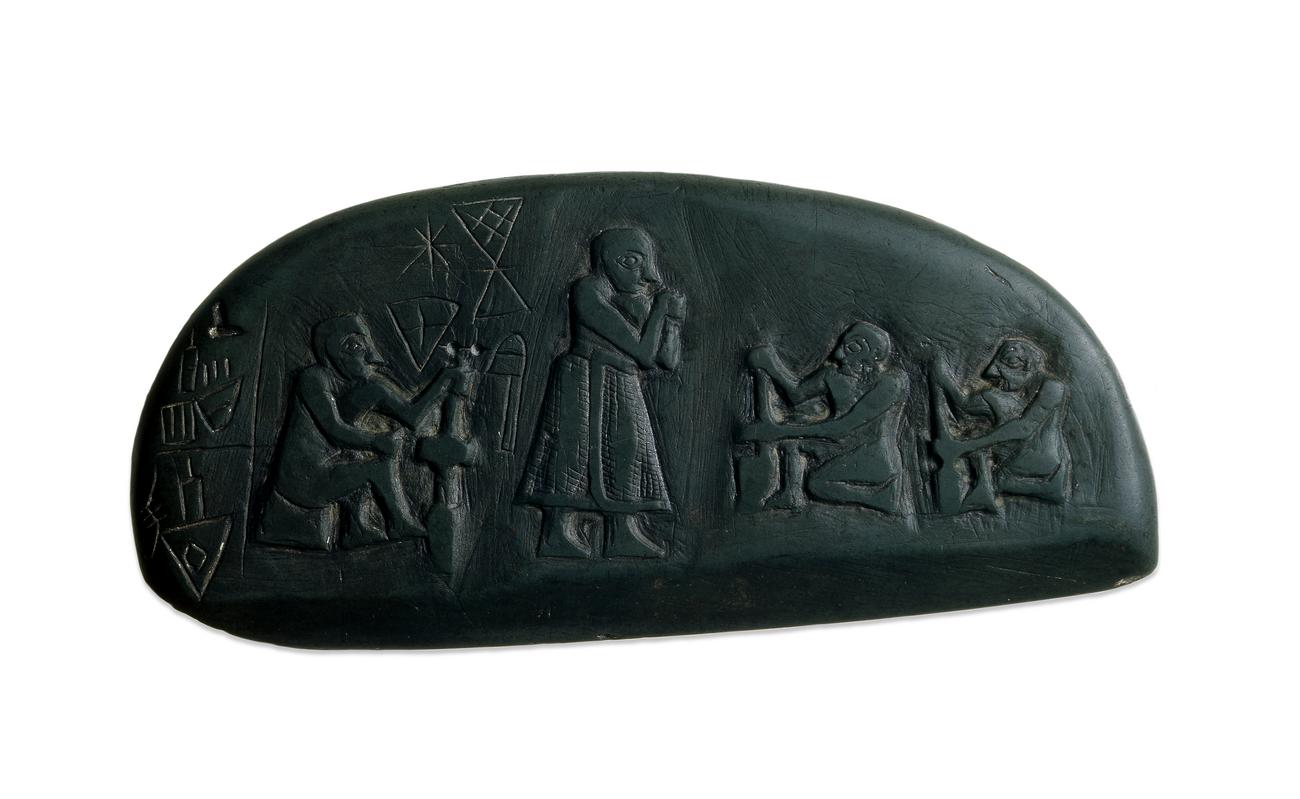
This is "The Blau Monuments," a green schist tablet from the Late Uruk period, dating to around 3300–3000 BC. It is one of a pair and shows an inscription on one side and two carved figures on the other. The figures may represent people involved in a transaction, possibly a land sale, recorded in early pictographic cuneiform script.
When these objects were first donated in 1899, they were doubted and even called forgeries. But later discoveries in southern Mesopotamia proved they are genuine and among the earliest examples of cuneiform writing. They were bought from a collector, Dr. A. Blau, who lived in the region at the time.
The tablet is carved from schist, a type of rock that was hard to shape, showing the effort required to create such important early records. Their style and materials offer a rare window into the beginnings of written communication in Mesopotamia.
See it in person
The Blau Monuments: tablet is on display in Room 56 at the British Museum on Great Russell Street, Bloomsbury, London — free to enter. Choose British Museum on audioguide.london and take a photo of it to hear this free audio guide in six languages — no app download needed.
New, in beta. British Museum support has just launched and is still improving: over 1,000 objects so far, with more added all the time.