Past and Present, No. 1
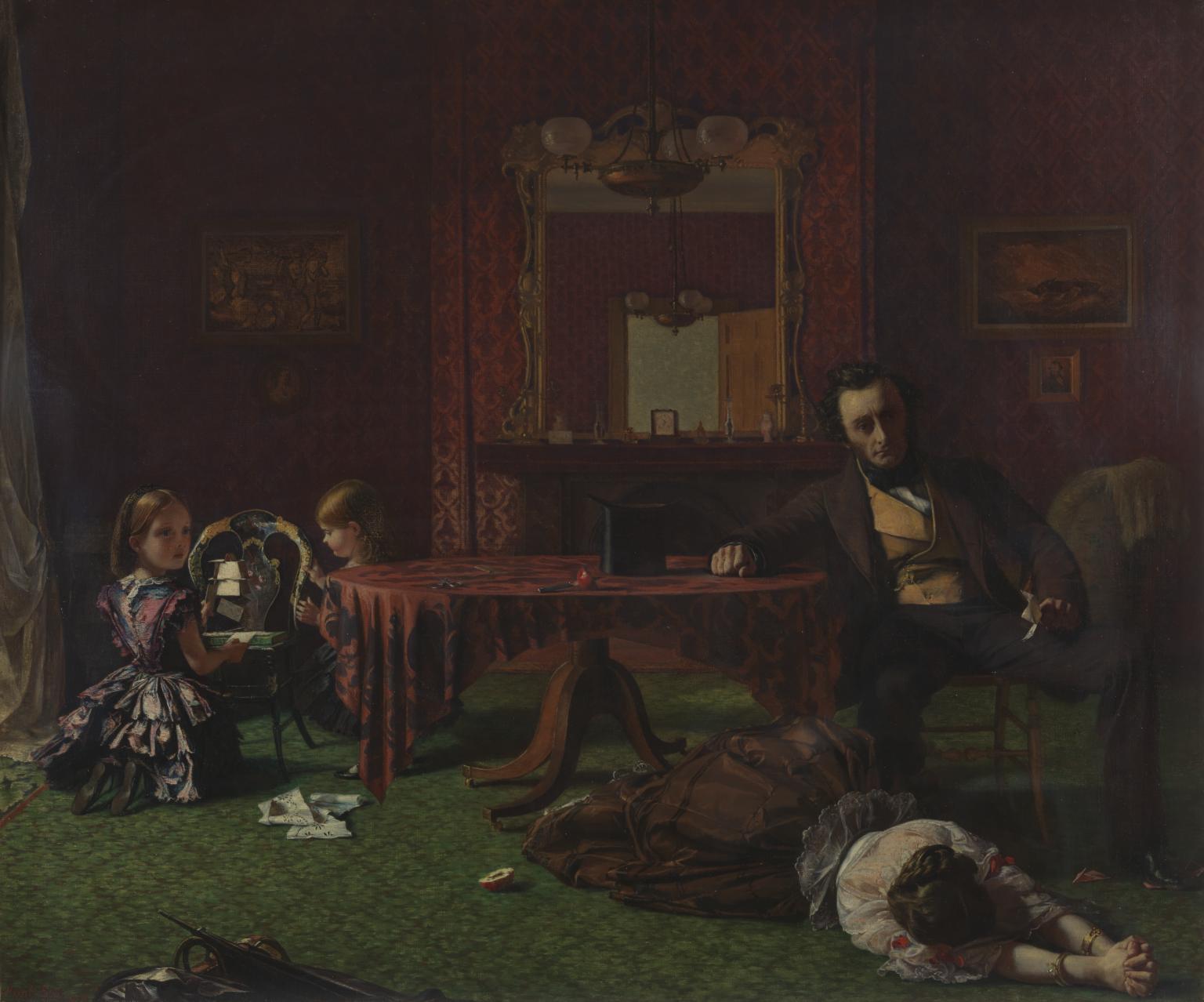
- Artist: Augustus Leopold Egg
- Date: 1858
- Medium: Oil paint on canvas
- Dimensions: support: 635 x 762 mm
- Museum: Tate Britain
- Collection record: Tate Britain website
Listen to the free audio guide
About this artwork
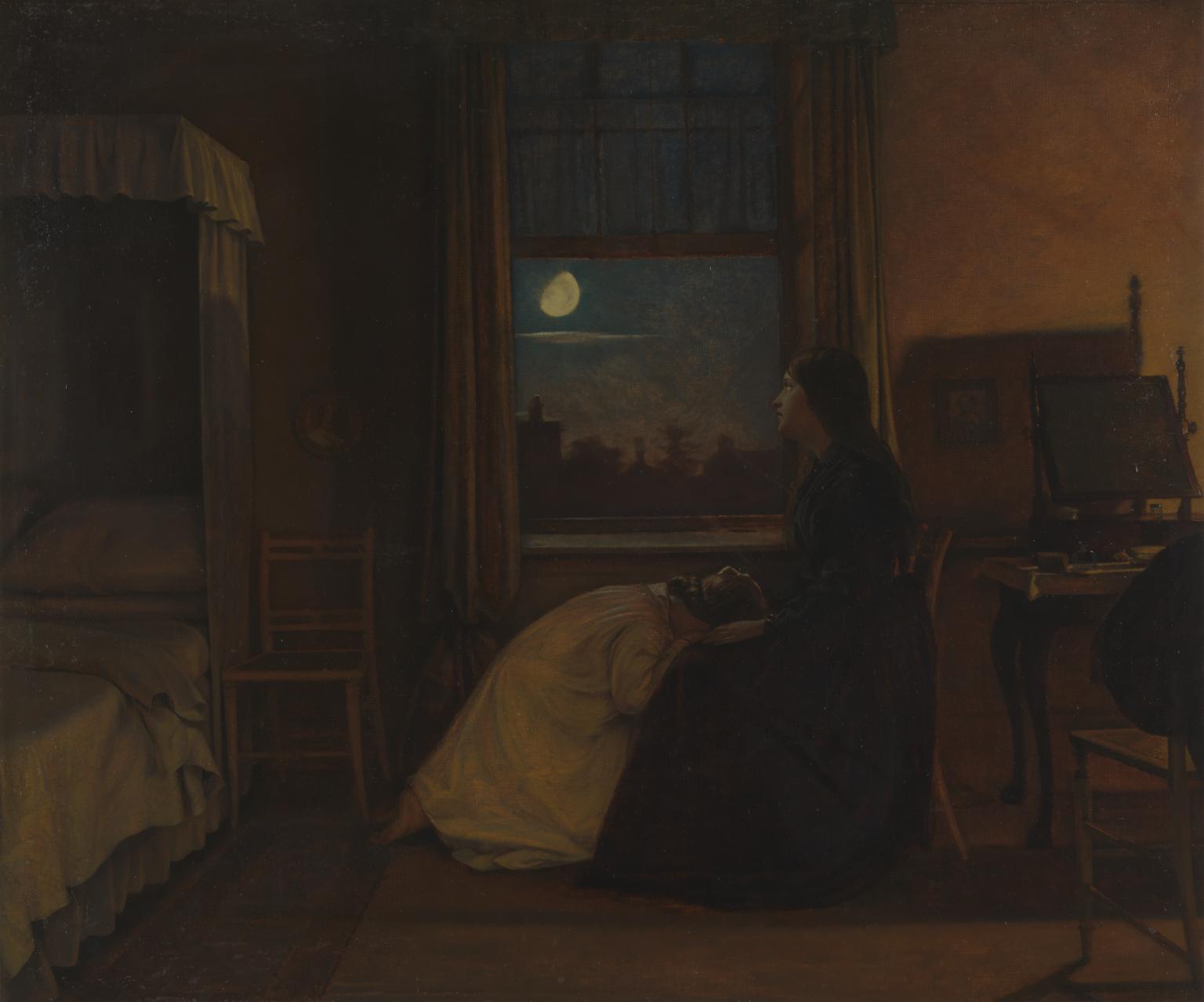
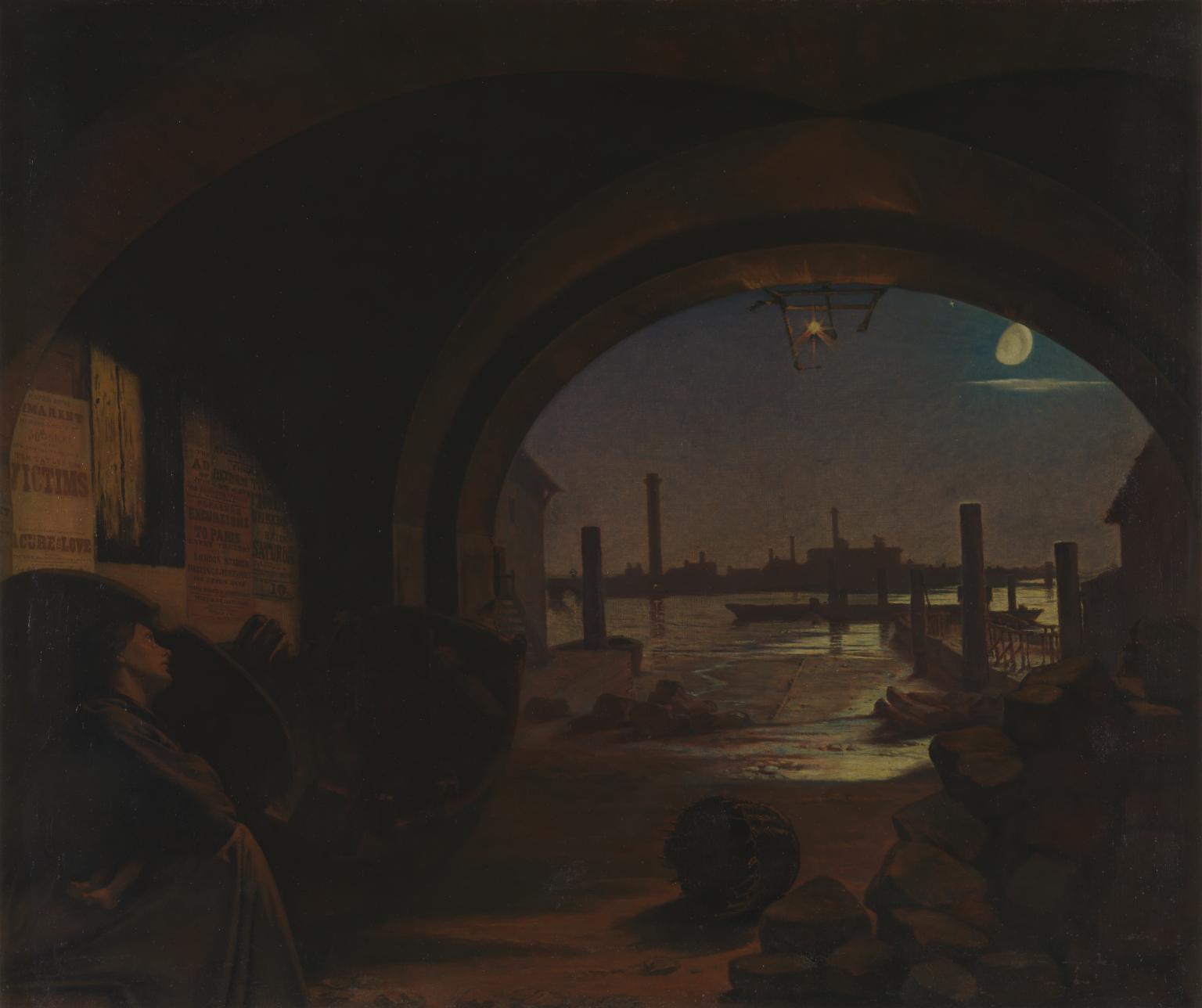
This is the “Past and Present, No. 1” by Augustus Leopold Egg, painted in 1858 in oil on canvas. It’s the opening panel of a triptych that dives into the fallout of love outside marriage in Victorian Britain. In this scene the focus is the “present”: a young mother, barefoot and barefoot, huddled under the Adelphi arches by the Thames, clutching the baby she bears from an affair. The moon hangs identically over both the present scenes in No. 1 and No. 3, signaling the same moment in time. Egg layers irony with posters for plays like *Victims* and *A Cure for Love*, and a travel notice for Paris, alluding to her social exile.
Egg’s signature Victorian moralism shows up in the details – the cracked apple split in two, the crumbling house of cards on the mantel, the letter in the husband’s hand that would have been in No. 2. The whole composition is a visual cautionary tale about gendered morality: a husband could keep a mistress with little risk, but a woman’s infidelity was damning. It’s a powerful snapshot of societal judgment, painted in Egg’s precise, almost documentary style, yet dripping with symbolic drama.
See it in person
Past and Present, No. 1 is in the collection of Tate Britain on Millbank, London — free to enter. Point your phone at any artwork there and audioguide.london plays a free audio guide in six languages — no app download needed.