Past and Present, No. 3
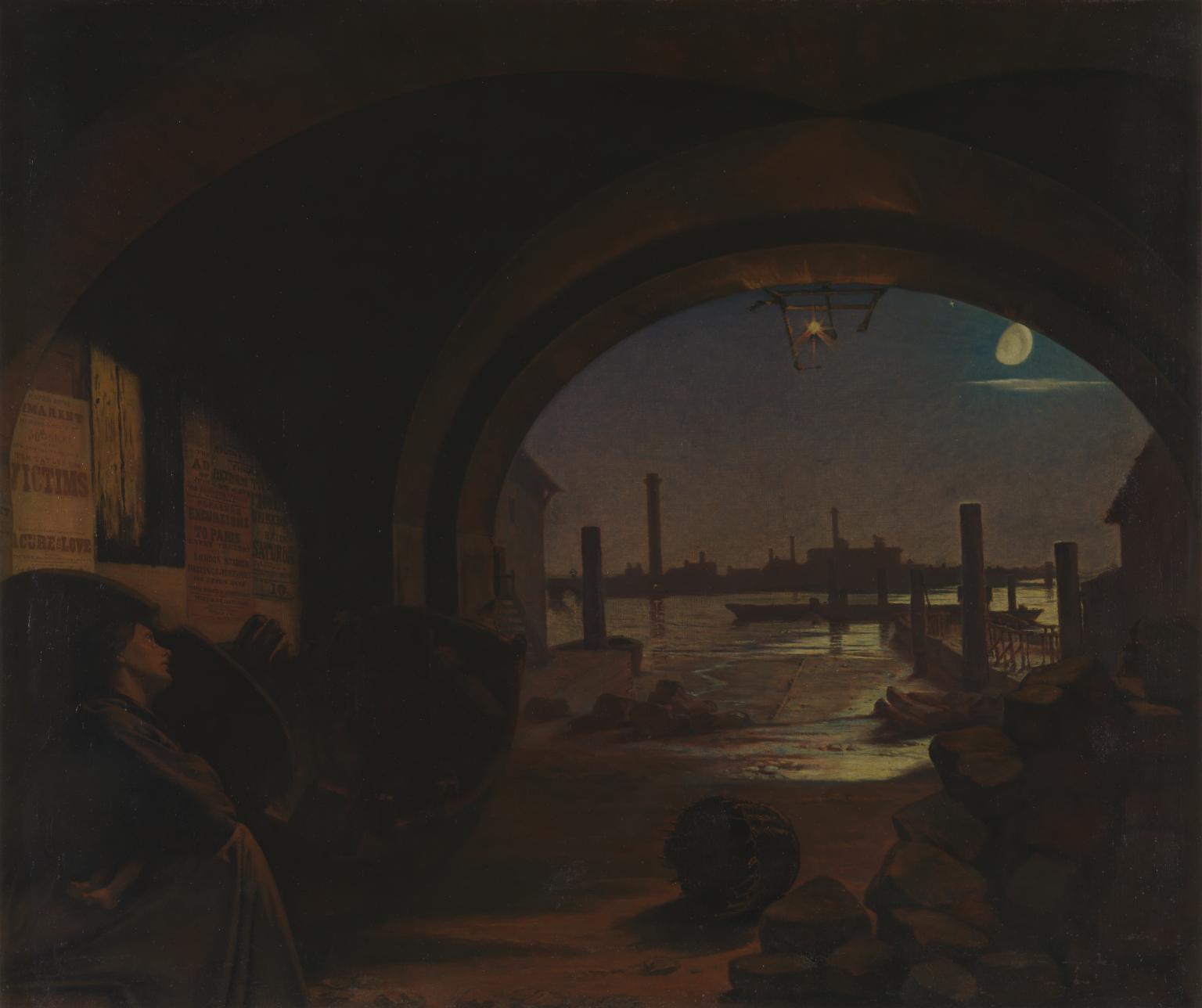
- Artist: Augustus Leopold Egg
- Date: 1858
- Medium: Oil paint on canvas
- Dimensions: support: 635 x 762 mm
- Museum: Tate Britain
- Collection record: Tate Britain website
Listen to the free audio guide
About this artwork
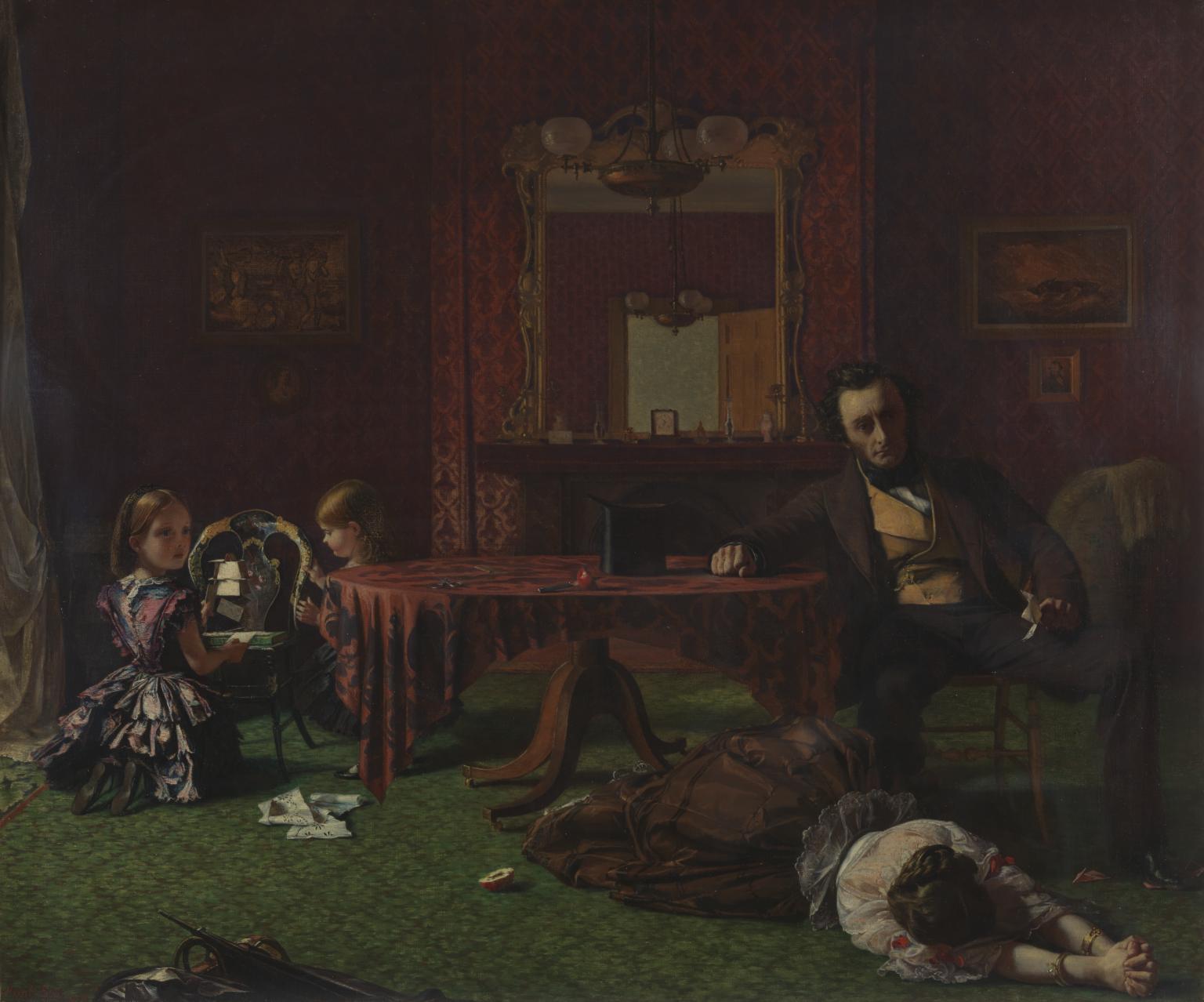
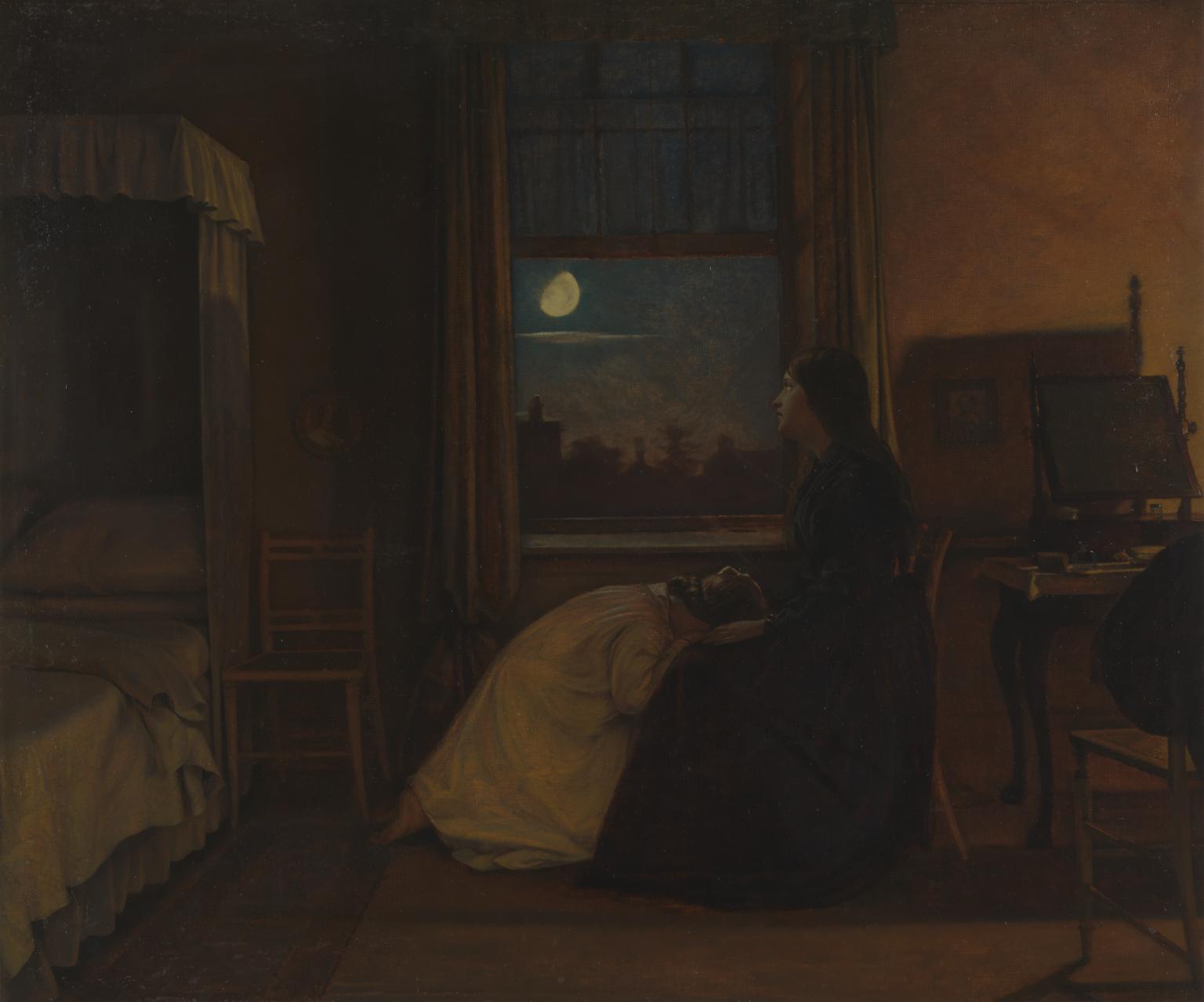
This is the “Past and Present, No. 3” by Augustus Leopold Egg. Egg created the piece in 1858 as the third panel of a triptych that follows a fallen woman’s story across five years. The first panel shows the wife begging forgiveness, the second a mourning household after the husband’s death, and the third, the scene we see now, takes place at the same night as the previous panels – the identical moons in the sky confirm that simultaneity.
In the foreground, a homeless mother crouches beneath one of the Adelphi arches by the Thames, clutching the child born from her affair. The mother’s posture and the damp streets speak of poverty and abandonment, while posters on the wall advertise plays titled “Victims,” “A Cure for Love,” and “Pleasure Excursions to Paris.” These adverts subtly mock the social commentary Egg was making: that a woman’s transgression was condemned more harshly than the man’s.
The two orphaned girls in the background cling to one another, their small hands a quiet reminder of resilience amid moral judgment. Egg’s meticulous use of light and shadow, the moon’s soft glow, and the architectural detail of the arch create a narrative that feels both intimate and universal.
This painting is a sharp, social portrait of Victorian moralism, showing how the weight of the era’s values rested on women, while men could move freely with fewer consequences.
See it in person
Past and Present, No. 3 is in the collection of Tate Britain on Millbank, London — free to enter. Point your phone at any artwork there and audioguide.london plays a free audio guide in six languages — no app download needed.