Palestrina - Composition
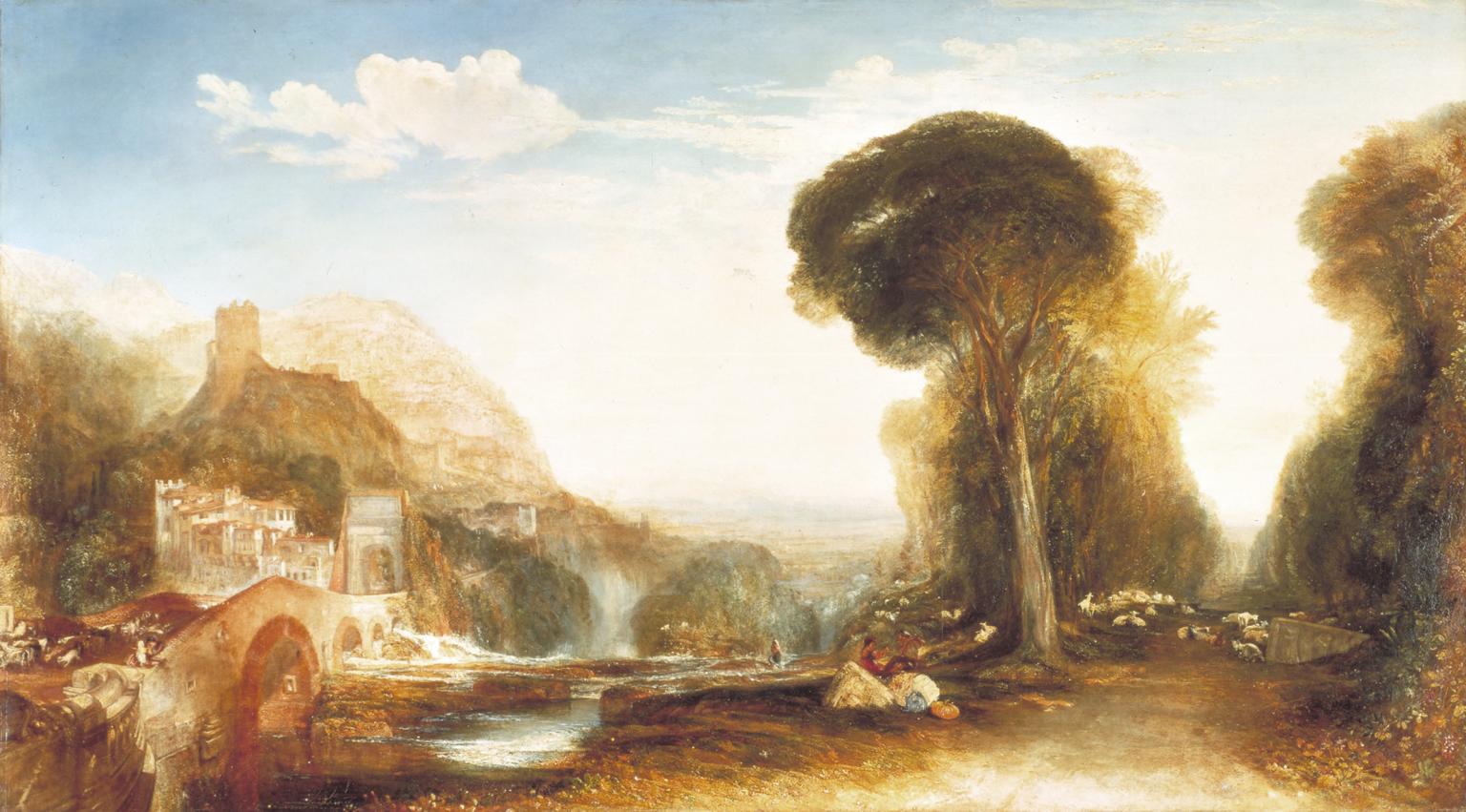
- Artist: Joseph Mallord William Turner
- Date: 1828, exhibited 1830
- Medium: Oil paint on canvas
- Dimensions: support: 1403 x 2489 mm
- Museum: Tate Britain
- Collection record: Tate Britain website
Listen to the free audio guide
About this artwork
This is the “Palestrina – Composition” by Joseph Mallord William Turner. Turner painted it in Rome in 1828, the first brushstroke laid on that city’s warm light. He had a commission from Lord Egremont, hoping to create a companion to a Claude Lorrain canvas the lord owned. The work never entered the Egremont collection; instead, after the exhibition in 1830, Turner sold it for a thousand guineas to the whaling magnate Elhanan Bicknell.
The painting has been shown in Rome, London and Edinburgh, and critics had mixed feelings. In London it was called “glorious” yet “artificial”, a common criticism of Turner’s bold, bright style. Edinburgh critics, on the other hand, praised the distant view: the brush seemed “dipped in a sunbeam”. The piece captures a bustling Italian town, a stone bridge and a winding river, echoing Virgil’s references to Praeneste, giving it a poetic, almost lyrical quality.
Turner’s light is striking—glare and glitter, but from a few feet away, the whole scene glows with a kind of genius that still catches the eye today. It’s a fine canvas, larger than most of his Rome works, and a fascinating snapshot of Turner’s passion for Italian light and the critical debates that surrounded his work.
See it in person
Palestrina - Composition is in the collection of Tate Britain on Millbank, London — free to enter. Point your phone at any artwork there and audioguide.london plays a free audio guide in six languages — no app download needed.