Landscape at Iden
- Artist: Paul Nash
- Date: 1929
- Medium: Oil paint on canvas
- Dimensions: support: 698 x 908 mm
- Museum: Tate Britain
- Collection record: Tate Britain website
Listen to the free audio guide
About this artwork
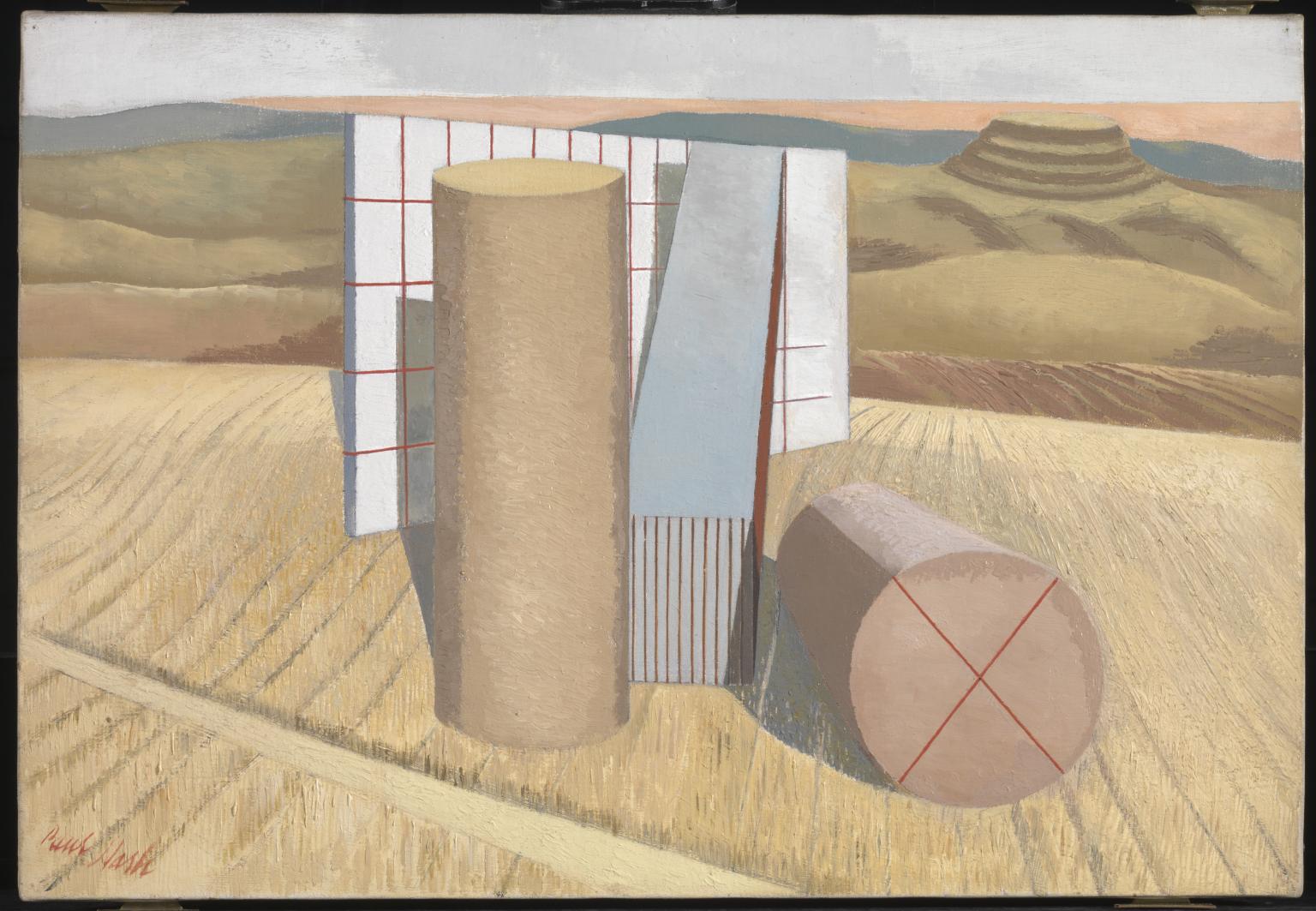
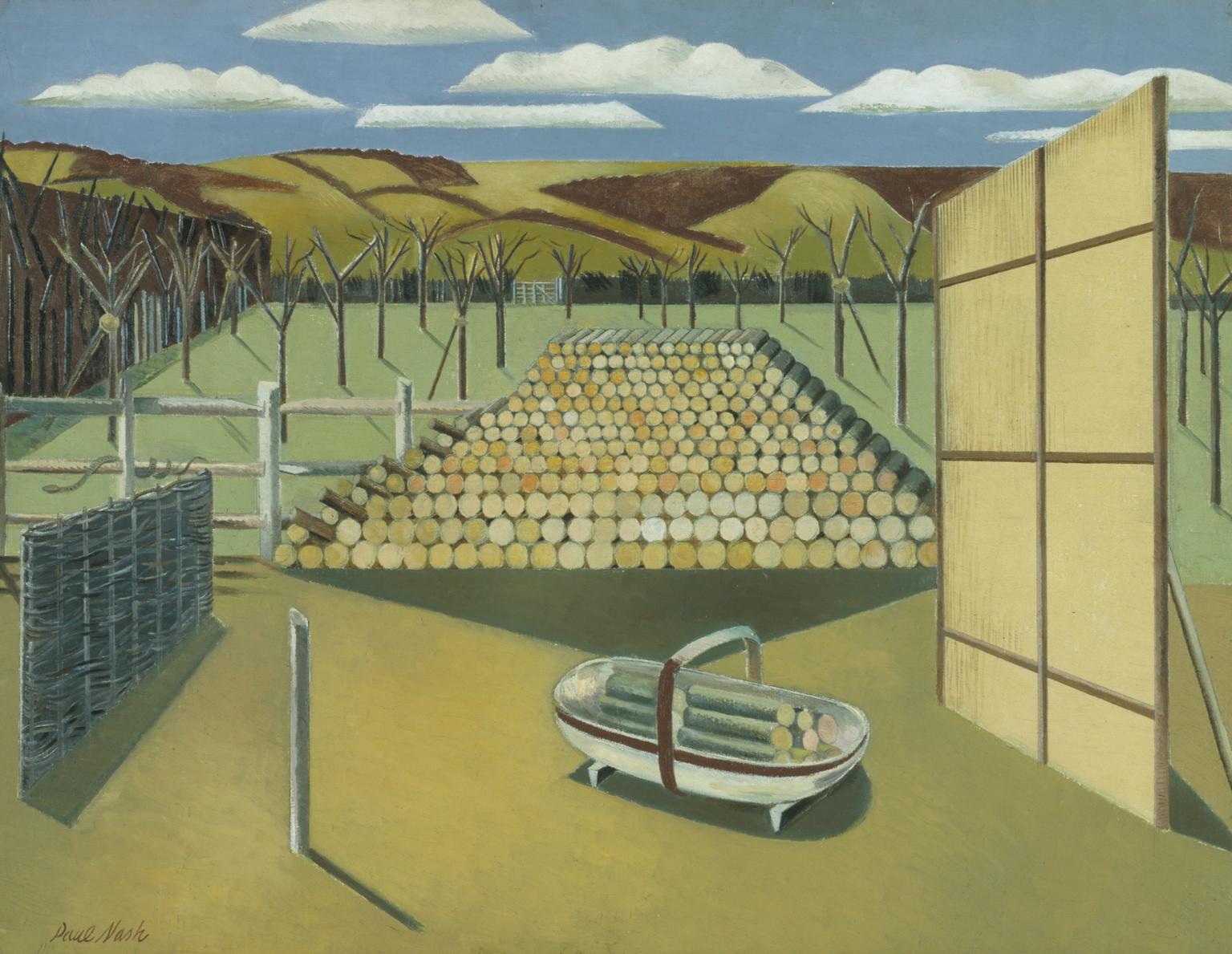
This is the “Landscape at Iden” by Paul Nash, painted in 1929 as an oil on canvas. Nash captures a view from his Sussex garden at Oxenbridge Farmhouse, but he distorts the geometry of the fence, the stack of logs and the screen that frame the scene. The perspective pulls the viewer into a space that feels both familiar and oddly uncanny.
The composition feels like a quiet elegy. The young fruit trees in the foreground hint at fragile youth, while the altar‑like pile of felled logs speaks to loss and fallen humanity—an echo of the dead that dominated war‑era art. In many of Nash’s works, the fallen tree is a symbol of death, and here it sits alongside a snake that slithers along the fence, a recurring motif in his paintings that adds a subtle, almost mythic layer.
Nash was influenced by the way Giorgio de Chirico treated objects in space, creating symbolic narratives that linger beyond the immediate landscape. By juxtaposing rustic rural elements with a dramatic, almost theatrical arrangement, Nash turns the ordinary English countryside into a site of memory and mourning. The painting’s stark, almost architectural lines, the shadowed light, and the sense of a landscape that resists time all combine to give us a moment that feels both timeless and deeply personal.
See it in person
Landscape at Iden is in the collection of Tate Britain on Millbank, London — free to enter. Point your phone at any artwork there and audioguide.london plays a free audio guide in six languages — no app download needed.