Pillar and Moon
- Artist: Paul Nash
- Date: 1932–42
- Medium: Oil paint on canvas
- Dimensions: support: 508 x 762 mm
- Museum: Tate Britain
- Collection record: Tate Britain website
Listen to the free audio guide
About this artwork
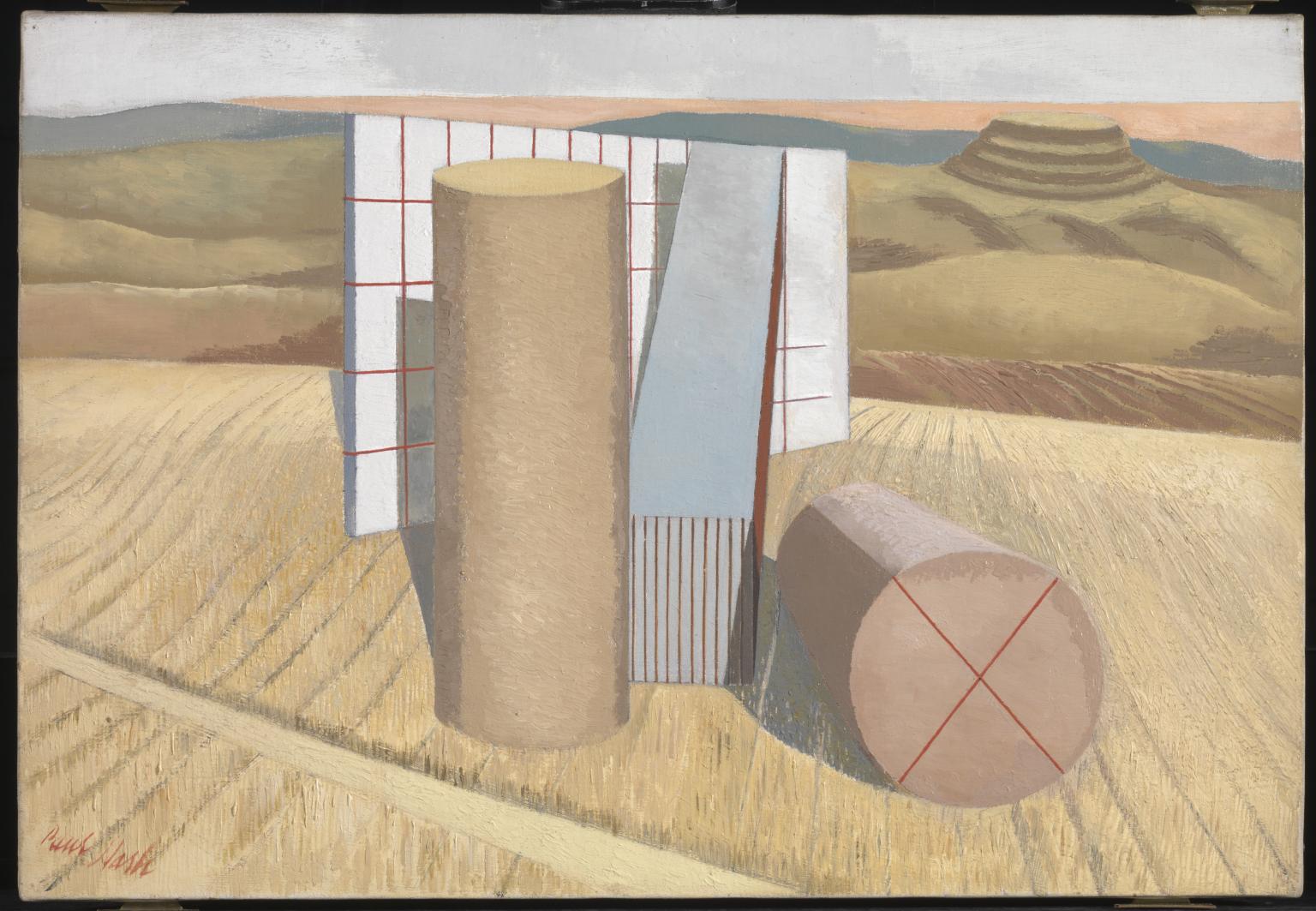
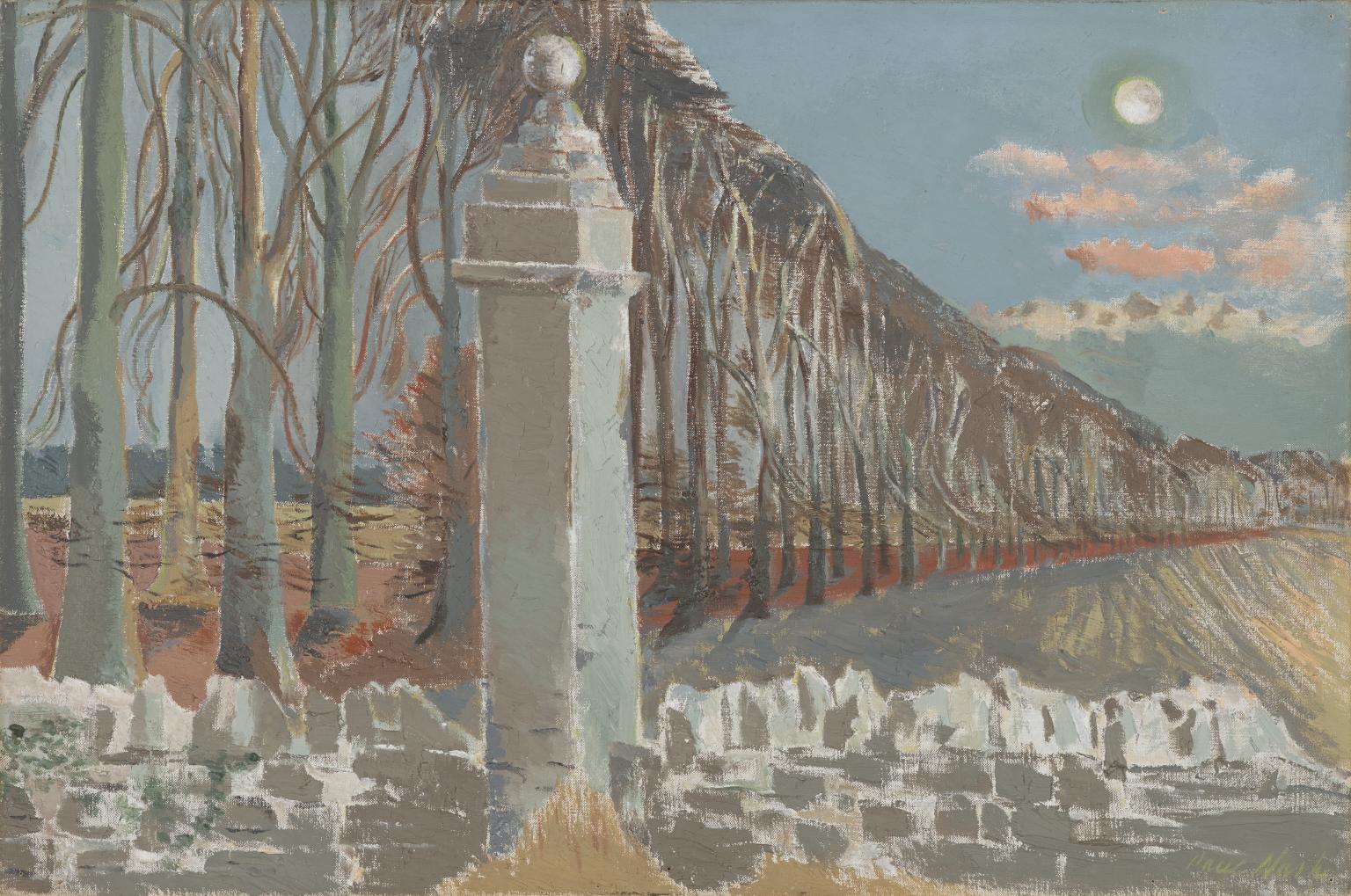
This is the *Pillar and Moon* by Paul Nash, completed between 1932 and 1942 and presented to the public by the Art Fund that year. The canvas shows a crumbling column with a small, pale stone sphere perched on its top, staring out toward a cold, moonlit sky. Nash didn’t paint a realistic landscape; instead he paired two unrelated objects—a stone pillar and the moon—to create a “mystical association” that feels both strange and unsettling.
Because of his wartime experience, Nash used the image to evoke memory and emotion rather than tell a literal story. The scene feels empty, almost desolate, and the muted light gives it a melancholy, almost dreamlike quality. He wanted the painting to stir feelings in the viewer—anxiety, wonder, and a touch of mystery—without imposing a clear narrative. It’s part of a larger series where he explored similar themes, like the sun and the sunflower, all aiming to bring out the emotional resonance of ordinary objects.
So as you look at the pillar and its quiet, reflective counterpart, think about how a single stone can hold so much meaning, and how a single moon can light an entire landscape of memory.
See it in person
Pillar and Moon is in the collection of Tate Britain on Millbank, London — free to enter. Point your phone at any artwork there and audioguide.london plays a free audio guide in six languages — no app download needed.