Equivalents for the Megaliths
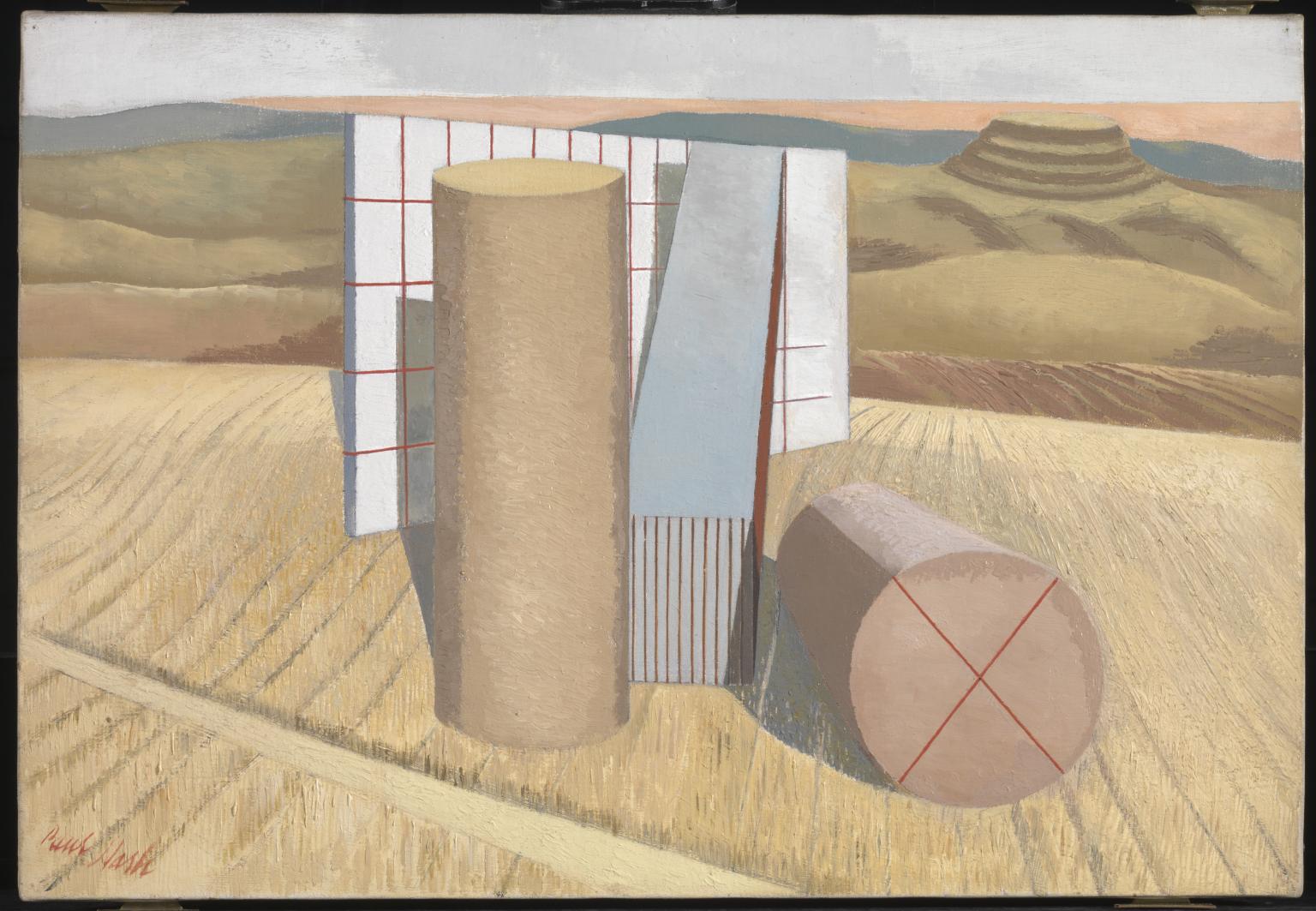
- Artist: Paul Nash
- Date: 1935
- Medium: Oil paint on canvas
- Dimensions: support: 457 x 660 mm
- Museum: Tate Britain
- Collection record: Tate Britain website
Listen to the free audio guide
About this artwork
This is the “Equivalents for the Megaliths” by Paul Nash. Painted in 1935, this oil on canvas captures Nash’s obsession with the ancient standing stones of Avebury in Wiltshire. Instead of rendering the stones literally, Nash replaces them with geometric shapes—upright cylinders, leaning blocks and planar fragments—arranged against a muted field that echoes the English countryside. The forms echo the rigour of contemporary abstract sculpture while evoking the weight and mystery of the megaliths. Nash, fascinated by the “mystical qualities of inanimate objects,” lets the shapes stand out against the landscape, creating a dialogue between ancient monument and modern abstraction. The work feels both a tribute to Britain’s prehistoric heritage and a statement about the power of design to give shape to the unseen. Nash’s language is simple, yet the painting invites you to imagine wind, light and the hidden stories that lie in the stones, and how those stories can be re‑interpreted through abstract geometry.
See it in person
Equivalents for the Megaliths is in the collection of Tate Britain on Millbank, London — free to enter. Point your phone at any artwork there and audioguide.london plays a free audio guide in six languages — no app download needed.