The Taylor Prism
- Gallery: Room 55
- Culture: Neo-Assyrian
- Made in: Iraq, North
- Date: 691BC
- Object type: prism
- Materials: clay
- Museum number: 91032
- Museum: The British Museum
- Collection record: British Museum website
- Image © The Trustees of the British Museum, shared under a CC BY-NC-SA 4.0 licence.
Listen to the free audio guide
About this object
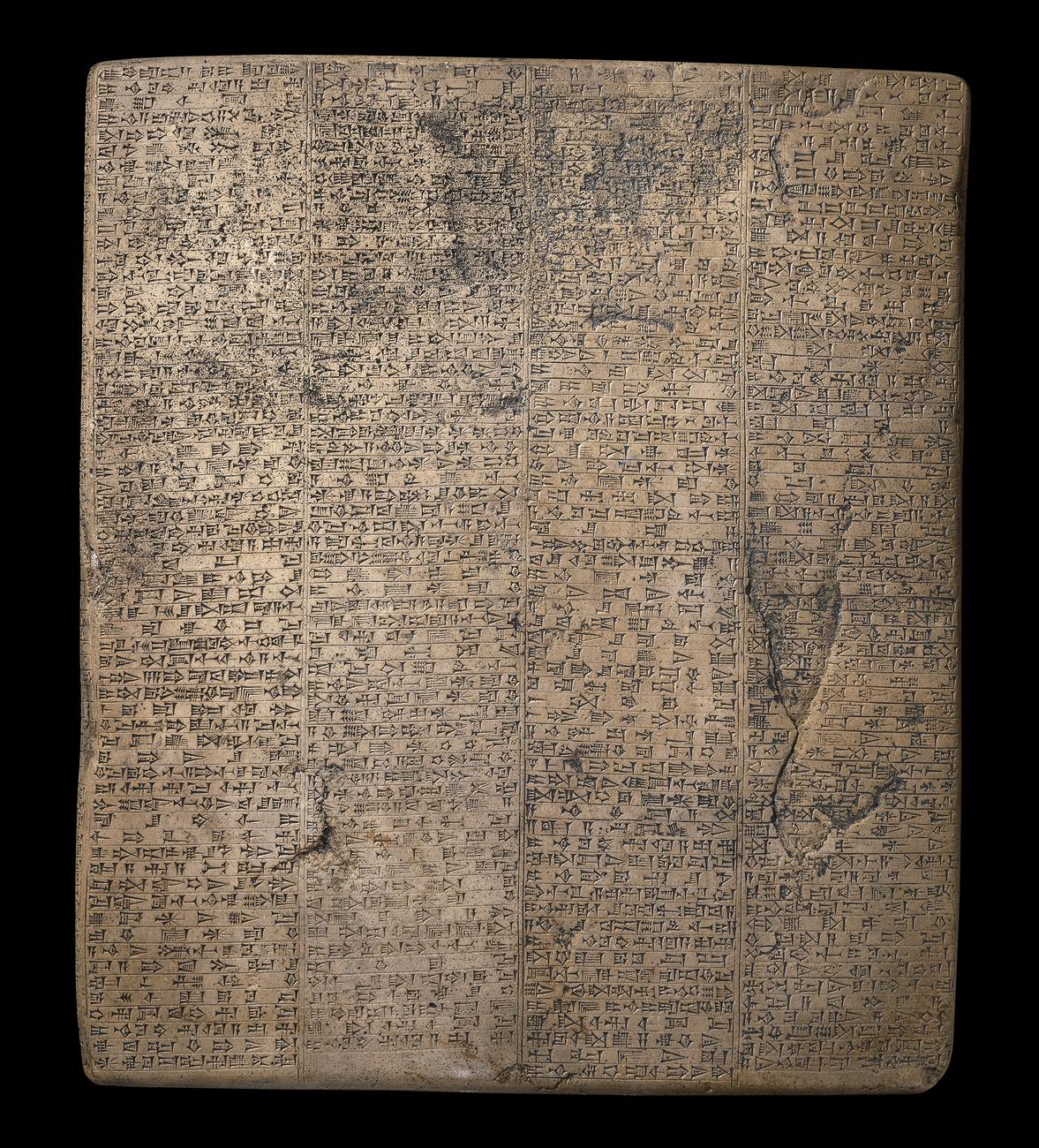
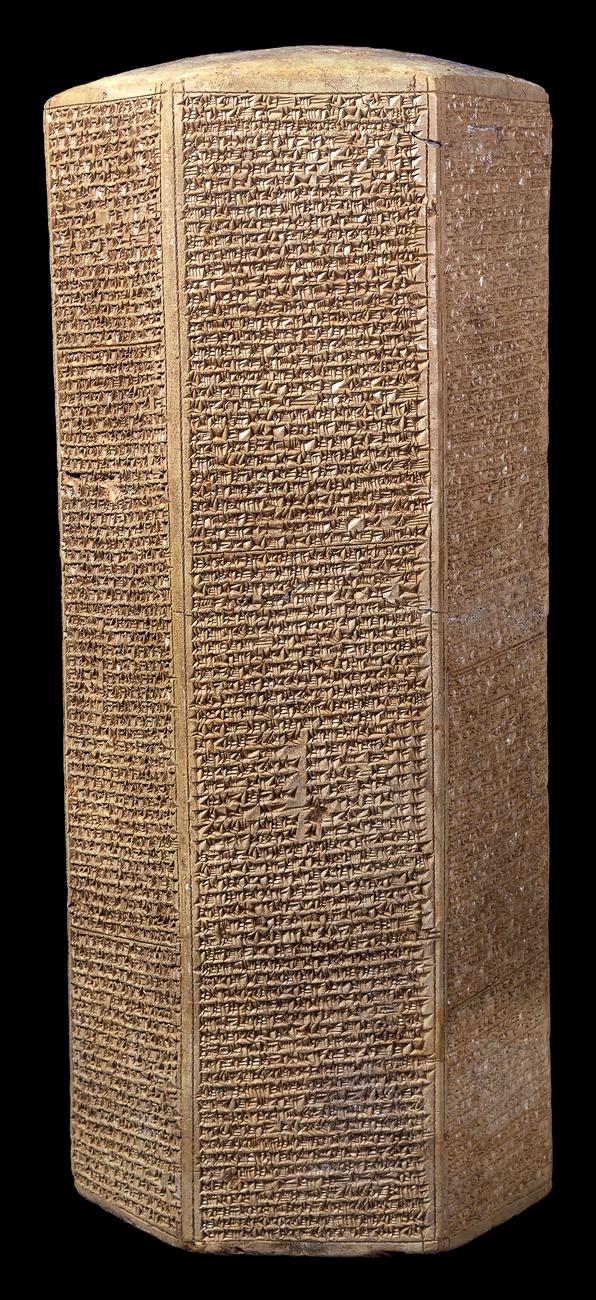
Before you is "The Taylor Prism," an ancient clay object shaped like a hexagonal prism. This remarkable artifact records the military campaigns of Assyrian King Sennacherib, including details about his interactions with King Hezekiah of Judah in 701 BC. The inscriptions are written in cuneiform, the wedge-shaped script of the ancient Near East.
Each of the six sides is covered with densely packed lines of text, totaling over 400 lines across the prism. This kind of foundation record was a common way for Assyrian rulers to document their achievements and assert their power.
Created around 691 BC in what is now northern Iraq, the prism was likely discovered at Nebi Yunus. It found its way into the British Museum in 1855, after being owned by Colonel R. Taylor and later purchased through Sir Henry Creswicke Rawlinson. Known for its deep historical significance and connection to biblical history, the prism continues to be a key piece in understanding the Assyrian Empire.
See it in person
The Taylor Prism is on display in Room 55 at the British Museum on Great Russell Street, Bloomsbury, London — free to enter. Choose British Museum on audioguide.london and take a photo of it to hear this free audio guide in six languages — no app download needed.
New, in beta. British Museum support has just launched and is still improving: over 1,000 objects so far, with more added all the time.