The Sun God Tablet
- Gallery: Room 55
- Culture: Middle Babylonian; Neo-Babylonian Dynasty
- Date: 860BC-850BC
- Object type: tablet
- Materials: limestone
- Museum number: 91000
- Museum: The British Museum
- Collection record: British Museum website
- Image © The Trustees of the British Museum, shared under a CC BY-NC-SA 4.0 licence.
Listen to the free audio guide
About this object
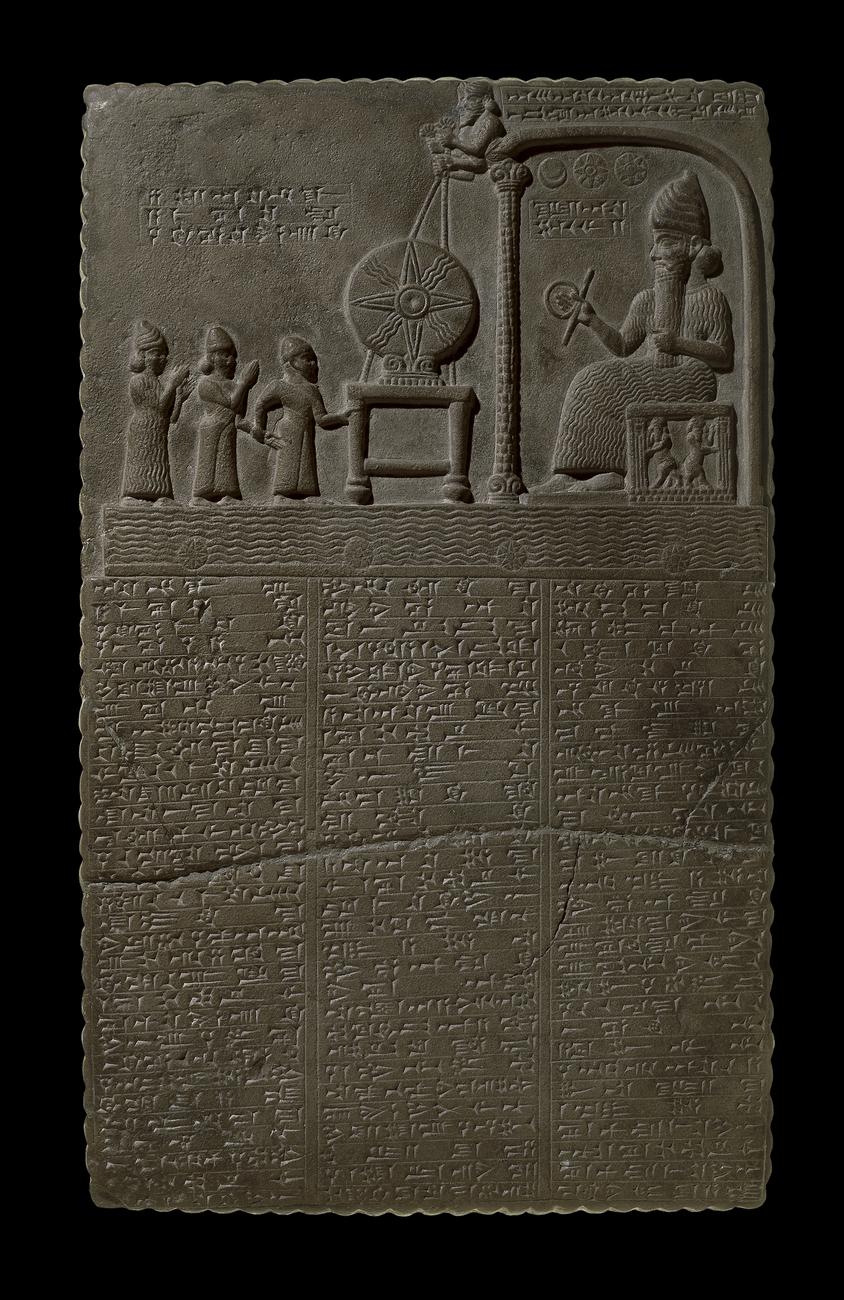
Before you stands "The Sun God Tablet," a limestone artifact from the Middle Babylonian period. This intricately carved relief shows Nabu-aplu-iddina, a king, being led into the presence of the Sun God, Shamash, by a priest and the goddess Aa. The deity is seated within a temple known as Ebabbara and wears a distinctive horned headdress, a symbol of divinity.
Above the Sun God, the tablet features celestial emblems: a lunar disc, a solar disc, and an eight-pointed star—signs of the deities Sin, Shamash, and Ishtar. The Sun God’s ringed rod symbolizes authority and cosmic balance. The scene reflects the god's association with justice and the heavens.
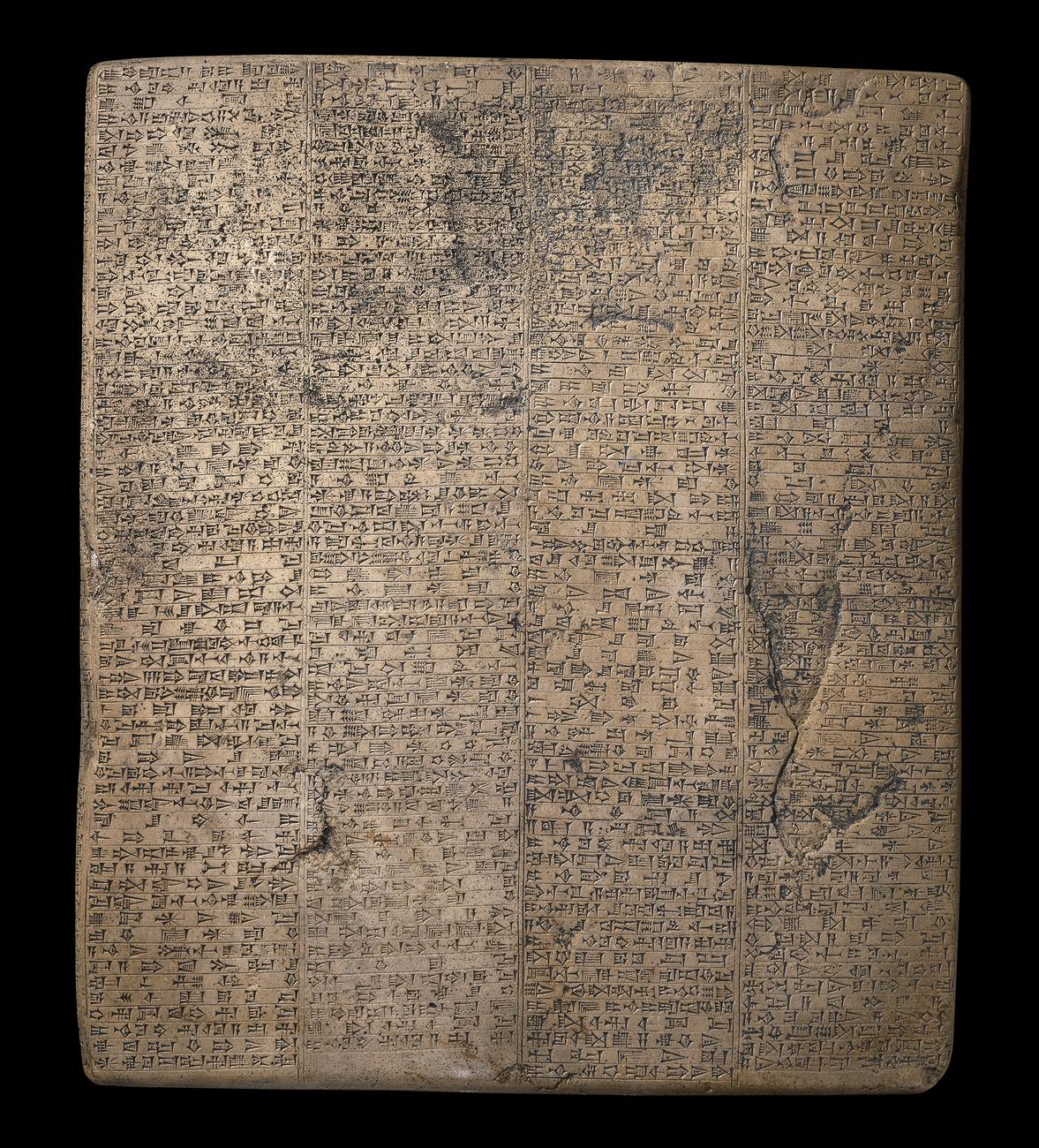
Surrounding details include a detailed cuneiform inscription that records Nabu-aplu-iddina's re-endowment of the Sun Temple in Sippar. The tablet’s bevelled edges and the dramatic relief capture the solemnity of worship and the king’s devotion to restoring sacred traditions, offering a rare, vivid glimpse into ancient Mesopotamian religious life.
See it in person
The Sun God Tablet is on display in Room 55 at the British Museum on Great Russell Street, Bloomsbury, London — free to enter. Choose British Museum on audioguide.london and take a photo of it to hear this free audio guide in six languages — no app download needed.
New, in beta. British Museum support has just launched and is still improving: over 1,000 objects so far, with more added all the time.