The Sargon Vase
- Gallery: Room 55
- Culture: Neo-Assyrian
- Date: 721BC-705BC (between)
- Object type: vase
- Materials: glass
- Museum number: 90952
- Museum: The British Museum
- Collection record: British Museum website
- Image © The Trustees of the British Museum, shared under a CC BY-NC-SA 4.0 licence.
Listen to the free audio guide
About this object
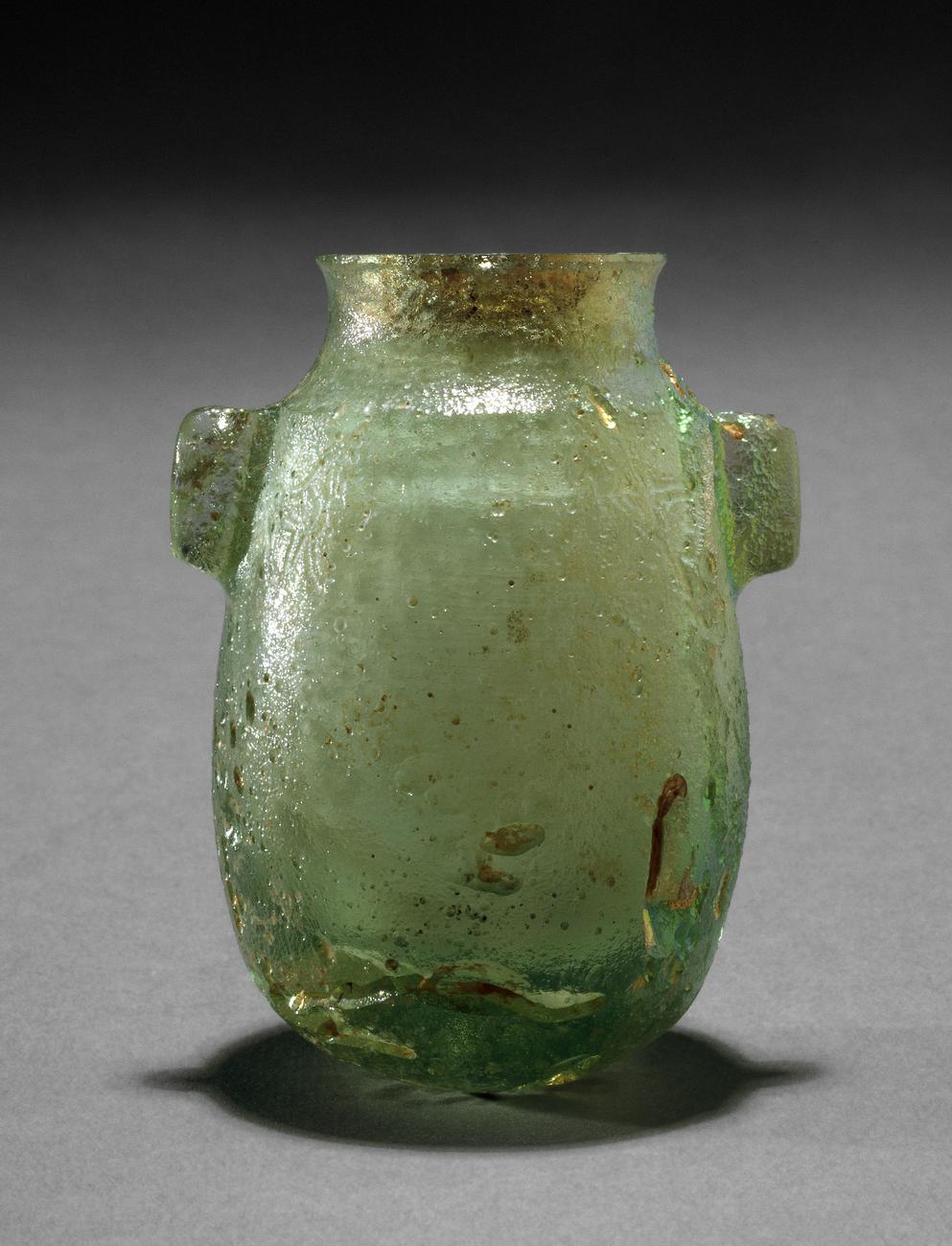
Before you stands "The Sargon Vase," a remarkable Neo-Assyrian glass jar from between 721 and 705 BC. Its clear light green color hints at ancient craftsmanship. The vase has a pear-shaped body, two vertical handles, and a flat rim. On its front and back, you can see a pacing lion and a cuneiform inscription reading "Palace of Sargon, King of Assyria."
Look closely at the weathered surface, once covered by a thick, creamy layer thought to have been manually removed centuries ago to reveal the glass. Drill marks reveal how the ancient artisan worked from the inside out. Small bubbles within the glass show how this object was carefully cast.
This vase is unique in its style and is thought to have belonged to Sargon II, possibly as official palace property. The lion and inscription provide important insight into royal symbols and the artistic innovation of the Neo-Assyrian era.
See it in person
The Sargon Vase is on display in Room 55 at the British Museum on Great Russell Street, Bloomsbury, London — free to enter. Choose British Museum on audioguide.london and take a photo of it to hear this free audio guide in six languages — no app download needed.
New, in beta. British Museum support has just launched and is still improving: over 1,000 objects so far, with more added all the time.