The Kurkh Stela
- Gallery: Room 6a
- Culture: Neo-Assyrian
- Date: 852BC (about)
- Object type: stela
- Materials: limestone
- Museum number: 118884
- Museum: The British Museum
- Collection record: British Museum website
- Image © The Trustees of the British Museum, shared under a CC BY-NC-SA 4.0 licence.
Listen to the free audio guide
About this object
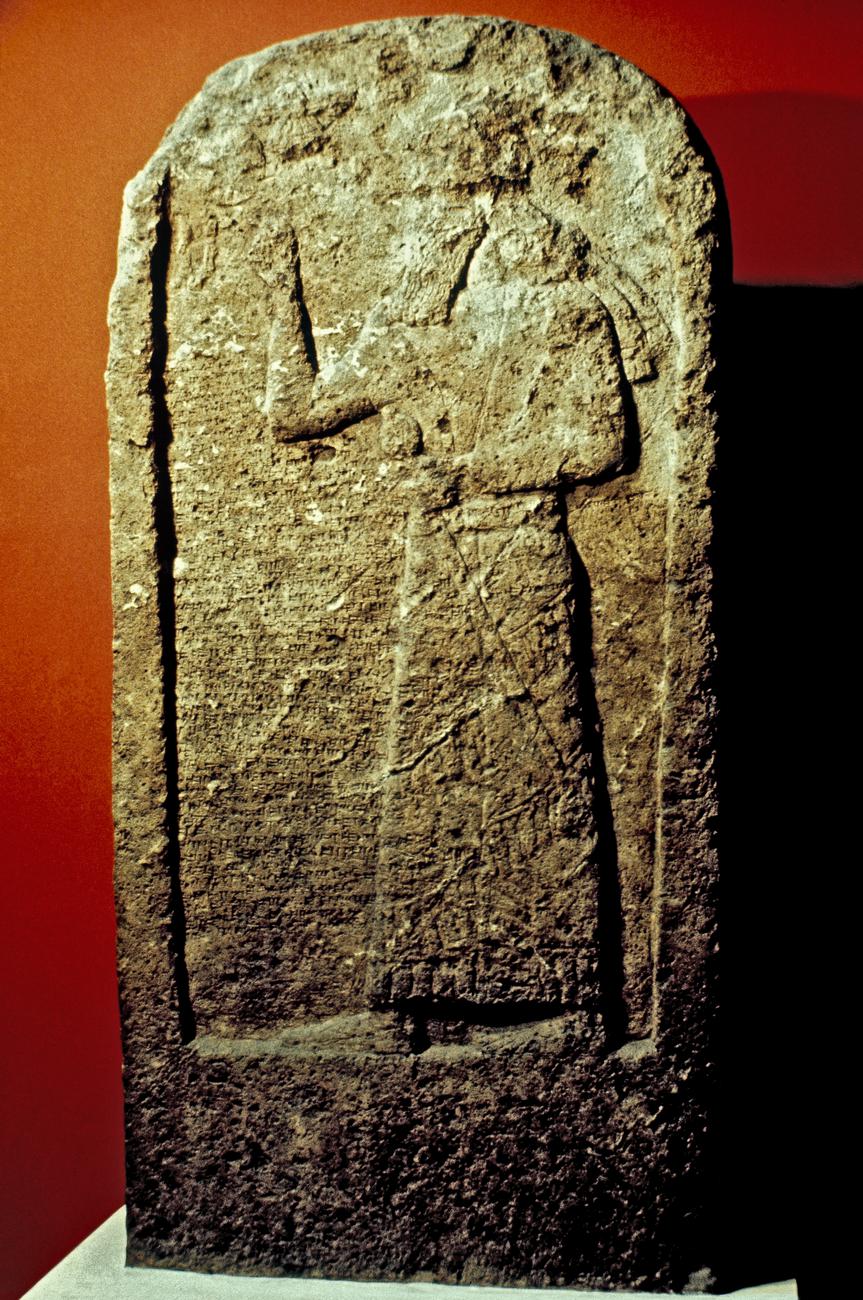
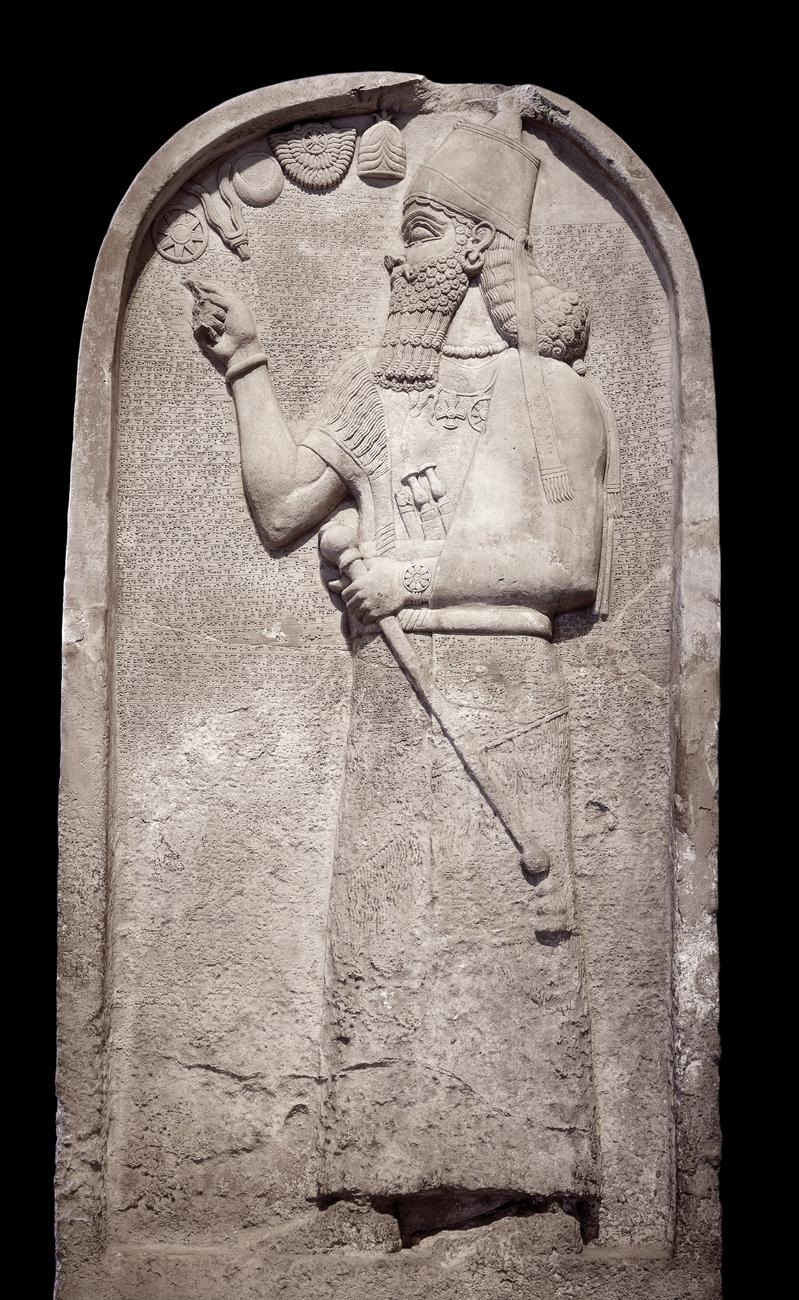
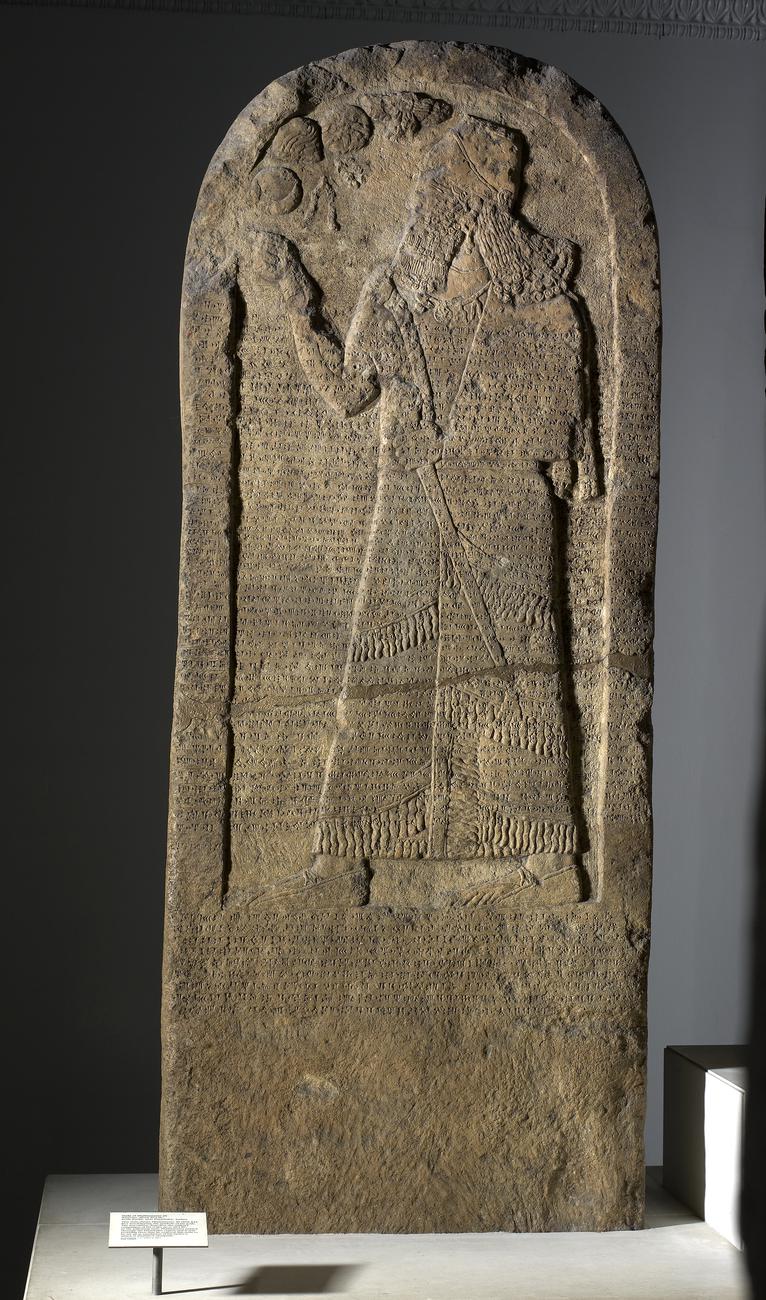
Before you is The Kurkh Stela, a limestone monument from the Neo-Assyrian period, dating to around 852 BC. This round-topped stela shows King Shalmaneser III standing before four divine emblems, representing important deities like Ashur, Shamash, Ishtar, and Sin. These symbols reflect the king’s religious and political authority.
You’ll notice the king wears a series of small amulets on his collar, each representing a different god or symbol. The meaning of his hand gesture has long been debated: some believe it’s a blessing, others a ritual act or a gesture of power.
The front and sides of the stela are covered in cuneiform inscriptions—an important feature of Assyrian art and communication. This stela was donated in 1862 by John George Taylor, who discovered it in Kurkh.
See it in person
The Kurkh Stela is on display in Room 6a at the British Museum on Great Russell Street, Bloomsbury, London — free to enter. Choose British Museum on audioguide.london and take a photo of it to hear this free audio guide in six languages — no app download needed.
New, in beta. British Museum support has just launched and is still improving: over 1,000 objects so far, with more added all the time.