Neo-Assyrian stela
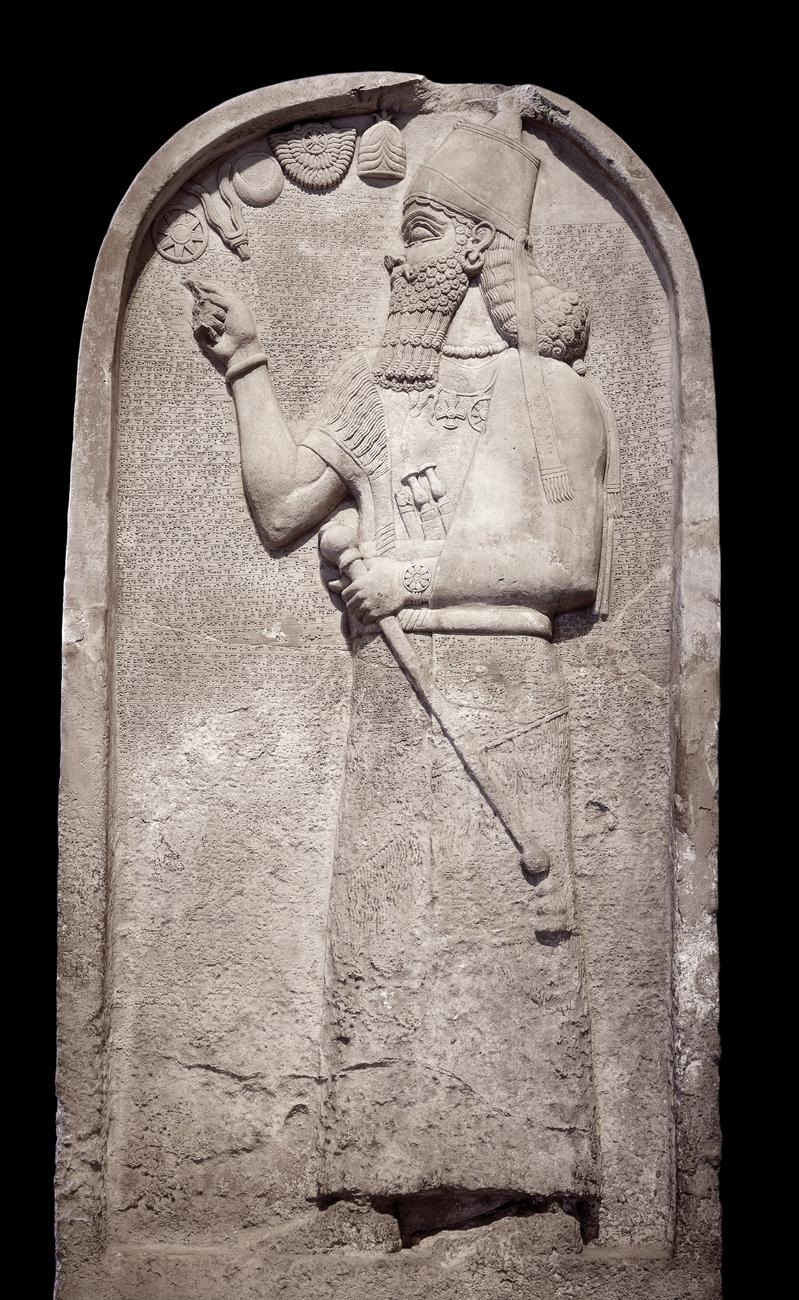
- Gallery: Room 6a
- Culture: Neo-Assyrian
- Date: 865BC-860BC
- Object type: stela
- Materials: limestone
- Museum number: 118805
- Museum: The British Museum
- Collection record: British Museum website
- Image © The Trustees of the British Museum, shared under a CC BY-NC-SA 4.0 licence.
Listen to the free audio guide
About this object
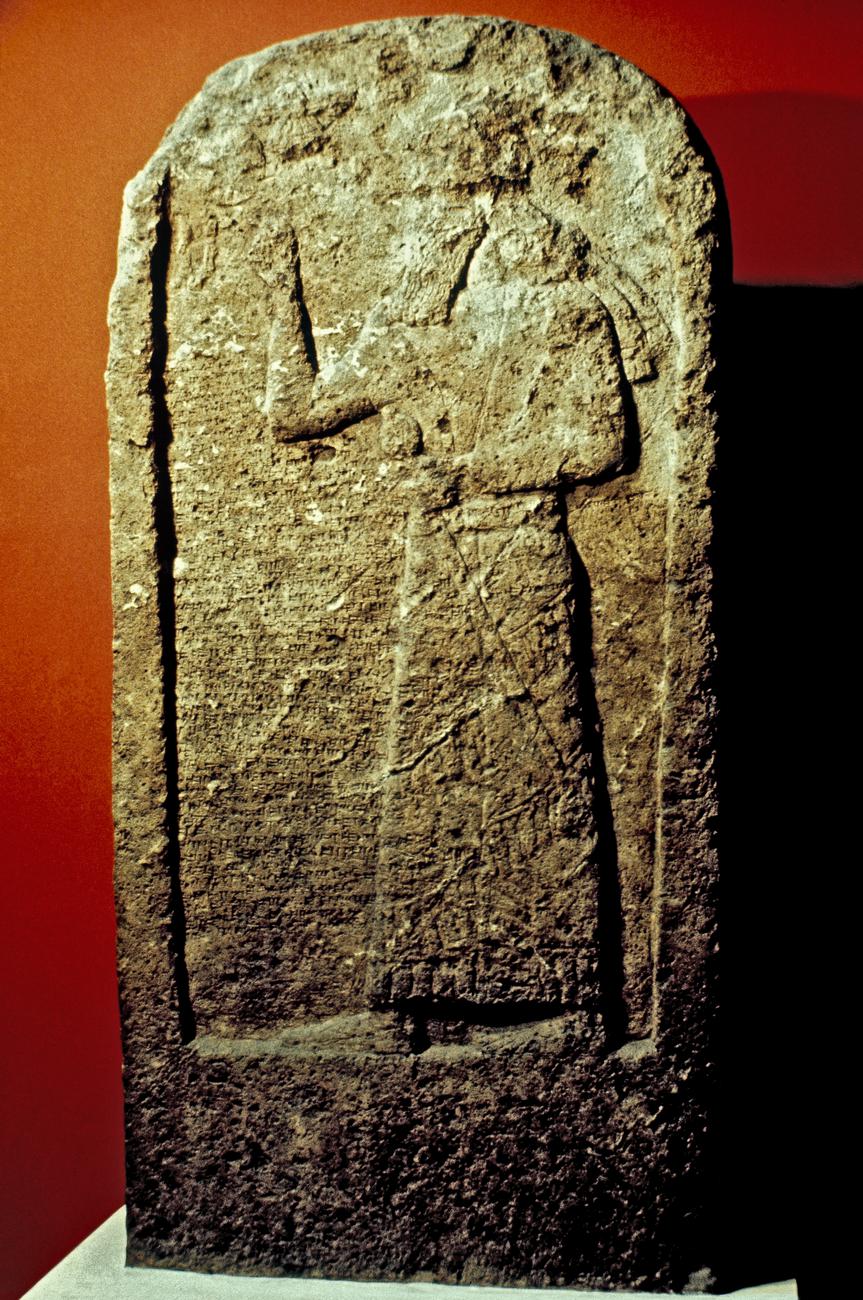
Before you stands the Neo-Assyrian stela of King Ashurnasirpal II, carved in limestone around 865–860 BC. The king is shown wearing a royal hat with a conical top and holding a mace, a sign of power. His right hand is raised as if in a respectful gesture toward five gods. Ashur, the supreme god, is marked by a horned helmet, while Shamash, the sun god, is symbolized by a winged disc. Sin, the moon god, appears as a crescent, Adad as a thunderbolt, and Ishtar, goddess of love and war, is represented by a star—possibly Venus.
Carved into the king’s chest are smaller symbols of these deities, including a Maltese cross for Ashur. Cuneiform writing covers the back and sides, describing the king’s major conquests.
This piece was discovered in the mid-1800s in Mesopotamia and later donated to the museum by King Edward VII of the United Kingdom.
See it in person
Neo-Assyrian stela is on display in Room 6a at the British Museum on Great Russell Street, Bloomsbury, London — free to enter. Choose British Museum on audioguide.london and take a photo of it to hear this free audio guide in six languages — no app download needed.
New, in beta. British Museum support has just launched and is still improving: over 1,000 objects so far, with more added all the time.