Black Obelisk of King Shalmaneser III
- Audio guide stop: 211
- Gallery: Room 6a
- Culture: Neo-Assyrian
- Date: 825BC
- Object type: obelisk
- Materials: limestone (black)
- Museum number: 118885
- Museum: The British Museum
- Collection record: British Museum website
- Image © The Trustees of the British Museum, shared under a CC BY-NC-SA 4.0 licence.
Listen to the free audio guide
About this object
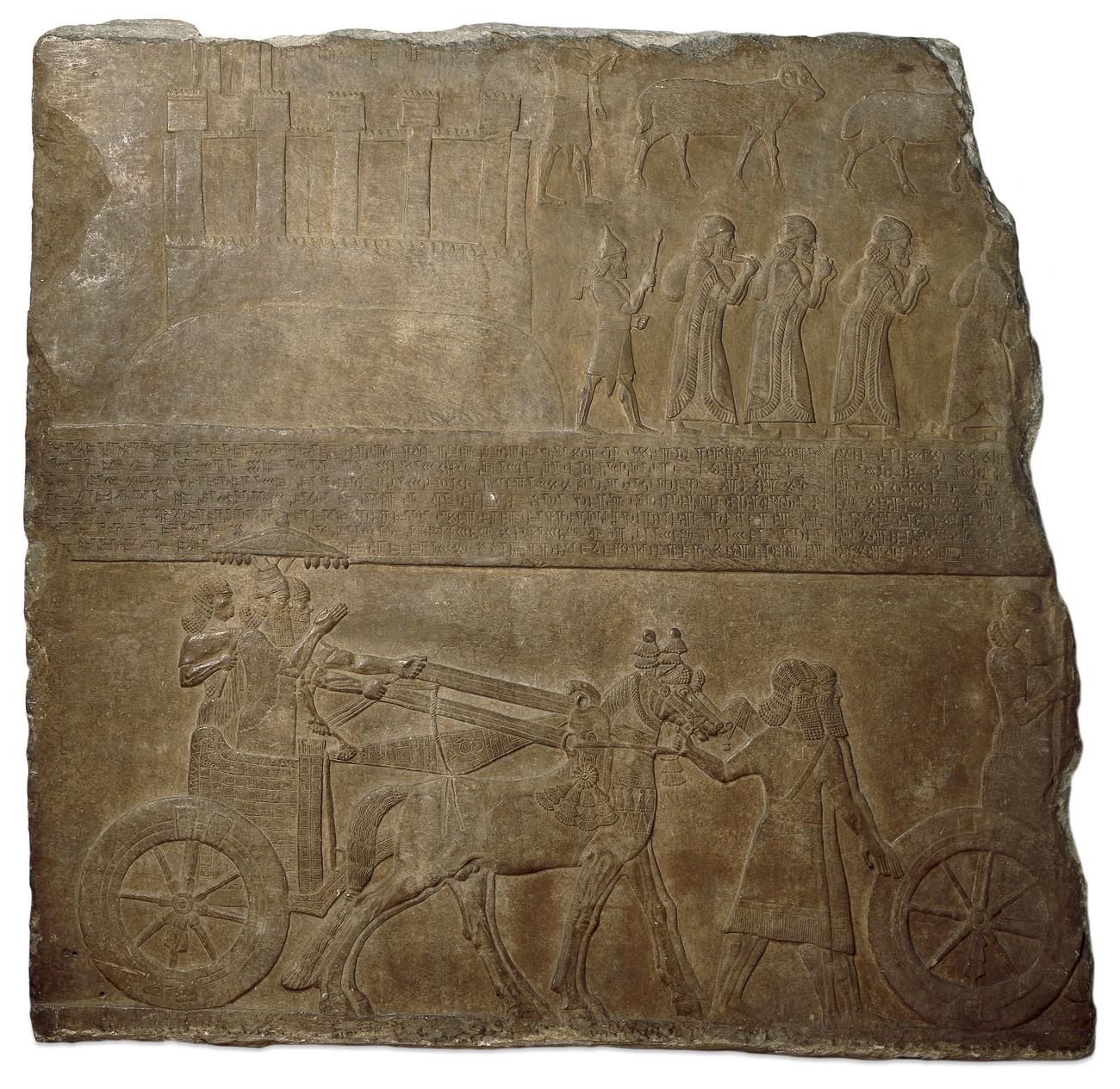
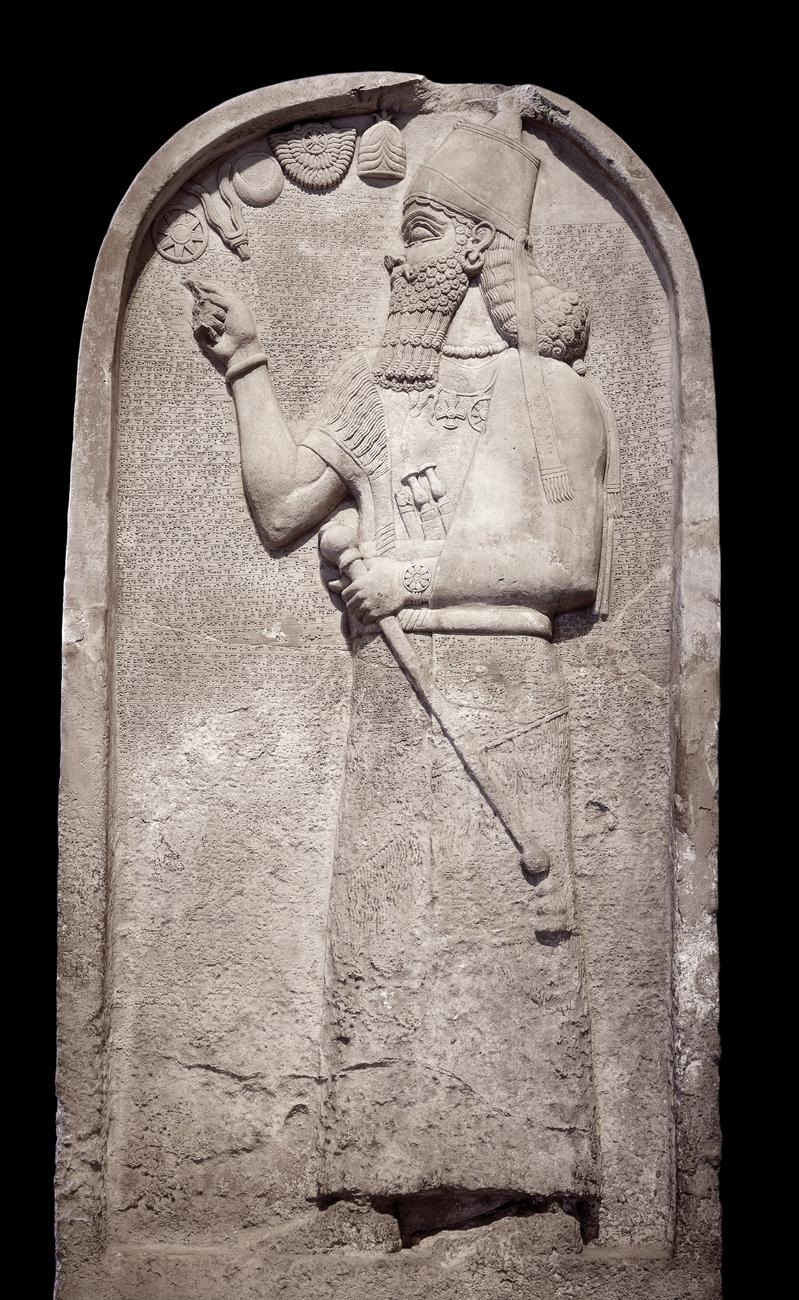
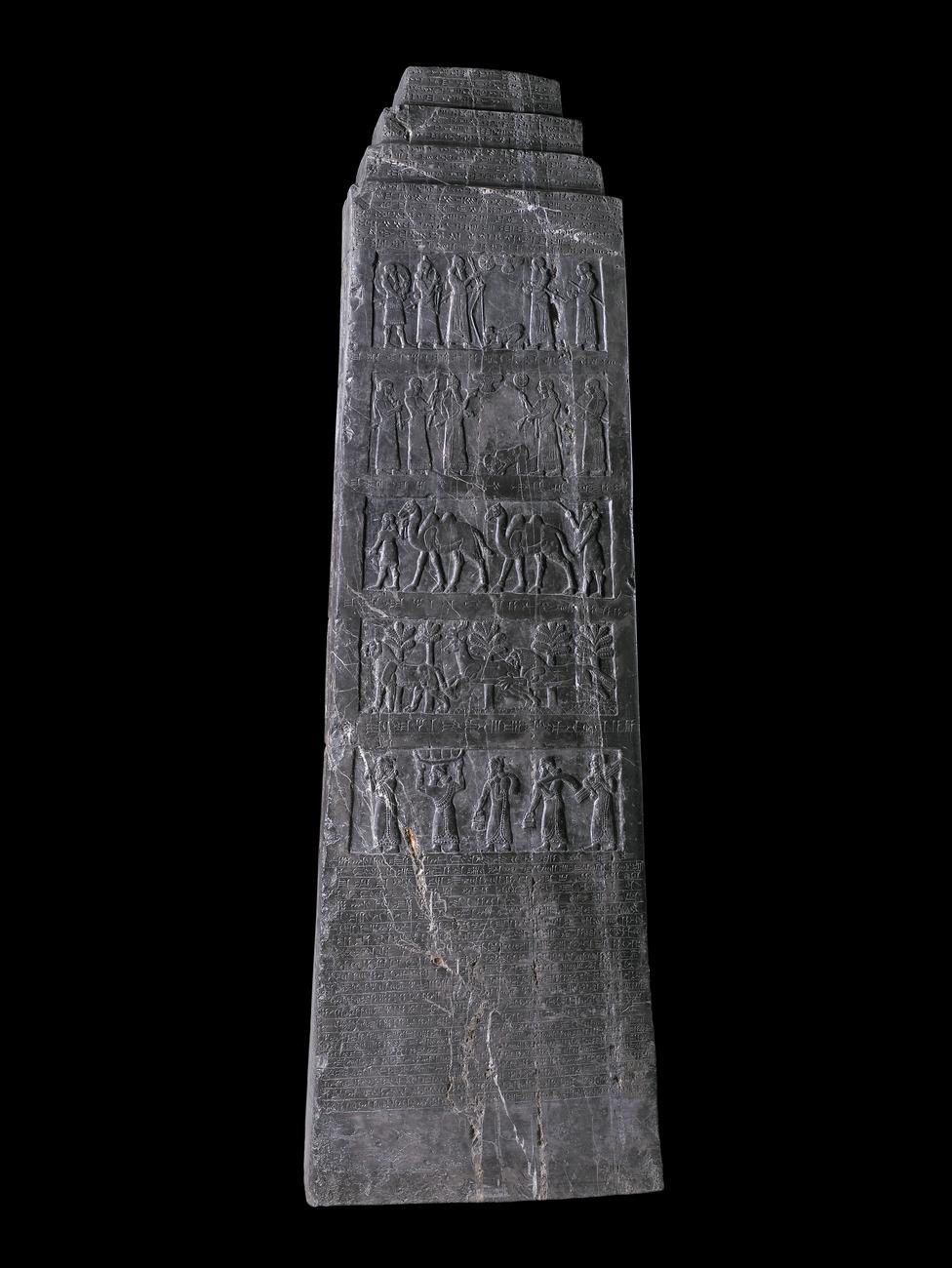
Before you stands "The Black Obelisk," a towering limestone monument from the Neo-Assyrian period, dating to around 825 BC. This striking black limestone obelisk commemorates the achievements of King Shalmaneser III and his loyal minister. The surface is richly carved with scenes and inscriptions in Akkadian cuneiform, detailing tribute from five far-flung regions.
On each of its four sides, you'll find panels illustrating tribute bearers from different parts of the ancient world. Horses from Northwest Iran, exotic animals including an elephant from Egypt, and scenes of hunting from the Euphrates all highlight the reach and influence of the Assyrian Empire.
Made of finely carved black limestone, the obelisk showcases the advanced sculpting techniques of the time. Its patina gives it an aged, dignified appearance. Originally uncovered at Nimrud, "The Black Obelisk" offers a rare glimpse into the grandeur of Assyrian court life and the diverse cultures it interacted with.
See it in person
Black Obelisk of King Shalmaneser III is on display in Room 6a at the British Museum on Great Russell Street, Bloomsbury, London — free to enter. Choose British Museum on audioguide.london and type its audio guide stop number, 211, from the gallery label, or take a photo of it, to hear this free audio guide in six languages — no app download needed.
New, in beta. British Museum support has just launched and is still improving: over 1,000 objects so far, with more added all the time.