Neo-Assyrian relief
- Gallery: Room 6a
- Culture: Neo-Assyrian
- Date: 730BC-727BC
- Object type: relief
- Materials: gypsum
- Museum number: 118908
- Museum: The British Museum
- Collection record: British Museum website
- Image © The Trustees of the British Museum, shared under a CC BY-NC-SA 4.0 licence.
Listen to the free audio guide
About this object
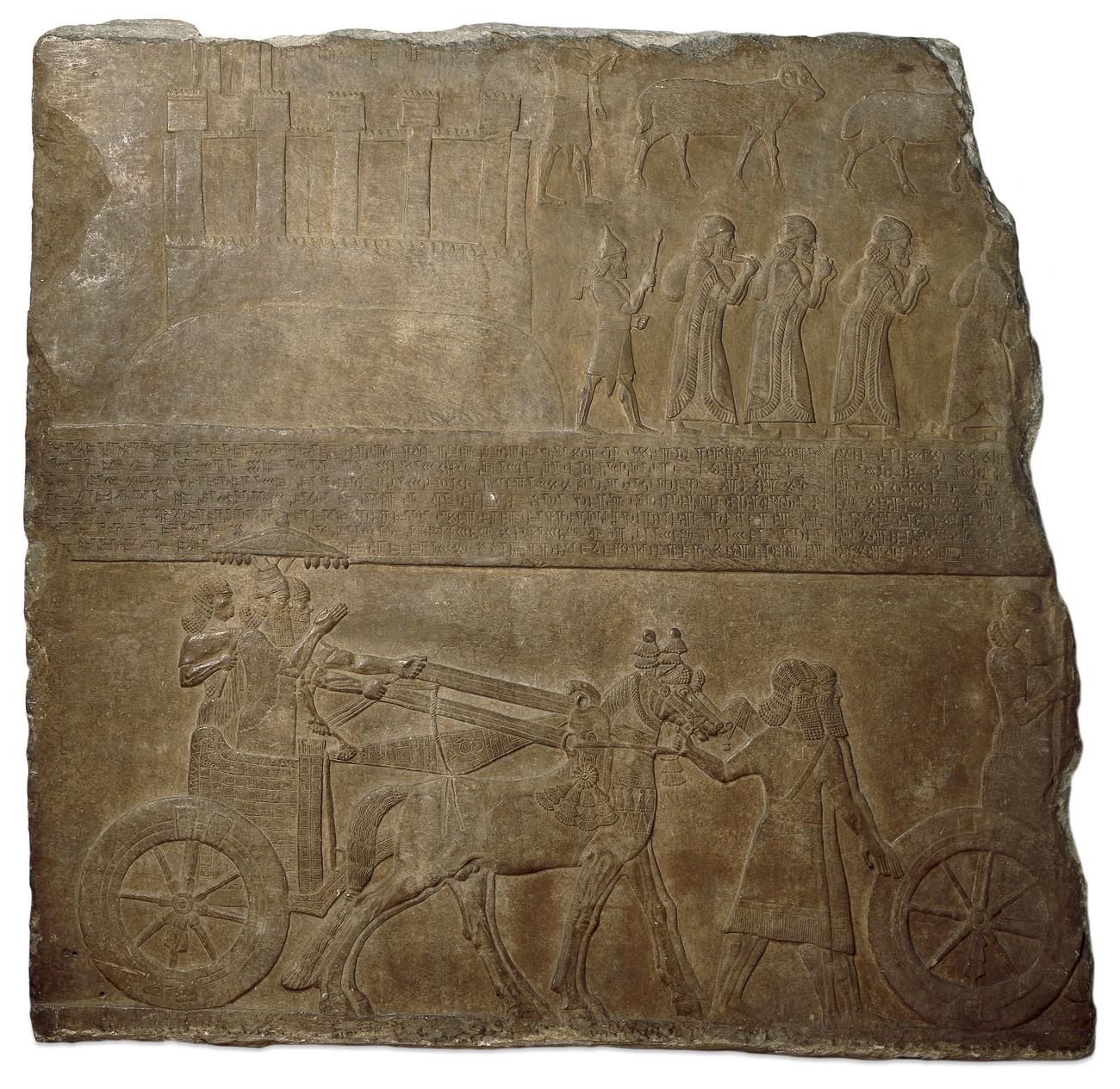
Before you stands a Neo-Assyrian relief carved from gypsum in low relief. This ancient panel depicts a military campaign and provides vivid details of ancient warfare and civilization.
At the top, you'll notice a fortified town named Astartu, resembling a typical Middle Eastern citadel built on an ancient mound. Inside the walls, prisoners are being led away, their clothes and turbans reflecting the local dress of the time. An Assyrian soldier, holding a mace, escorts them, suggesting the aftermath of a successful siege.
Below, King Tiglath-pileser III appears in a grand chariot, shaded by a tasselled parasol held by a eunuch. His royal attire, the patterned cloth with a winged disc—symbol of the sun—is richly detailed. The chariot itself is more elaborate than earlier models, with eight-spoked wheels and two adorned horses guided by a groom.
This relief also features a central cuneiform inscription that names Astartu and offers insight into the historical events of Tiglath-pileser III’s reign.
See it in person
Neo-Assyrian relief is on display in Room 6a at the British Museum on Great Russell Street, Bloomsbury, London — free to enter. Choose British Museum on audioguide.london and take a photo of it to hear this free audio guide in six languages — no app download needed.
New, in beta. British Museum support has just launched and is still improving: over 1,000 objects so far, with more added all the time.