Razorbill
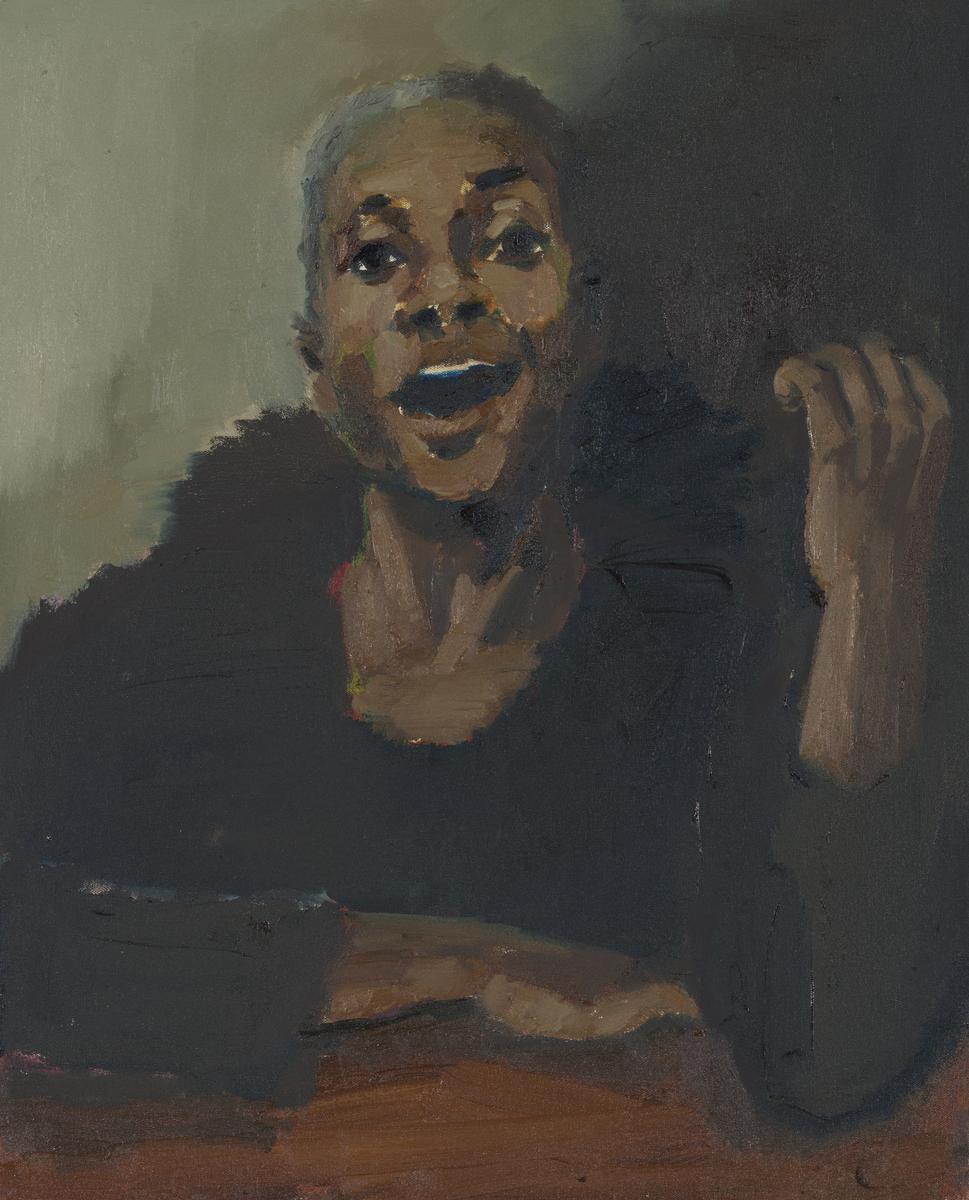
- Artist: Lynette Yiadom-Boakye
- Date: 2020
- Medium: Oil paint on canvas
- Dimensions: support: 501 × 404 mm
- Museum: Tate Britain
- Collection record: Tate Britain website
Listen to the free audio guide
About this artwork
This is the “Razorbill” by Lynette Yiadom‑Boakye. Created in 2020, it’s a small oil‑on‑canvas study measuring just over half a meter in width. The canvas shows a single female figure, hair cropped close to her skull, mouth open as if caught mid‑song or conversation. She wears a near‑black bodice edged with a feathered ruffle—an allusion to the carnivalesque ruff that appears in her earlier bird‑named works like *Greenfinch* and *Skylark*. Her right forearm and left elbow rest on an unseen tabletop, anchoring her in an abstract, undefined space.
Yiadom‑Boakye has spoken about the painting as a language of marks rather than a literal narrative, aiming to evoke feeling instead of history. The work emerged during the 2020 lockdown, a period of intense self‑reflection and experimentation, and showcases a shift toward looser brushwork and a warmer palette compared to her earlier, more restrained pieces. The figure’s direct, candid expression invites the viewer into a conversation that feels both intimate and universal. It’s a striking example of how the artist blends contemporary concerns with timeless portrait traditions, offering a fresh dialogue between past and present.
See it in person
Razorbill is in the collection of Tate Britain on Millbank, London — free to enter. Point your phone at any artwork there and audioguide.london plays a free audio guide in six languages — no app download needed.