Queen Mab’s Cave
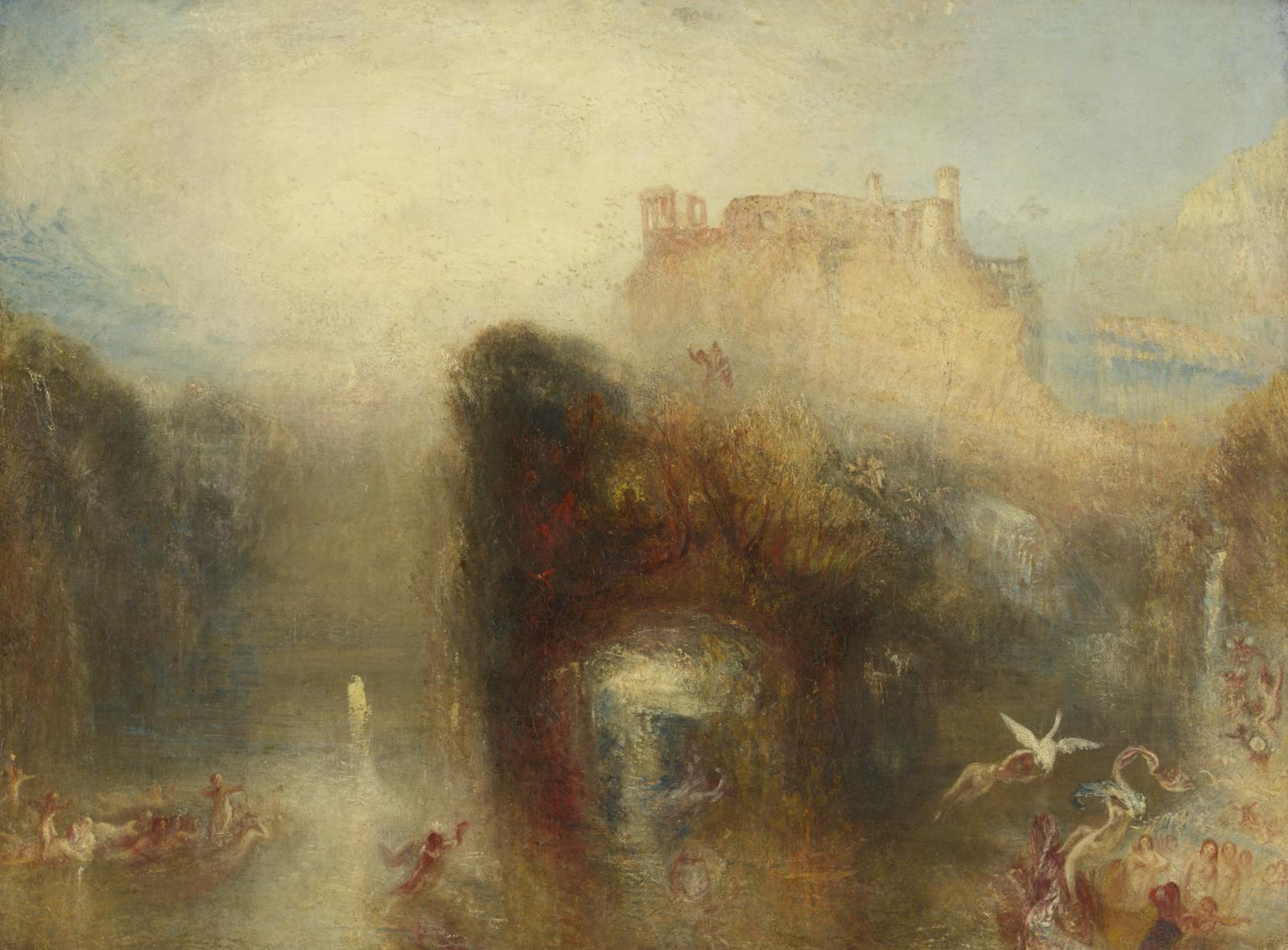
- Artist: Joseph Mallord William Turner
- Date: exhibited 1846
- Medium: Oil paint on canvas
- Dimensions: support: 921 x 1226 mm
- Museum: Tate Britain
- Collection record: Tate Britain website
Listen to the free audio guide
About this artwork
This is the “Queen Mab’s Cave” by Joseph Mallord William Turner. Painted in 1846, the work is an oil on canvas that Turner first showed at the British Institution. One contemporary critic described it as “a daylight dream… of gorgeous, bright, and positive colour, not painted but apparently flung upon the canvas,” a testament to Turner’s daring use of light and colour.
The subject draws on the Shakespearean figure of Queen Mab, the mischievous fairy who rides over sleeping people to reveal hidden hopes. Turner alludes to Shakespeare’s *A Midsummer Night’s Dream* in the painting’s title and mood, and some scholars suggest he may have also been influenced by Percy Bysshe Shelley’s poem *Queen Mab*. The piece’s fantastical landscape—misty water, a cavernous cave, a hint of twilight—captures the dreamlike atmosphere of those works.
John Ruskin, however, offered a harsher view, calling the work a “strange example of the way in which the greatest men may at times lose themselves.” Despite such criticism, the painting was accepted by the nation as part of the Turner Bequest in 1856 and now resides in Tate Britain.
“Queen Mab’s Cave” showcases Turner’s mastery of light and his fascination with the supernatural, blending literary reference with bold, almost theatrical, colour.
See it in person
Queen Mab’s Cave is in the collection of Tate Britain on Millbank, London — free to enter. Point your phone at any artwork there and audioguide.london plays a free audio guide in six languages — no app download needed.