Reapers
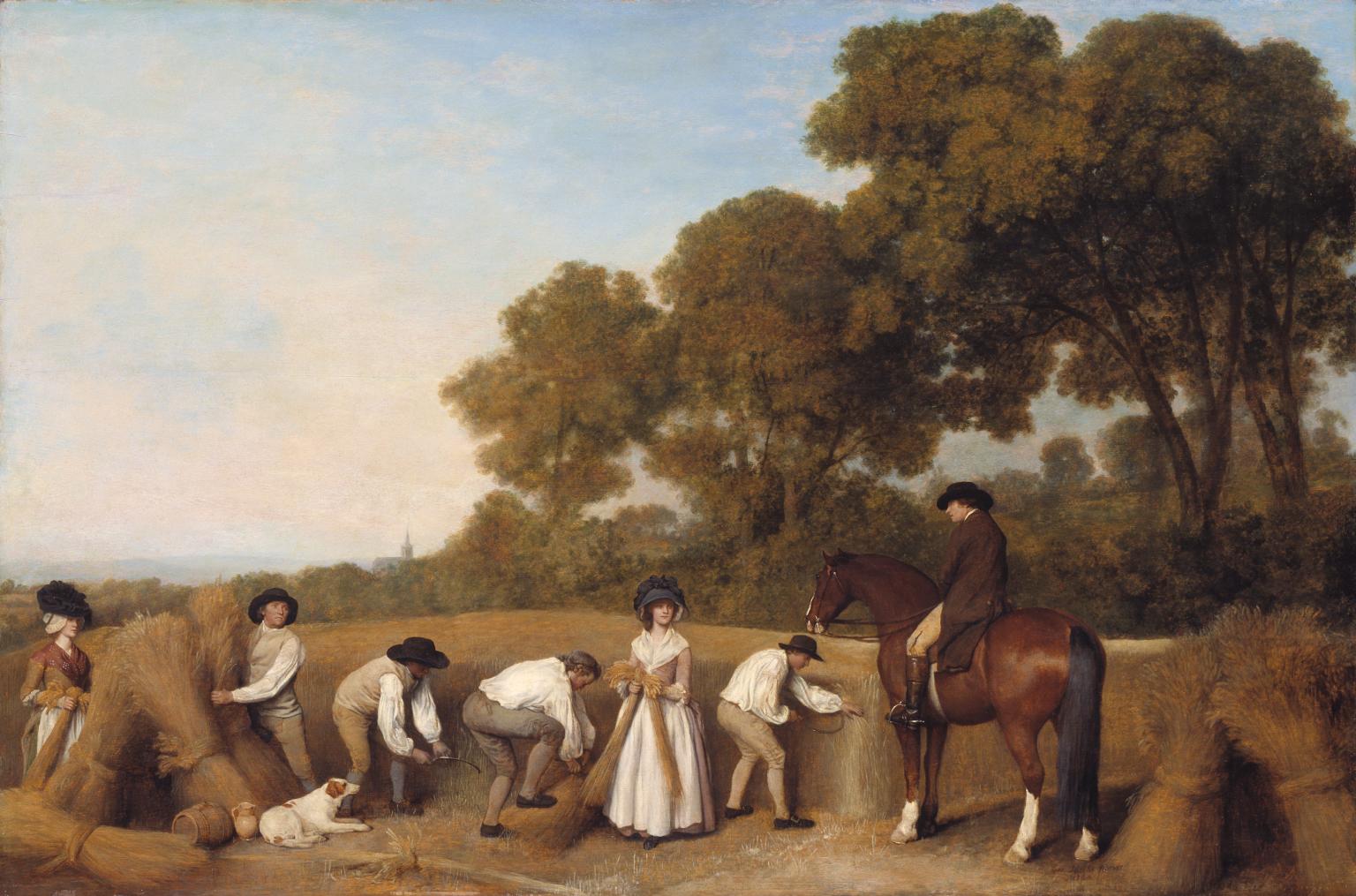
- Artist: George Stubbs
- Date: 1785
- Medium: Oil paint on wood
- Dimensions: support: 899 x 1368 mm
- Museum: Tate Britain
- Collection record: Tate Britain website
Listen to the free audio guide
About this artwork
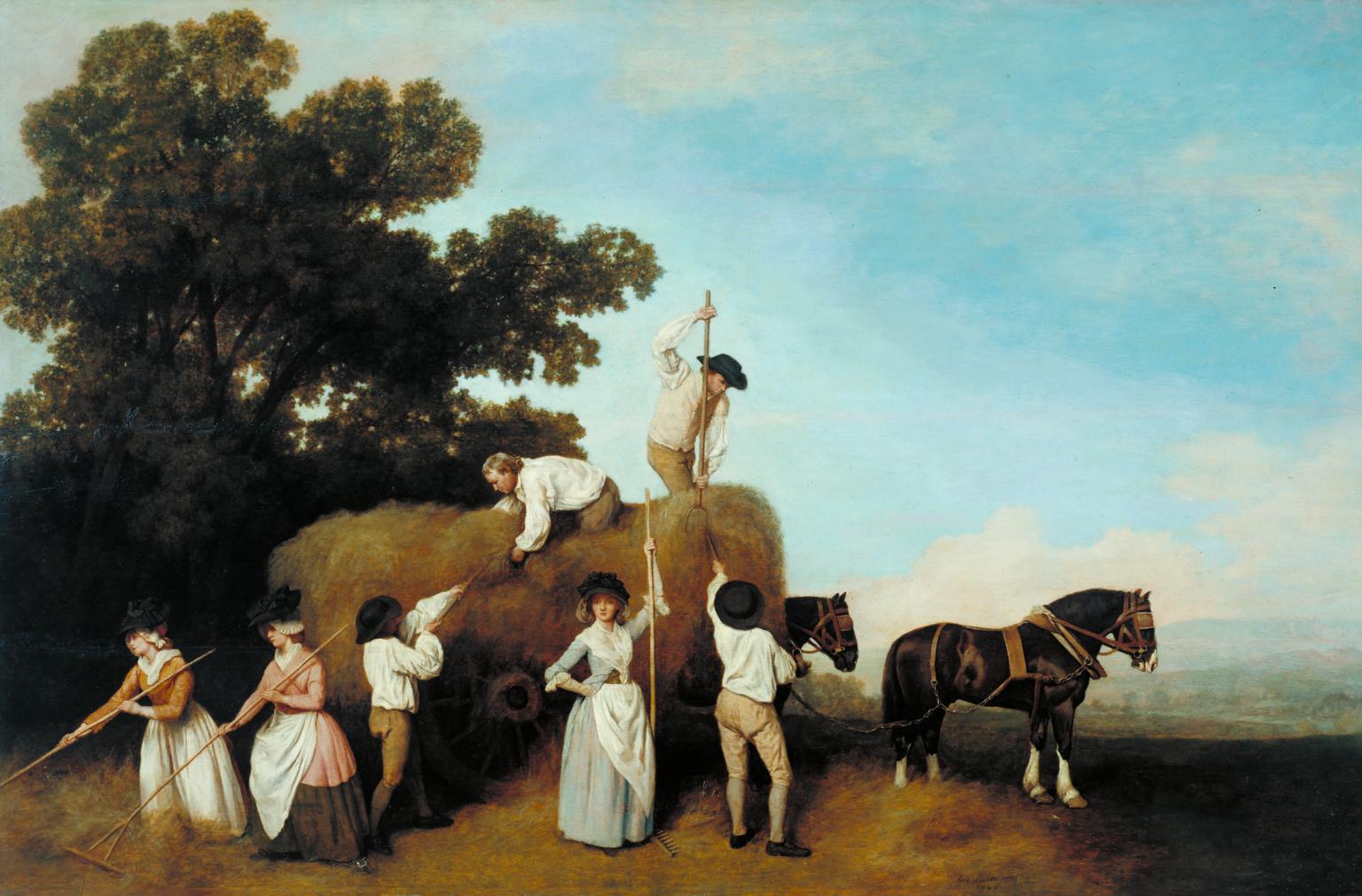
This is the "Reapers" by George Stubbs, painted in 1785. The scene unfolds in a wide field, a cluster of laborers bent over their work, stacked sheaves of wheat, their rhythmic motions a quiet hymn of industry. In the middle, a farm manager on a polished horse lifts his gaze toward the group, a raised position that instantly signals authority and the social hierarchy of rural life. Stubbs’ composition cuts the flow of the workers with this figure, suggesting the tension between individual toil and the oversight of the landed class.
Agricultural efficiency was a hot topic then – the growing, increasingly urban population needed to be fed, and the productivity of the countryside was under scrutiny. Stubbs captures this concern by rendering the workers with a calm, almost idealized realism that can feel both celebratory and slightly detached.
The painting was exhibited at the Royal Academy in 1786 and again in Liverpool in 1787, making it one of Stubbs’ key public works of the period. Its pair counterpart, "Haymakers," mirrors the theme in a different season, together offering a concise study of rural labour and class structure in late eighteenth‑century England.
See it in person
Reapers is in the collection of Tate Britain on Millbank, London — free to enter. Point your phone at any artwork there and audioguide.london plays a free audio guide in six languages — no app download needed.