Haymakers
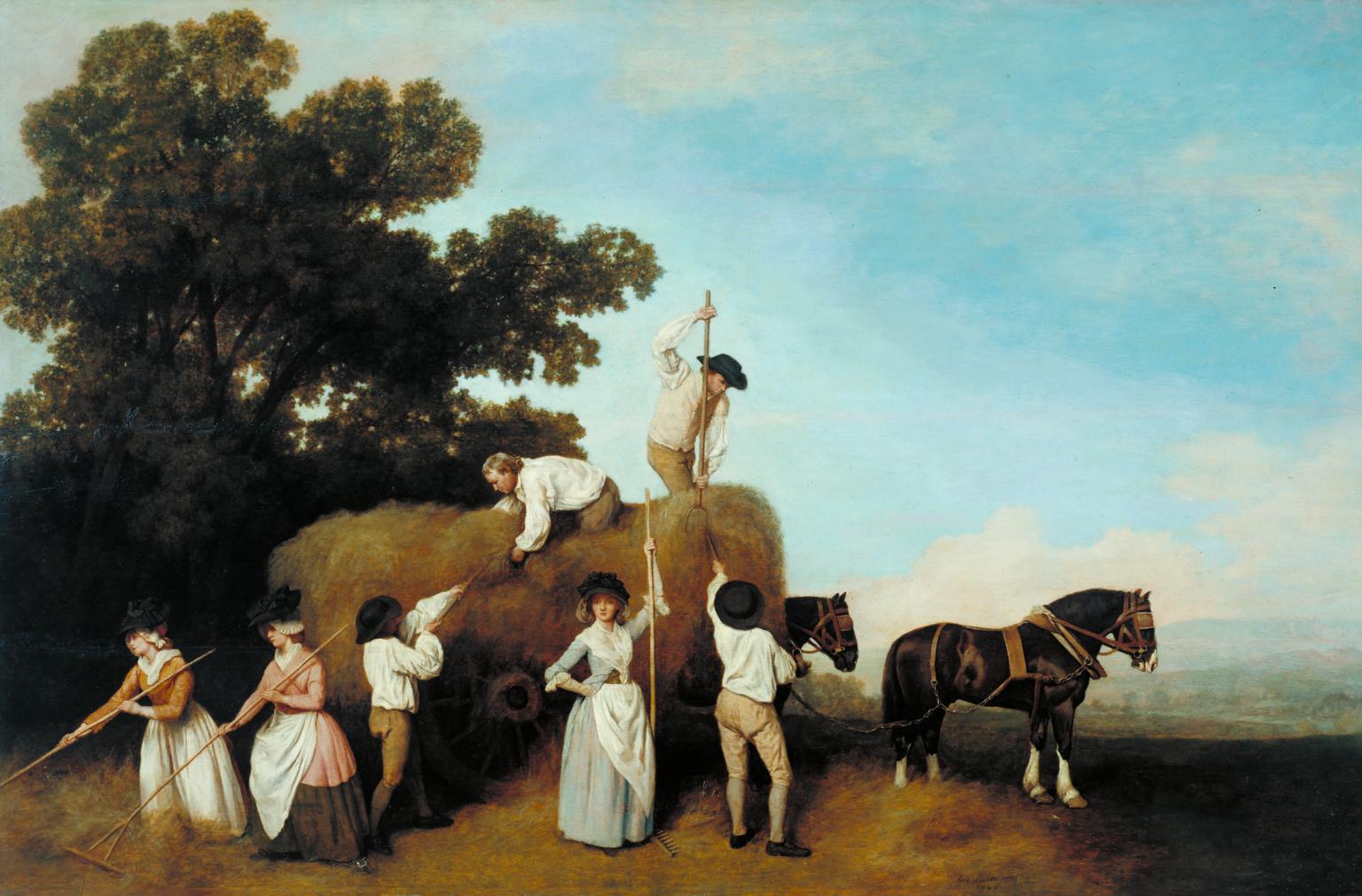
- Artist: George Stubbs
- Date: 1785
- Medium: Oil paint on wood
- Dimensions: support: 895 x 1353 mm
- Museum: Tate Britain
- Collection record: Tate Britain website
Listen to the free audio guide
About this artwork
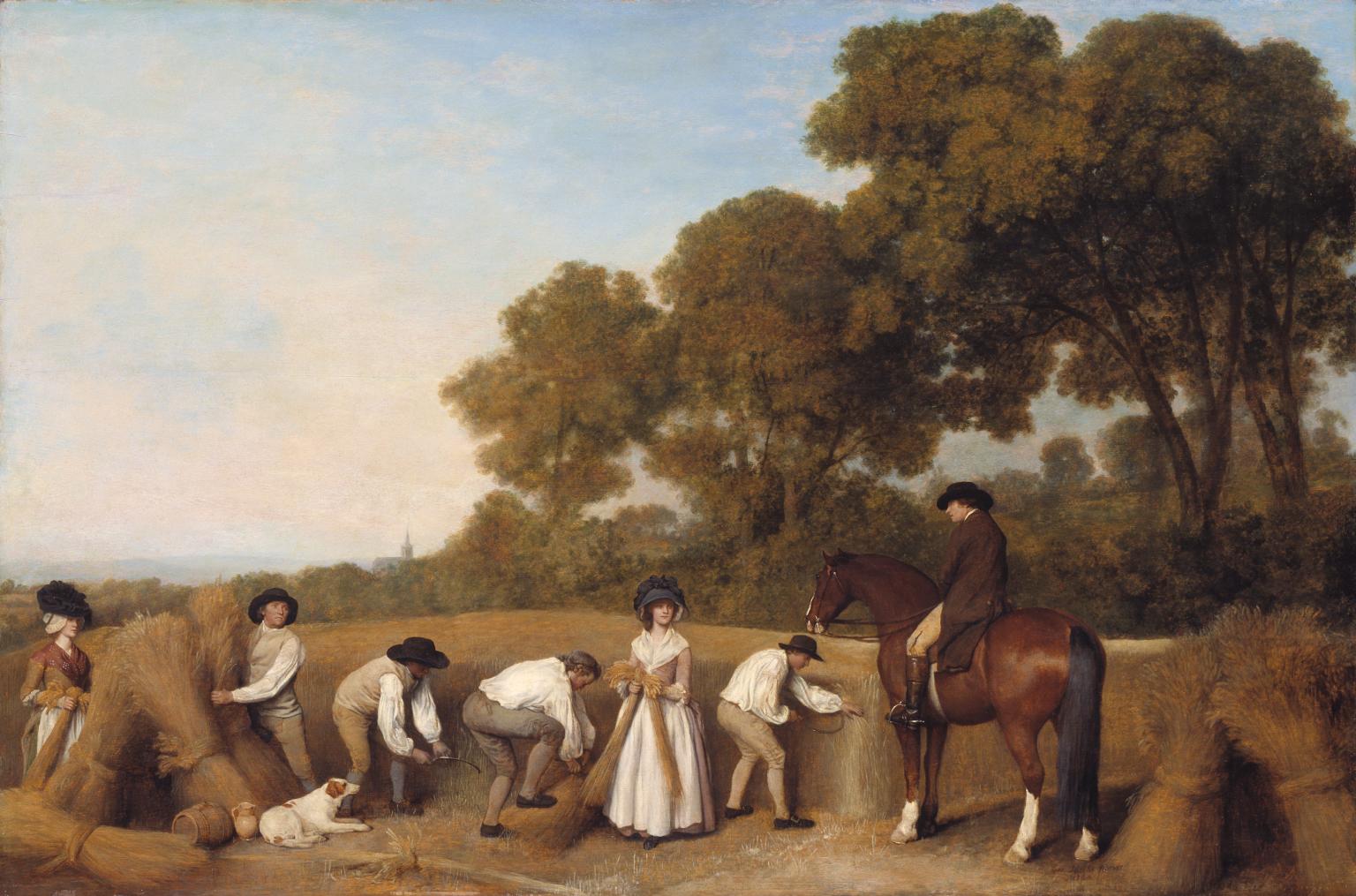
This is the “Haymakers” by George Stubbs, painted in 1785 in oil on wood. It was created as a pair with a companion work titled “Reapers,” reflecting the late‑18th‑century fascination with picturesque rural scenes. Stubbs was meticulous: he observed the rhythm of haymaking, the way the workers moved and the way light fell across the field, and he rendered that realism with a calm precision.
What makes this painting stand out is its idealised harmony. The labourers appear serene, almost statuesque, dressed in clean, orderly garments that hint at dignity and respect. In a time when the harsh realities of farm work were often hidden from wealthy patrons, Stubbs offers a reassuring image of pastoral labour—elegant, spotless, and almost dignified.
The composition itself is balanced: the figures are arranged to lead the eye through the landscape, while the cart and the scattered hay create a sense of movement without chaos. Stubbs later exhibited this pair at the Royal Academy in 1786, and they were also shown in the Society for Promoting Painting and Design in 1787. The work exemplifies how art could both celebrate rural life and provide a polished, almost romantic vision of it.
See it in person
Haymakers is in the collection of Tate Britain on Millbank, London — free to enter. Point your phone at any artwork there and audioguide.london plays a free audio guide in six languages — no app download needed.