Lion statues of Amenhotep III
- Audio guide stop: 208
- Gallery: Room 4
- Audio guide: one commentary for a group of objects shown together
- Museum: The British Museum
- Image © The Trustees of the British Museum, shared under a CC BY-NC-SA 4.0 licence.
Listen to the free audio guide
About these objects
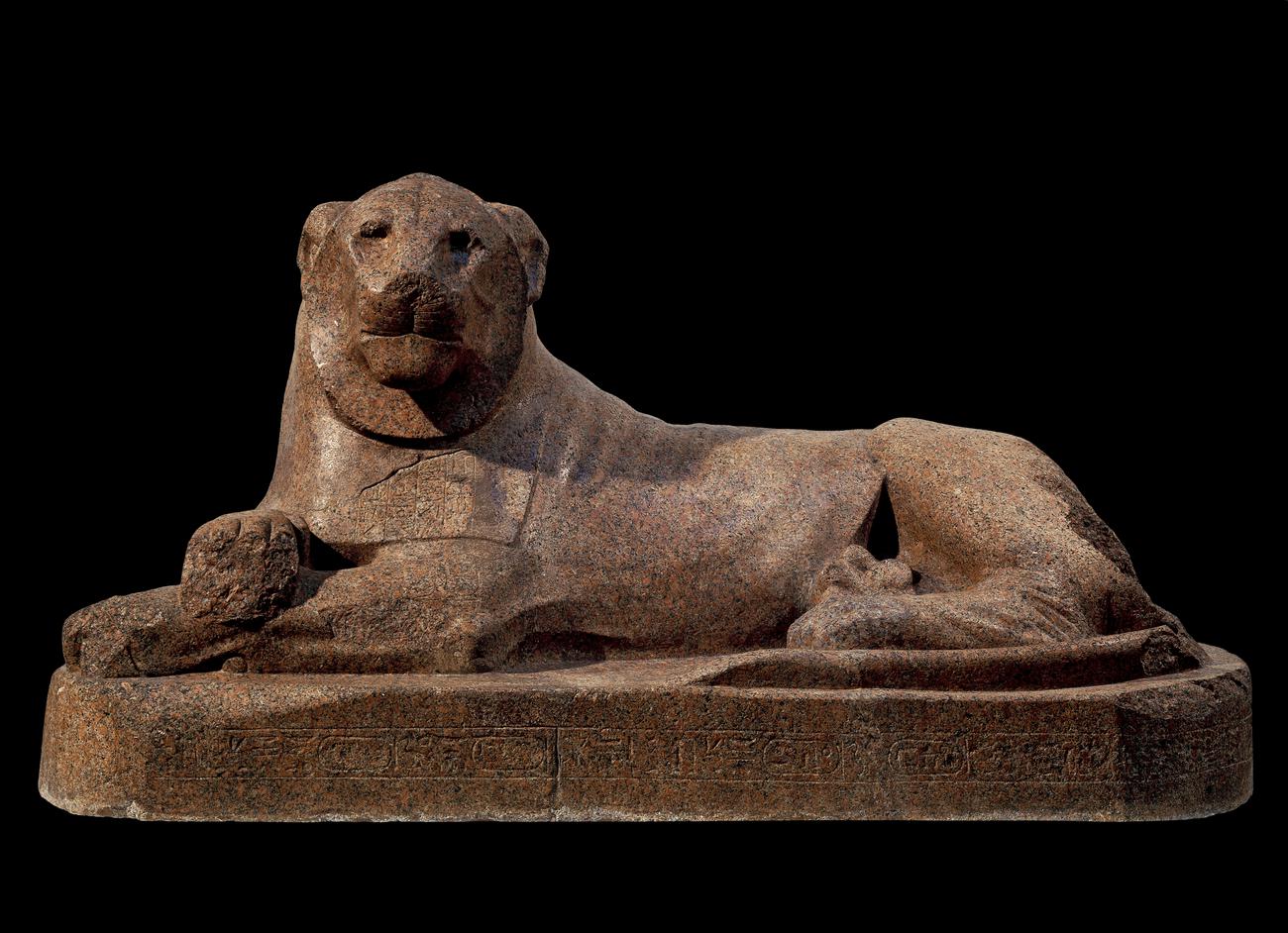
In front of you are the majestic "Prudhoe Lions," monumental statues of recumbent lions from ancient Egypt’s 18th Dynasty. These statues, carved from red granite, were originally created to honor Pharaoh Amenhotep III and were likely linked to temples in Nubia, near modern-day Jebel Barkal or Soleb.
The lions are stylized yet powerful in form, with intricate inscriptions that provide valuable insights into their dedications. Look closely at the lion’s chest and paws—there, you’ll find hieroglyphic inscriptions naming Tutankhamun and a temple official called Amanislo. These texts reveal the role of such statues in religious or commemorative practices, perhaps as guardians or offerings.
One lion bears the inscription “The good god, lion of rulers,” a poetic tribute to Amenhotep III’s strength and role as protector. The carvings were inscribed after the statue was already in place, reflecting how these works may have served multiple purposes through history.
These works highlight the artistic mastery and symbolic depth of New Kingdom sculpture, combining naturalism with deep cultural meaning.
See it in person
Lion statues of Amenhotep III is on display in Room 4 at the British Museum on Great Russell Street, Bloomsbury, London — free to enter. Choose British Museum on audioguide.london and type its audio guide stop number, 208, from the gallery label, or take a photo of it, to hear this free audio guide in six languages — no app download needed.
New, in beta. British Museum support has just launched and is still improving: over 1,000 objects so far, with more added all the time.