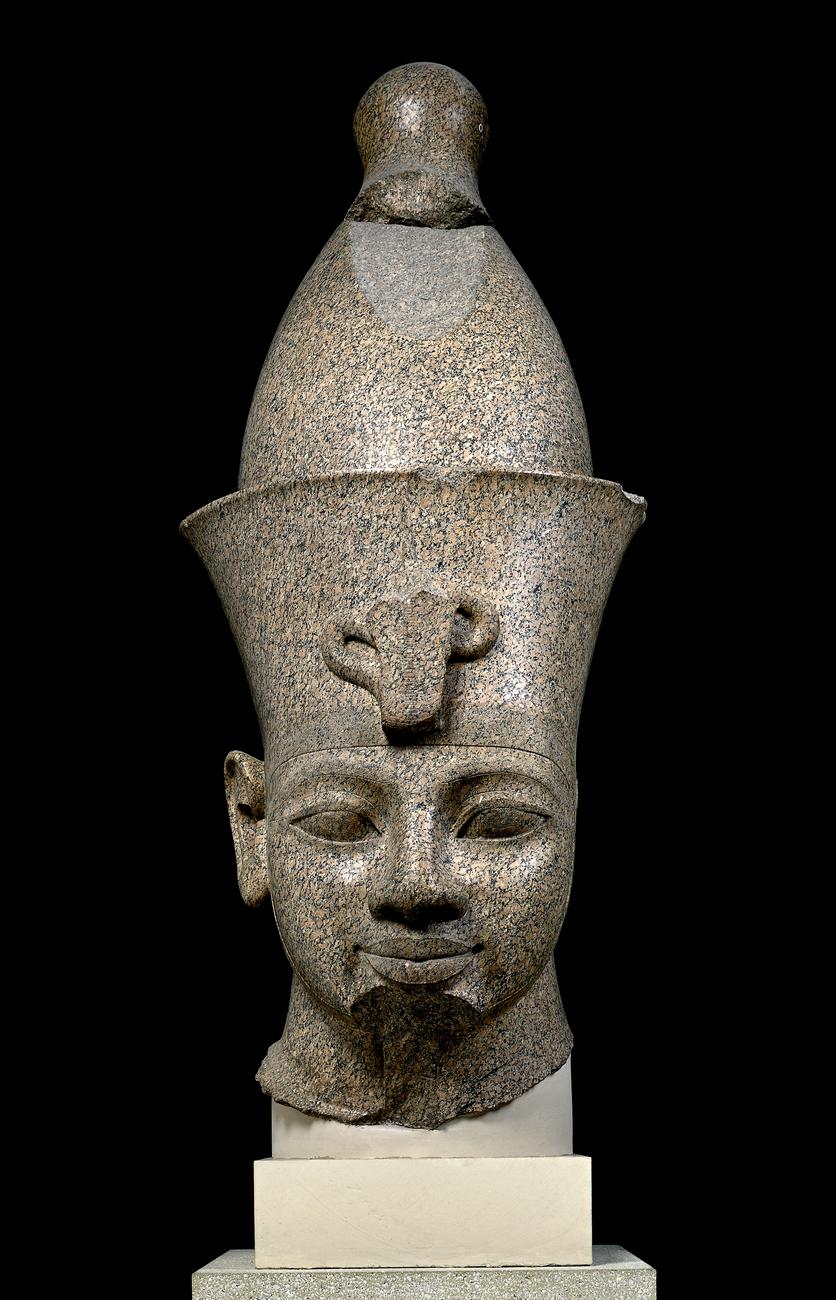
Head and arm from a statue of King Amenhotep III
- Audio guide stop: 205
- Gallery: Room 4
- Audio guide: one commentary for a group of objects shown together
- Museum: The British Museum
- Image © The Trustees of the British Museum, shared under a CC BY-NC-SA 4.0 licence.
Listen to the free audio guide
About these objects
In front of you are two pieces of a once-majestic statue—this is the head and arm of a giant red granite statue, possibly of King Amenhotep III. These fragments come from a monumental sculpture originally hailing from the 18th Dynasty, around 1370 BCE. The statue was found at Karnak, near Thebes, where a temple called Khonspakhered stood long ago. Though some once believed these parts were of Thutmose III, they may actually belong to Amenhotep III, known for his grand building projects in ancient Egypt.
Looking closely, you'll notice the intricate detailing in the granite—this is a heavy, hard material chosen for its strength and enduring beauty. The head shows the double crown, a symbol of unifying Upper and Lower Egypt, and the arm remains strong and lifelike, with the fist clenched. These pieces once formed part of a towering statue, some of which can still be seen in the temple complex today.
Curators have tracked the head’s journey since 1818, when it was stored in Cairo. The statue was uncovered in 1817—an exciting discovery back then, and a powerful glimpse into royal iconography today.
See it in person
Head and arm from a statue of King Amenhotep III is on display in Room 4 at the British Museum on Great Russell Street, Bloomsbury, London — free to enter. Choose British Museum on audioguide.london and type its audio guide stop number, 205, from the gallery label, or take a photo of it, to hear this free audio guide in six languages — no app download needed.
New, in beta. British Museum support has just launched and is still improving: over 1,000 objects so far, with more added all the time.