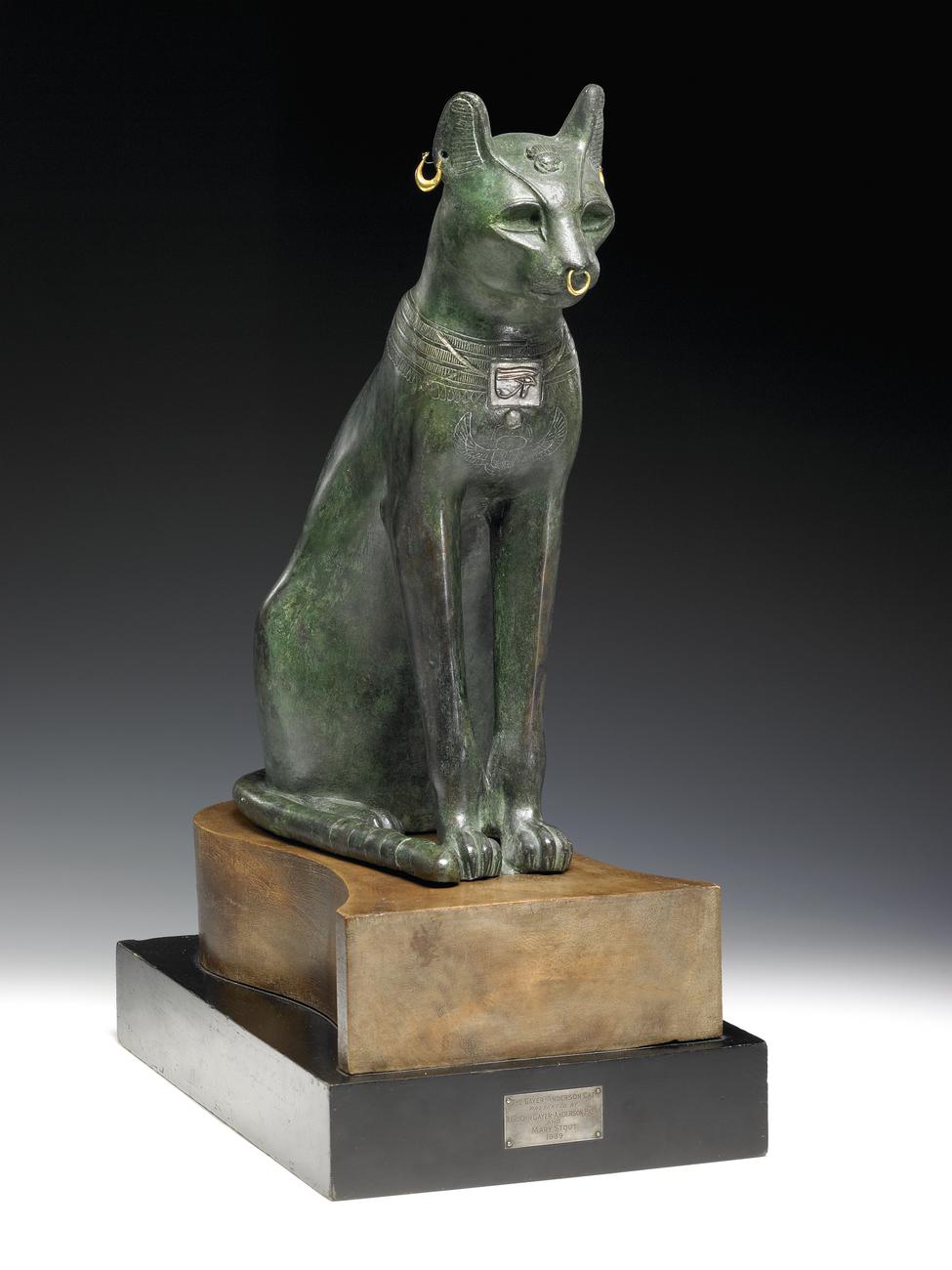
Figure of seated cat
- Audio guide stop: 202
- Gallery: Room 4
- Culture: Late Period
- Object type: animal coffin, figure
- Materials: copper alloy; gold; silver
- Museum number: EA64391
- Museum: The British Museum
- Collection record: British Museum website
- Image © The Trustees of the British Museum, shared under a CC BY-NC-SA 4.0 licence.
Listen to the free audio guide
About this object
This is The Gayer-Anderson Cat, a stunning copper alloy figure of a seated cat from Egypt’s Late Period. The cat’s tail curls around its body, and its eyes are set into hollowed spaces that once held colorful inlays, now missing. A small scarab is carved in relief on the cat's forehead, a symbol of rebirth. Around the neck is a detailed incised collar with a sacred wedjat eye pectoral and a silver sun-disc held by a winged scarab—one of the most intricate animal coffins known. The ears, nose, and tail have pierced details suggesting gold and silver adornments. Two metal tangs suggest the figure may have once been mounted on a plinth. Likely containing a mummified cat within, this object reflects the deep reverence Egyptians had for cats, particularly as protectors and sacred animals. Donated to the museum in 1939, it remains one of the finest examples of feline mummification artistry ever found.
See it in person
Figure of seated cat is on display in Room 4 at the British Museum on Great Russell Street, Bloomsbury, London — free to enter. Choose British Museum on audioguide.london and type its audio guide stop number, 202, from the gallery label, or take a photo of it, to hear this free audio guide in six languages — no app download needed.
New, in beta. British Museum support has just launched and is still improving: over 1,000 objects so far, with more added all the time.