Kushite temple-relief
- Gallery: Room 65
- Culture: Kushite; Meroitic
- Date: 2ndC BC
- Object type: temple-relief
- Materials: sandstone
- Museum number: EA719
- Museum: The British Museum
- Collection record: British Museum website
- Image © The Trustees of the British Museum, shared under a CC BY-NC-SA 4.0 licence.
Listen to the free audio guide
About this object
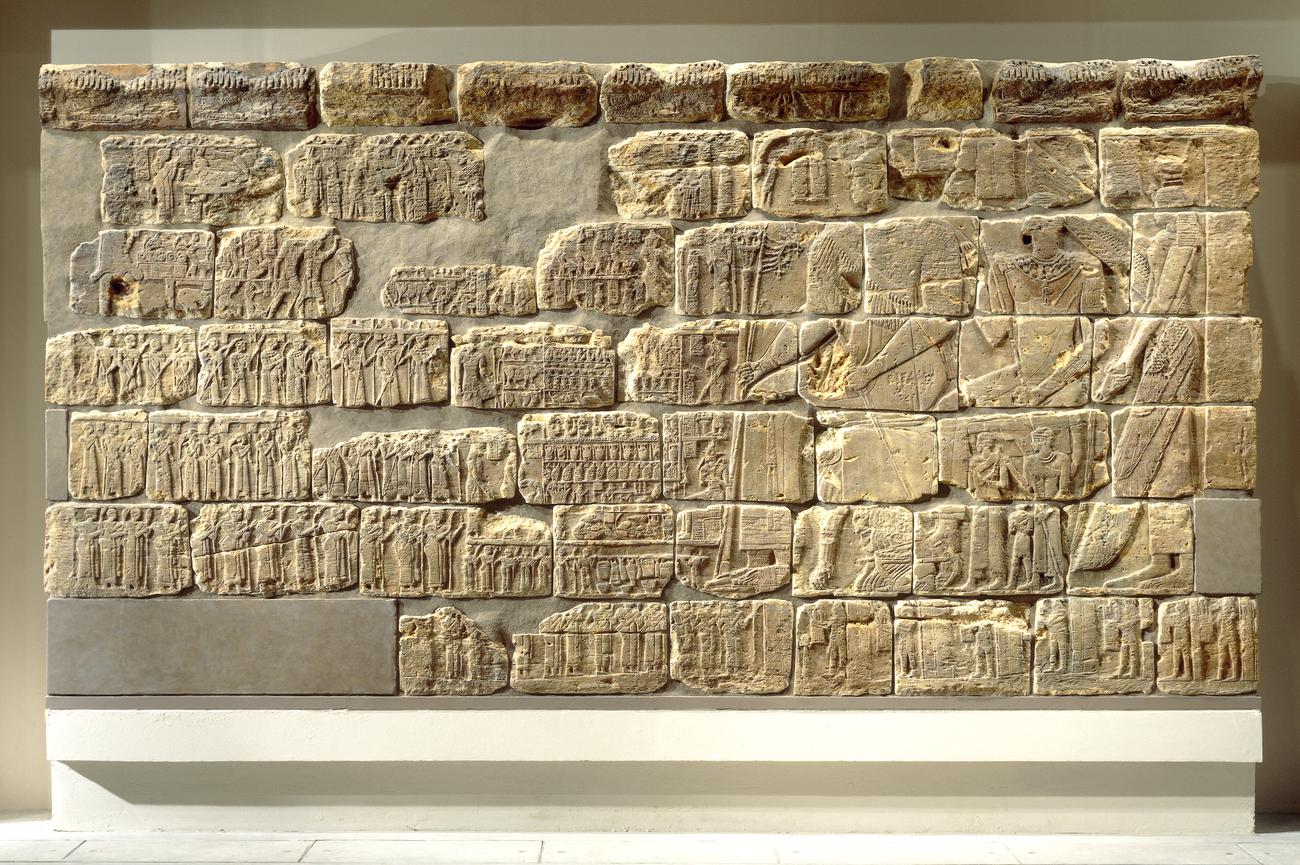
Before you stands a remarkable sandstone relief from a funerary chapel in ancient Nubia, created during the 2nd century BC. This intricate artwork comes from the south wall of Queen Shanakdakhete’s chapel, one of the earliest known female rulers of the region.
The relief is composed of fifty-one separate blocks, each fitted together to form a rich and detailed scene. On the right side, the queen is seated on a throne, with a figure believed to be a prince seated behind her, both protected by the outstretched wings of the goddess Isis. Alongside them, there are multiple registers of scenes, including processions of attendants holding palm branches and symbolic religious imagery.
The style echoes traditional Egyptian art, but with distinctive Kushite elements such as stylized figures and heavier shapes. Despite the absence of hieroglyphs, traces of Meroitic script hint at important textual details no longer fully legible. This piece offers a rare glimpse into the artistic and spiritual world of ancient Nubia, an area that, while influenced by Egypt, developed its own unique cultural and artistic identity.
See it in person
Kushite temple-relief is on display in Room 65 at the British Museum on Great Russell Street, Bloomsbury, London — free to enter. Choose British Museum on audioguide.london and take a photo of it to hear this free audio guide in six languages — no app download needed.
New, in beta. British Museum support has just launched and is still improving: over 1,000 objects so far, with more added all the time.