Sphinx of King Taharqo
- Audio guide stop: 342
- Gallery: Room 65
- Culture: Kushite; Napatan
- Date: 680BC (c.)
- Object type: statue
- Materials: granite gneiss
- Museum number: EA1770
- Museum: The British Museum
- Collection record: British Museum website
- Image © The Trustees of the British Museum, shared under a CC BY-NC-SA 4.0 licence.
Listen to the free audio guide
About this object
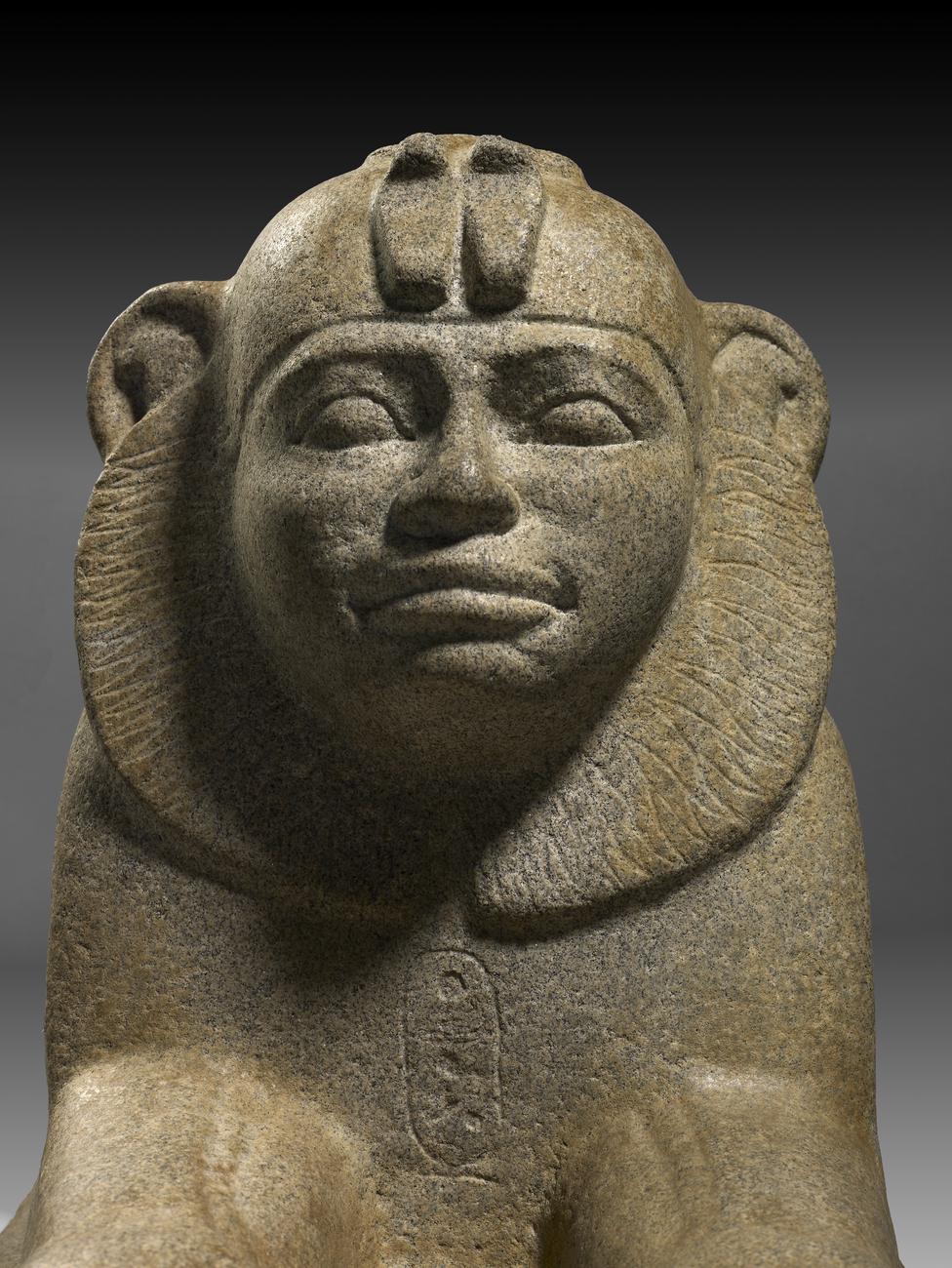
Before you is the "Sphinx of King Taharqo," a powerful and beautifully carved statue from the ancient Kushite culture. You're looking at a granite gneiss sphinx wearing a skull-cap and a double uraeus, the symbolic cobras worn by Egyptian and Kushite royalty. Notice the cartouche at its chest—this identifies the figure as King Taharqo, who ruled in the seventh century BC.
This sphinx was discovered in Kawa, in what is now Sudan, a region with strong ties to Egyptian art and language. The sculpture's design reflects a deep connection to Egyptian traditions, especially in how the kings of the Kushite dynasty used familiar imagery to emphasize their power and legitimacy.
Look closely at the head and neck—its style echoes older Egyptian forms from the Middle Kingdom, showing a deliberate artistic choice. The furrows on the face and detailed mane are also hallmarks of the Kushite period. This piece not only demonstrates skilled craftsmanship but also tells the story of a dynasty that blended Egyptian traditions with its own strong regional identity.
See it in person
Sphinx of King Taharqo is on display in Room 65 at the British Museum on Great Russell Street, Bloomsbury, London — free to enter. Choose British Museum on audioguide.london and type its audio guide stop number, 342, from the gallery label, or take a photo of it, to hear this free audio guide in six languages — no app download needed.
New, in beta. British Museum support has just launched and is still improving: over 1,000 objects so far, with more added all the time.