Kushano-Sasanian plate
- Gallery: Room 52
- Culture: Kushano-Sasanian
- Date: 4thC(late) (?)
- Object type: plate
- Materials: silver; gold
- Museum number: 124093
- Museum: The British Museum
- Collection record: British Museum website
- Image © The Trustees of the British Museum, shared under a CC BY-NC-SA 4.0 licence.
Listen to the free audio guide
About this object
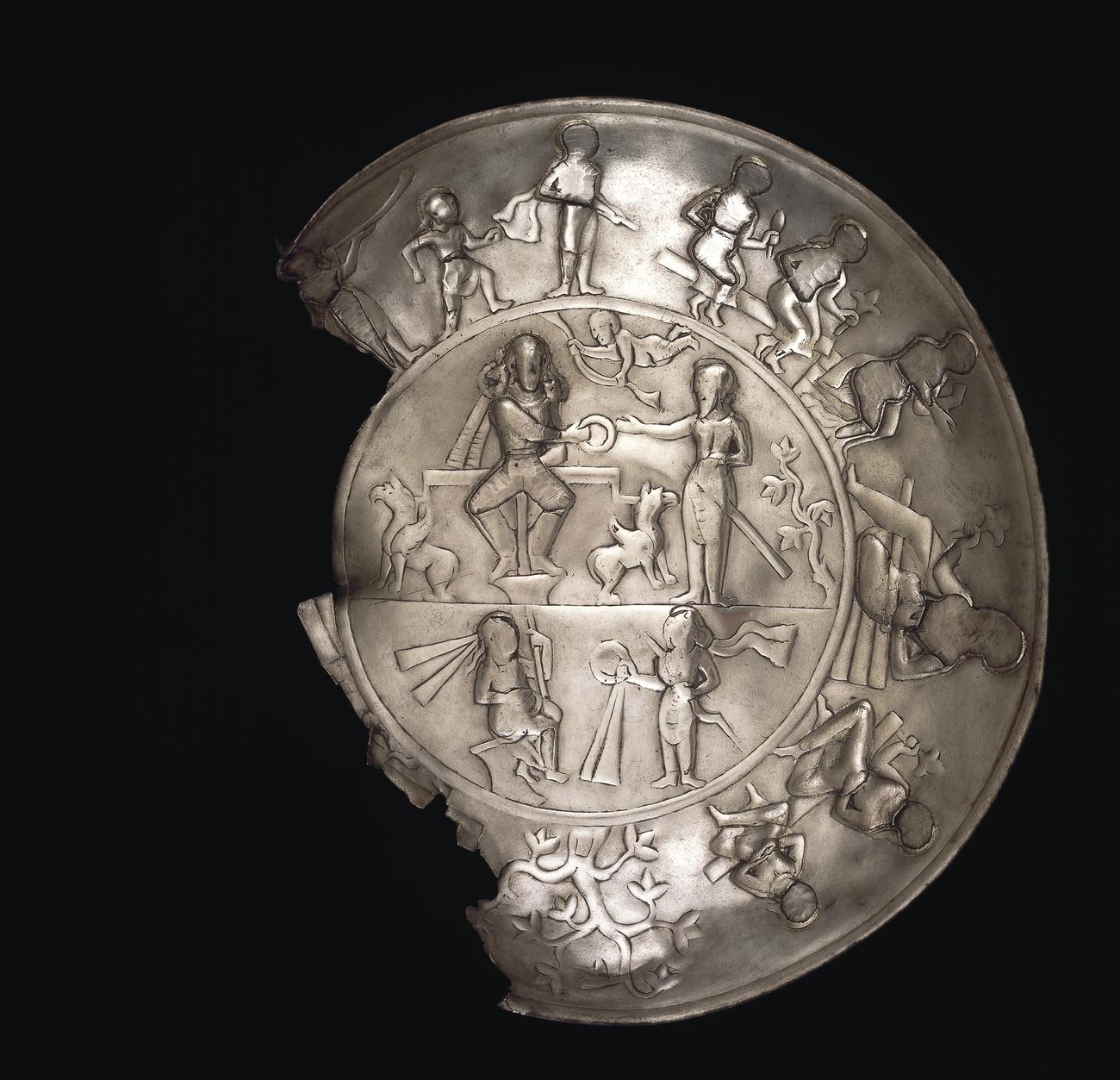
This is a Kushano-Sasanian silver plate from the late fourth century AD. Before you is a fragmentary, shallow dish with hammered and engraved decoration, featuring gilded details. At the center sits a royal figure, crowned or supported by griffins, offering a ring to another standing figure. Above them floats a small, ribboned figure—perhaps a cupbearer.
The lower section shows a man offering a ring to a long-haired figure, possibly a woman, wearing flowing ribbons. Around these scenes, more figures recline or dance, creating a lively banquet scene.
The plate's construction is remarkable. Each figure is built from separate pieces, carefully crimped onto the base. While damaged, the main symbols remain. Scholars suggest possible Sasanian or eastern Iranian influence, but its exact meaning remains a mystery.
This piece was acquired in Rawalpindi and bequeathed to the museum by Sir Augustus Wollaston Franks. It offers a rare glimpse into the artistic traditions of Central Asia during a time of cultural exchange.
See it in person
Kushano-Sasanian plate is on display in Room 52 at the British Museum on Great Russell Street, Bloomsbury, London — free to enter. Choose British Museum on audioguide.london and take a photo of it to hear this free audio guide in six languages — no app download needed.
New, in beta. British Museum support has just launched and is still improving: over 1,000 objects so far, with more added all the time.