Achaemenid relief
- Gallery: Room 52
- Culture: Achaemenid
- Made in: Persepolis
- Date: 4thC BC (?)
- Object type: relief
- Materials: limestone (grey)
- Museum number: 129381
- Museum: The British Museum
- Collection record: British Museum website
- Image © The Trustees of the British Museum, shared under a CC BY-NC-SA 4.0 licence.
Listen to the free audio guide
About this object
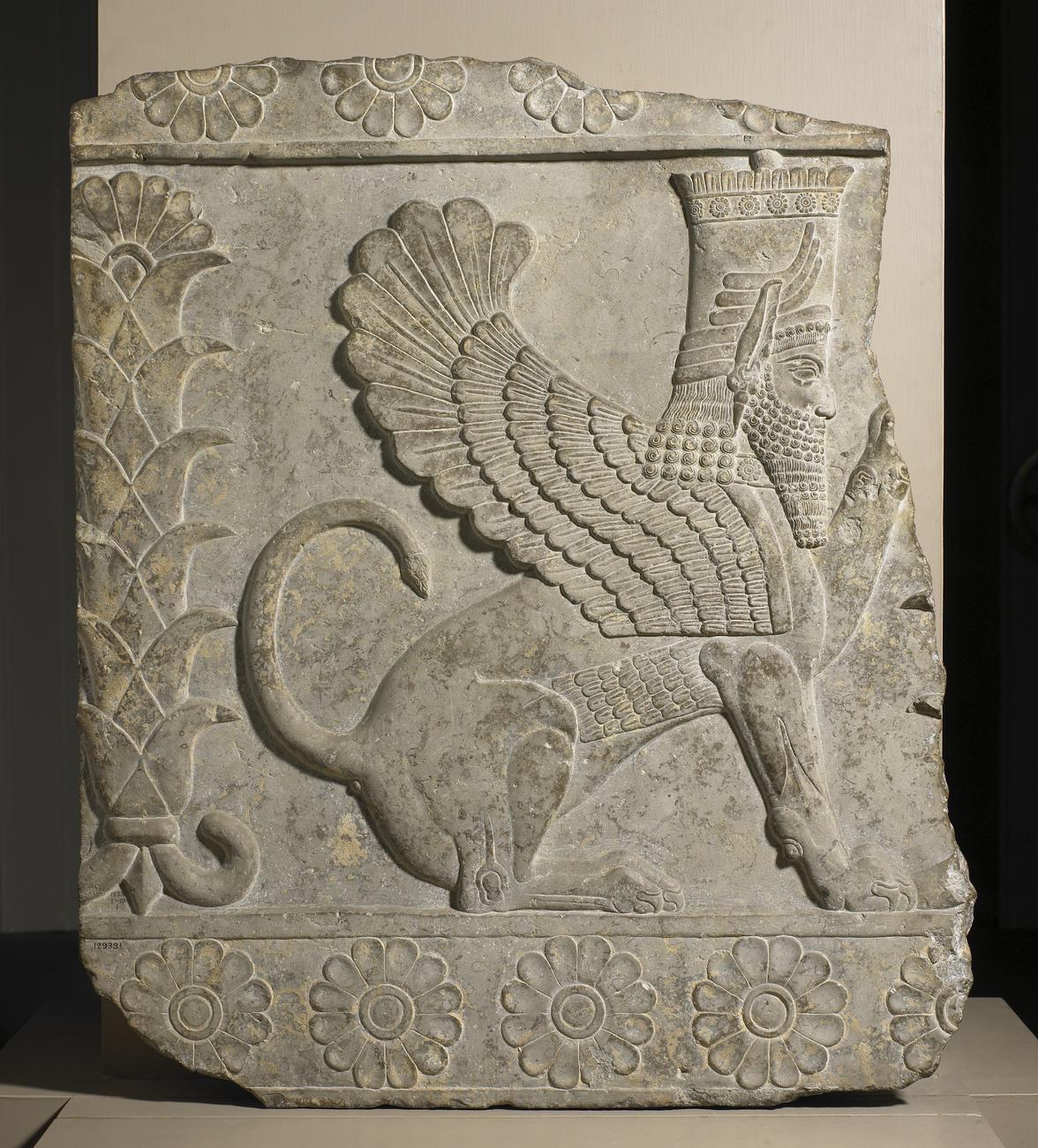
Before you stands a fragment of a limestone relief from Persepolis, a masterpiece of Achaemenid art. Carved from grey limestone, it features a seated bearded sphinx, its head crowned with a divine horned headdress adorned with rosettes. The sphinx’s raised forepaw suggests a gesture of reverence—an original pair once framed a winged disc, representing Ahuramazda.
Notice the lotus stem behind the figure and the richly detailed earring, once touched by green pigment. Though some traces may be modern, similar colors appear elsewhere at Persepolis. The piece originates from Palace G, later moved to Palace H during the 4th century BC.
This relief offers rare insight into Persian imperial art. Discovered in 1826 and later acquired by the British Museum through donation and purchase, it reflects both ancient craftsmanship and a history of exploration.
See it in person
Achaemenid relief is on display in Room 52 at the British Museum on Great Russell Street, Bloomsbury, London — free to enter. Choose British Museum on audioguide.london and take a photo of it to hear this free audio guide in six languages — no app download needed.
New, in beta. British Museum support has just launched and is still improving: over 1,000 objects so far, with more added all the time.