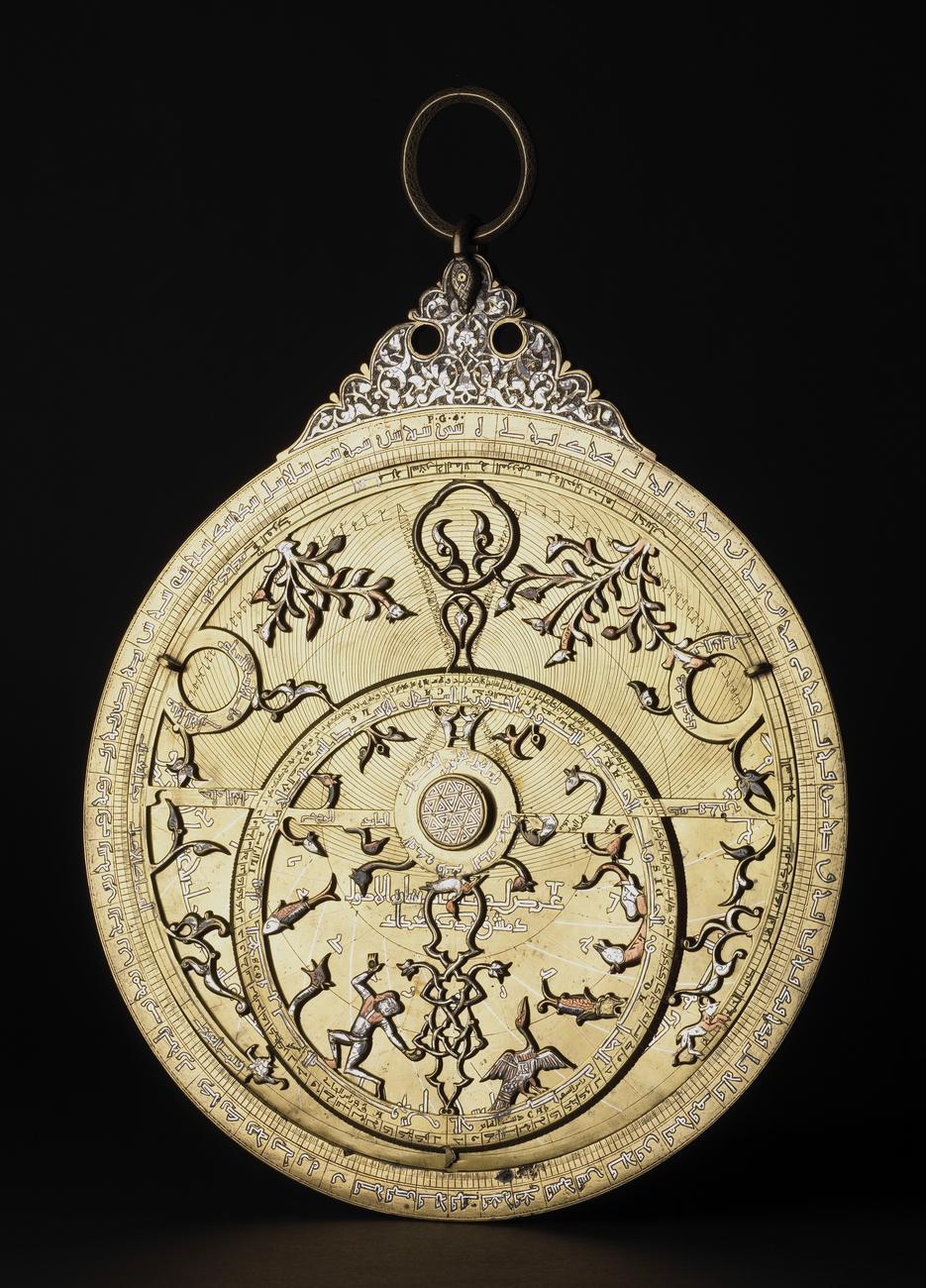
Ayyubid dynasty astrolabe
- Gallery: Room 42
- Maker: al-Misri, Abd al-Karim
- Culture: Ayyubid dynasty
- Made in: Turkey (?); Iraq (?); Syria (?)
- Date: 1241/2 (AH 638)
- Object type: astrolabe
- Materials: brass; copper; silver
- Museum number: 1855,0709.1
- Museum: The British Museum
- Collection record: British Museum website
- Image © The Trustees of the British Museum, shared under a CC BY-NC-SA 4.0 licence.
Listen to the free audio guide
About this object
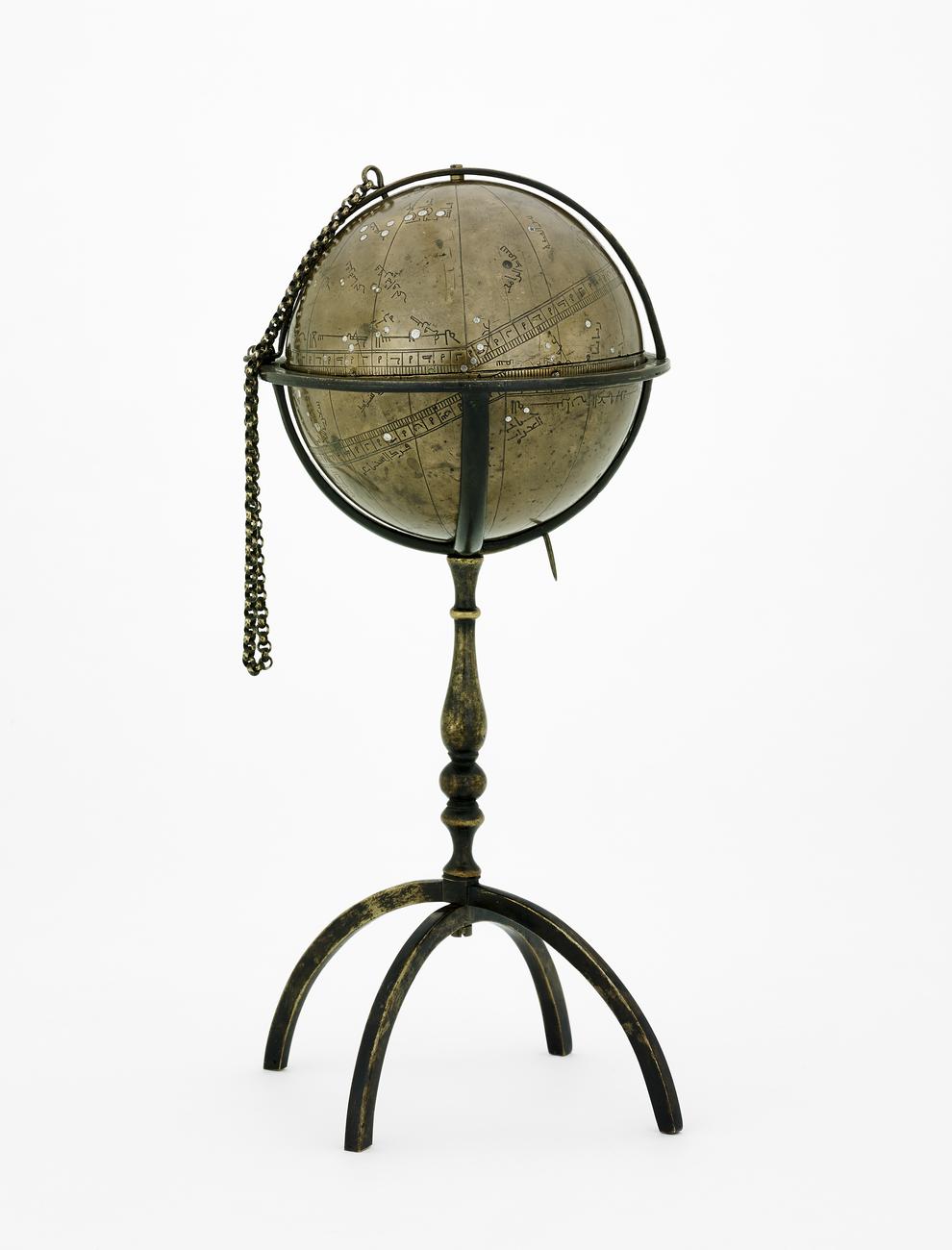
This is an astrolabe crafted during the Ayyubid dynasty, made of brass and inlaid with silver and copper. It features intricate designs and engraved inscriptions on the back, including the maker’s mark: "Abd al-Karim al-Asturlabi," which means "The Astrolabist." Three names of potential royal patrons are also engraved: al-Malik, al-Mu'izz, and Shihab al-Din.
Look closely at the front and back of the astrolabe—you’ll notice figural designs representing constellations. The detailed craftsmanship and larger-than-typical size suggest it may have been a decorative presentation piece rather than a tool for everyday use.
Such instruments were vital for determining prayer times and finding the direction of Mecca, central to Islamic religious practice. This piece exemplifies the transmission of Greek scientific knowledge into the Islamic world and shows the cultural importance of astronomy in medieval societies.
Made by Abd al-Karim al-Misri around 1241, it represents a rare and significant example of scientific artistry from the Ayyubid period.
See it in person
Ayyubid dynasty astrolabe is on display in Room 42 at the British Museum on Great Russell Street, Bloomsbury, London — free to enter. Choose British Museum on audioguide.london and take a photo of it to hear this free audio guide in six languages — no app download needed.
New, in beta. British Museum support has just launched and is still improving: over 1,000 objects so far, with more added all the time.