Ancient South Arabian sculpture
- Gallery: Room 42
- Culture: Ancient South Arabian
- Made in: Yemen
- Date: 3rdC BC-2ndC BC (possibly)
- Object type: sculpture
- Materials: calcite; shell
- Museum number: 140658
- Museum: The British Museum
- Collection record: British Museum website
- Image © The Trustees of the British Museum, shared under a CC BY-NC-SA 4.0 licence.
Listen to the free audio guide
About this object
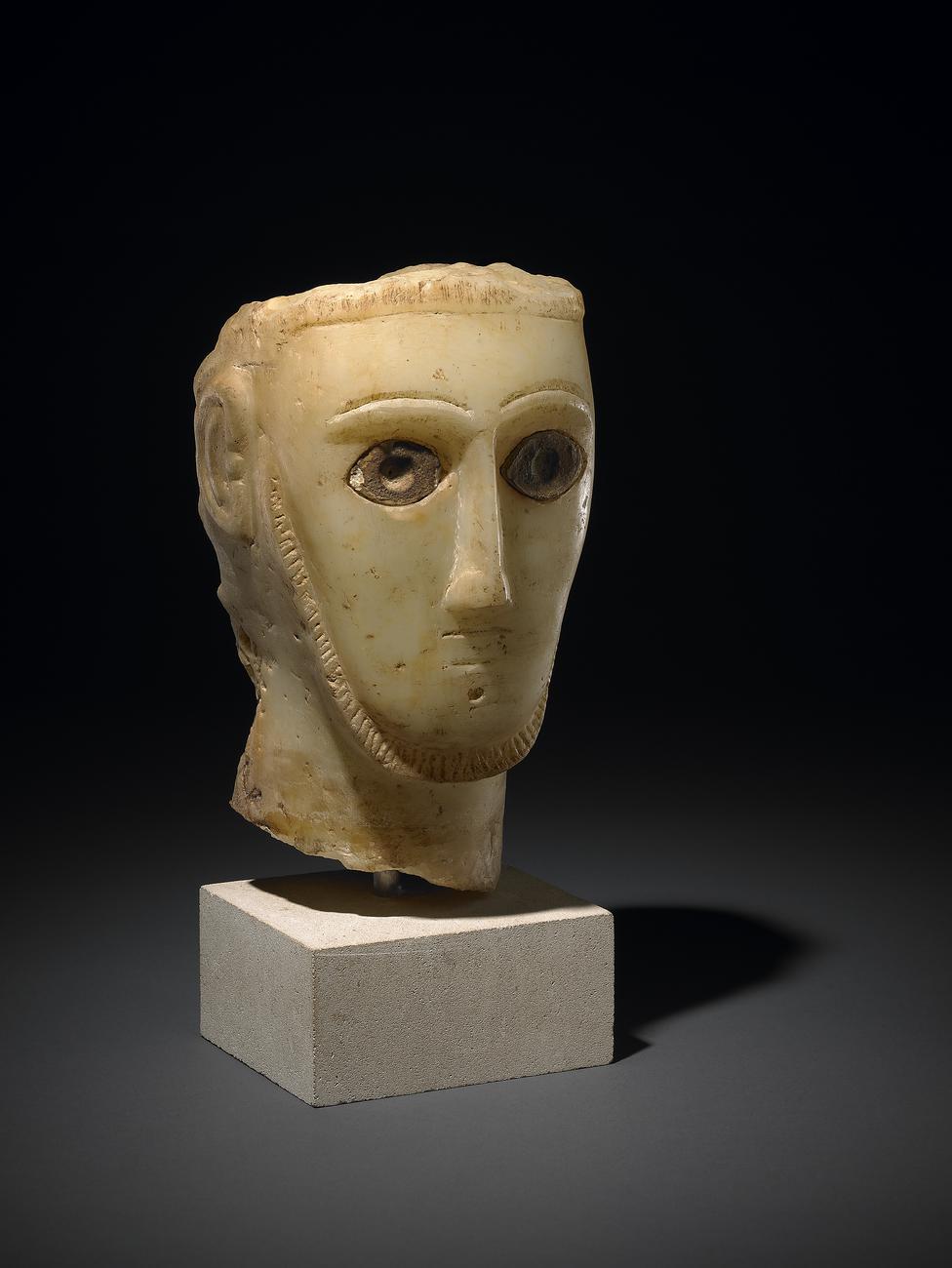
This Ancient South Arabian sculpture represents a male head carved from calcite-alabaster. You can observe a neatly trimmed beard, shown with a row of short incised lines, and a small chin dimple that may have held an inlay. The eyes originally featured shell inlays, though the colored stone pupils are missing. The ears are more crudely carved, and the back and top were deliberately unfinished — likely because the head was meant to be displayed in a niche and not viewed from all sides.
Carved in the 3rd to 2nd century BC, it was probably found in the cemetery area of Hayd ibn Aqil in Yemen. Originally, shell and stone inlays were added, but unlike other regions, the South Arabian artists left the limestone-like calcite exposed, valuing its natural beauty. The piece was presented to Sir Charles Johnston by the Emir of Bayhan during his time as a British official in Aden.
See it in person
Ancient South Arabian sculpture is on display in Room 42 at the British Museum on Great Russell Street, Bloomsbury, London — free to enter. Choose British Museum on audioguide.london and take a photo of it to hear this free audio guide in six languages — no app download needed.
New, in beta. British Museum support has just launched and is still improving: over 1,000 objects so far, with more added all the time.