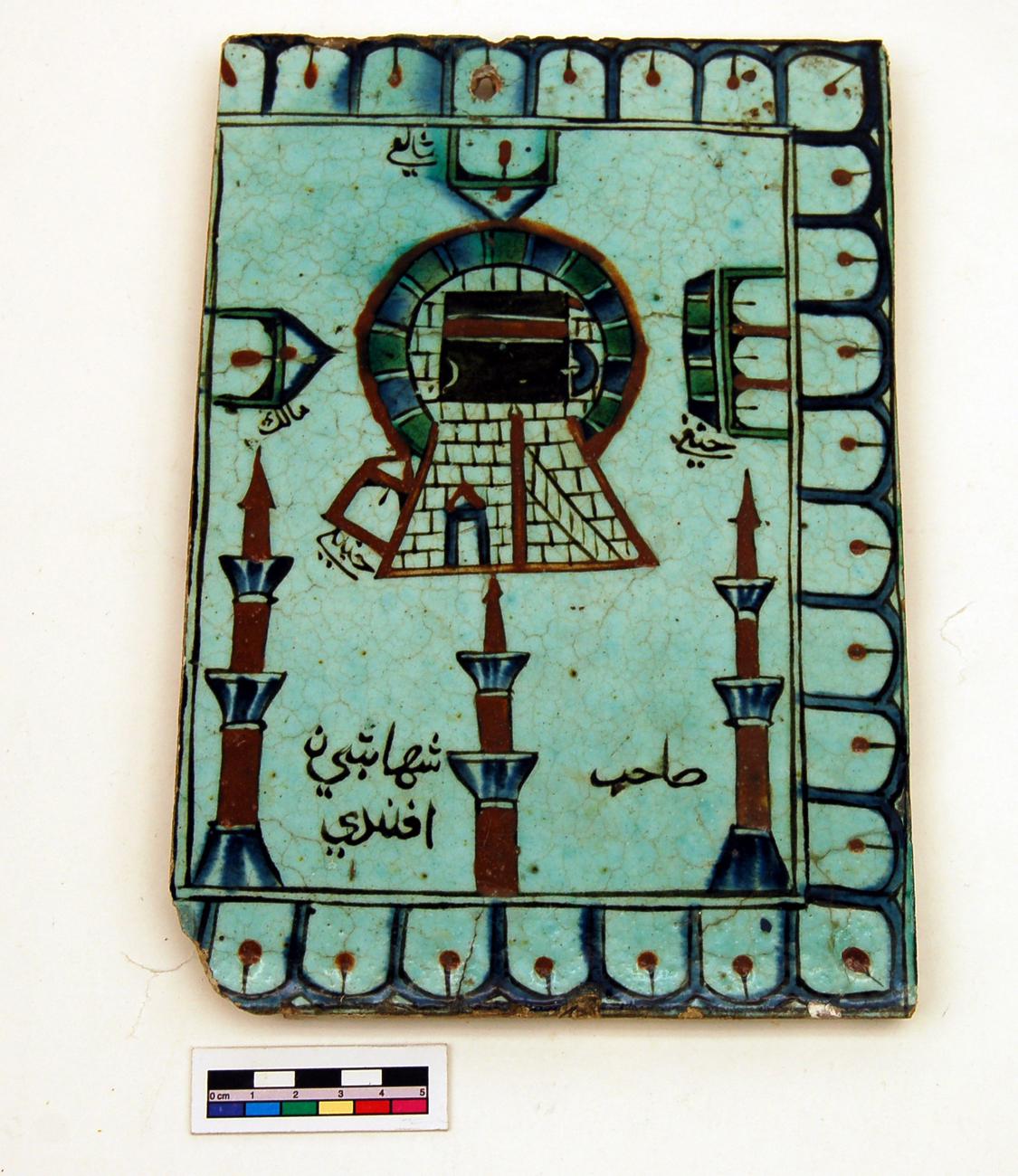
Ka'ba tile
- Audio guide stop: 629
- Gallery: Room 42
- Culture: Ottoman dynasty
- Made in: Iznik (?); Kütahya (city) (?)
- Date: 17thC (mid)
- Object type: tile
- Materials: stonepaste
- Museum number: 2009,6039.1
- Museum: The British Museum
- Collection record: British Museum website
- Image © The Trustees of the British Museum, shared under a CC BY-NC-SA 4.0 licence.
Listen to the free audio guide
About this object
This is a "Ka'ba tile," a small but intricate piece of art from the 17th century. It shows the sacred shrine at Mecca known as the Masjid al-Haram, or the Sacred Mosque. At the center stands the Ka’ba, with a marked spot for the Black Stone. Around it are four architectural forms that represent the four schools of Islamic law. The tile is inscribed with the name of its owner, Shehab al-Din Efendi, and may have been created to commemorate a major pilgrimage. Made of glazed stonepaste, the tile reflects the Iznik style of Ottoman craftsmanship. Though small, it's rich in detail and meaning. This piece was likely created in Kütahya, a famous center for ceramic art in the Ottoman Empire. Such tiles were treasured for their spiritual and artistic significance.
See it in person
Ka'ba tile is on display in Room 42 at the British Museum on Great Russell Street, Bloomsbury, London — free to enter. Choose British Museum on audioguide.london and type its audio guide stop number, 629, from the gallery label, or take a photo of it, to hear this free audio guide in six languages — no app download needed.
New, in beta. British Museum support has just launched and is still improving: over 1,000 objects so far, with more added all the time.