Mosque lamp
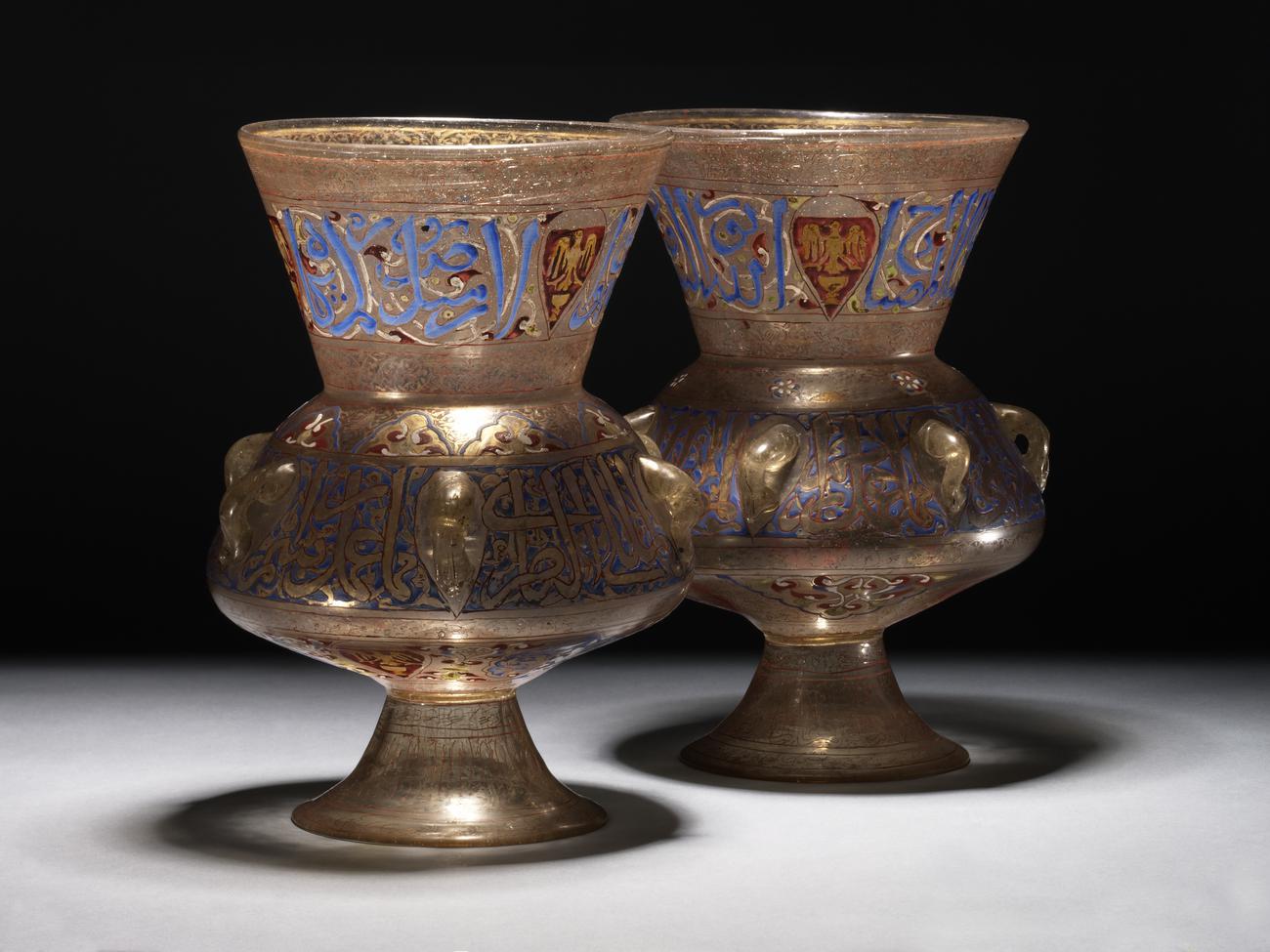
- Audio guide stop: 293
- Gallery: Room 42
- Culture: Mamluk dynasty
- Made in: Syria
- Date: 1330-1345 (circa)
- Object type: mosque-lamp
- Materials: glass; gold
- Museum number: 1869,0624.1
- Museum: The British Museum
- Collection record: British Museum website
- Image © The Trustees of the British Museum, shared under a CC BY-NC-SA 4.0 licence.
Listen to the free audio guide
About this object
This is a mosque lamp from the Mamluk dynasty, crafted between 1330 and 1345 in what is now Syria. The lamp was made for Tuquztamur of Hama, an officer serving under Sultan Muhammad ibn Qala'un. Its design reflects the high-status purpose of such objects in medieval Islamic culture.
Notice the fine gilded and enamelled glass, a rare and valuable material in this period. The lamp would have stood in a mosque, adding both function and beauty to the sacred space. Gold accents and delicate glasswork show the sophistication of Mamluk craftsmanship.
This piece is made from glass with gold, a combination that was both practical and symbolic of wealth and refinement. It measures around 24 to 33 centimetres in height and width. The lamp is connected to a long tradition of Islamic glassmaking, where form and decoration were closely linked to religious and social life.
It came to the collection as a bequest from Felix Slade.
See it in person
Mosque lamp is on display in Room 42 at the British Museum on Great Russell Street, Bloomsbury, London — free to enter. Choose British Museum on audioguide.london and type its audio guide stop number, 293, from the gallery label, or take a photo of it, to hear this free audio guide in six languages — no app download needed.
New, in beta. British Museum support has just launched and is still improving: over 1,000 objects so far, with more added all the time.