Zoomorphic pipes
- Audio guide stop: 151
- Gallery: Room 26
- Audio guide: one commentary for a group of objects shown together
- Museum: The British Museum
- Image © The Trustees of the British Museum, shared under a CC BY-NC-SA 4.0 licence.
Listen to the free audio guide
About these objects
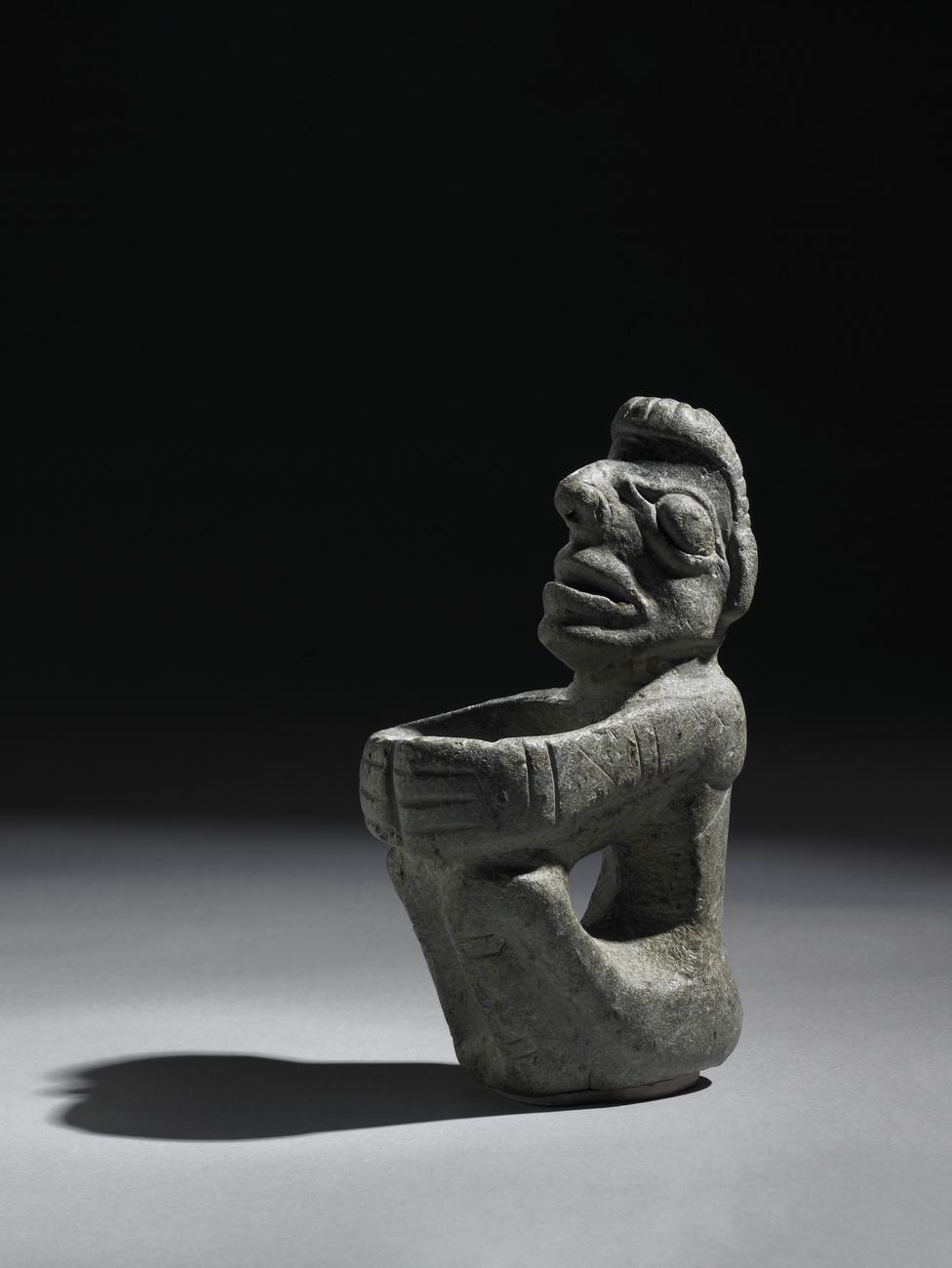
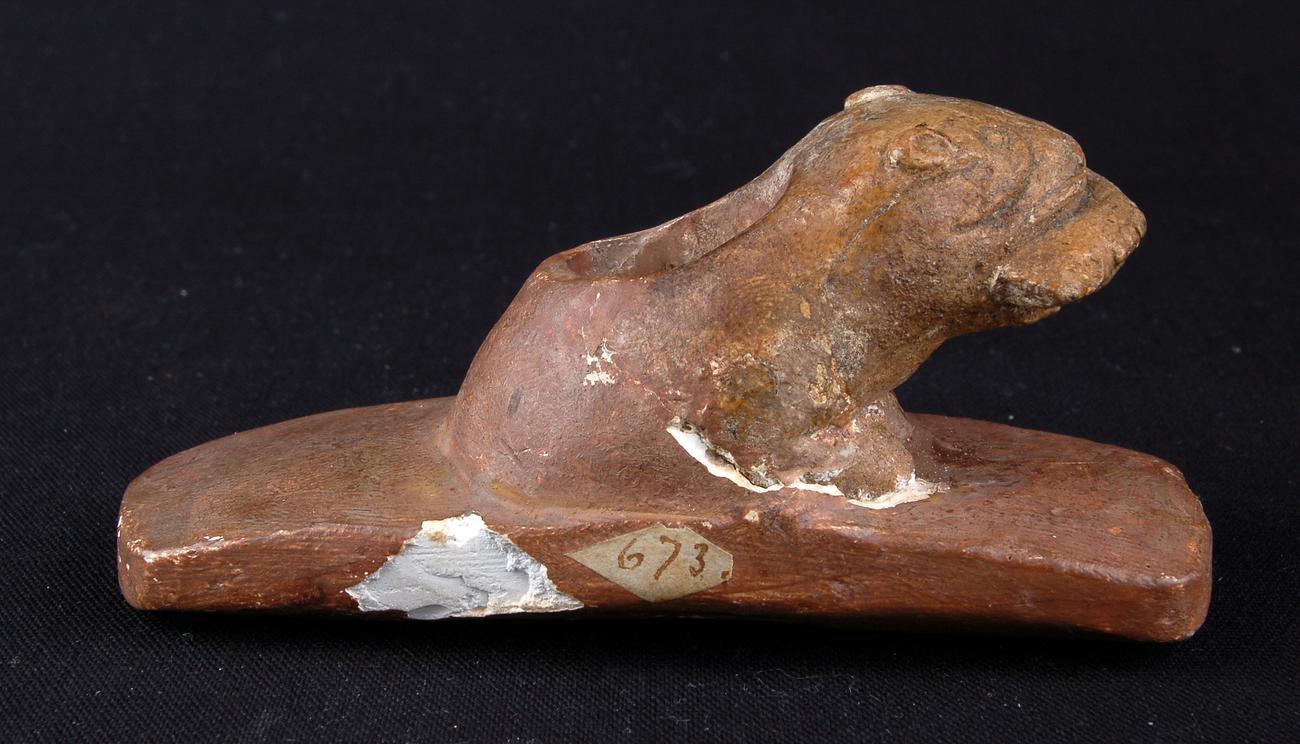
This is a collection of “Zoomorphic Pipes,” a group of intricately carved smoking pipes with animal and creature forms, dating to the Middle and Woodland Periods. These pieces were crafted by the Hopewell people in what is now Ohio, and many were recovered from burial mounds or offerings. They served more than functional purposes—in many cases, they may have represented spiritual or symbolic significance.
These pipes are striking in their diversity, ranging from birds and reptiles to frogs and mammals like manatees or bighorn sheep. The carvers used a soft red, grey, or green stone known as pipestone, and they brought their subjects to life using incisions and low-relief carving. Many of these pipes were reconstructed after being found in fragments, showing the care with which they were crafted and preserved.
Look closely at the one shaped like an aquatic mammal with a fish in its mouth—an example of how these pipes often depict realistic or symbolic animals. Also notice the carved head of a bighorn sheep and the bird pipes with finely detailed feathers. Each tells a story in stone, reflecting the artistry and attention to nature by the Hopewell culture.
See it in person
Zoomorphic pipes is on display in Room 26 at the British Museum on Great Russell Street, Bloomsbury, London — free to enter. Choose British Museum on audioguide.london and type its audio guide stop number, 151, from the gallery label, or take a photo of it, to hear this free audio guide in six languages — no app download needed.
New, in beta. British Museum support has just launched and is still improving: over 1,000 objects so far, with more added all the time.