Saddle-bag
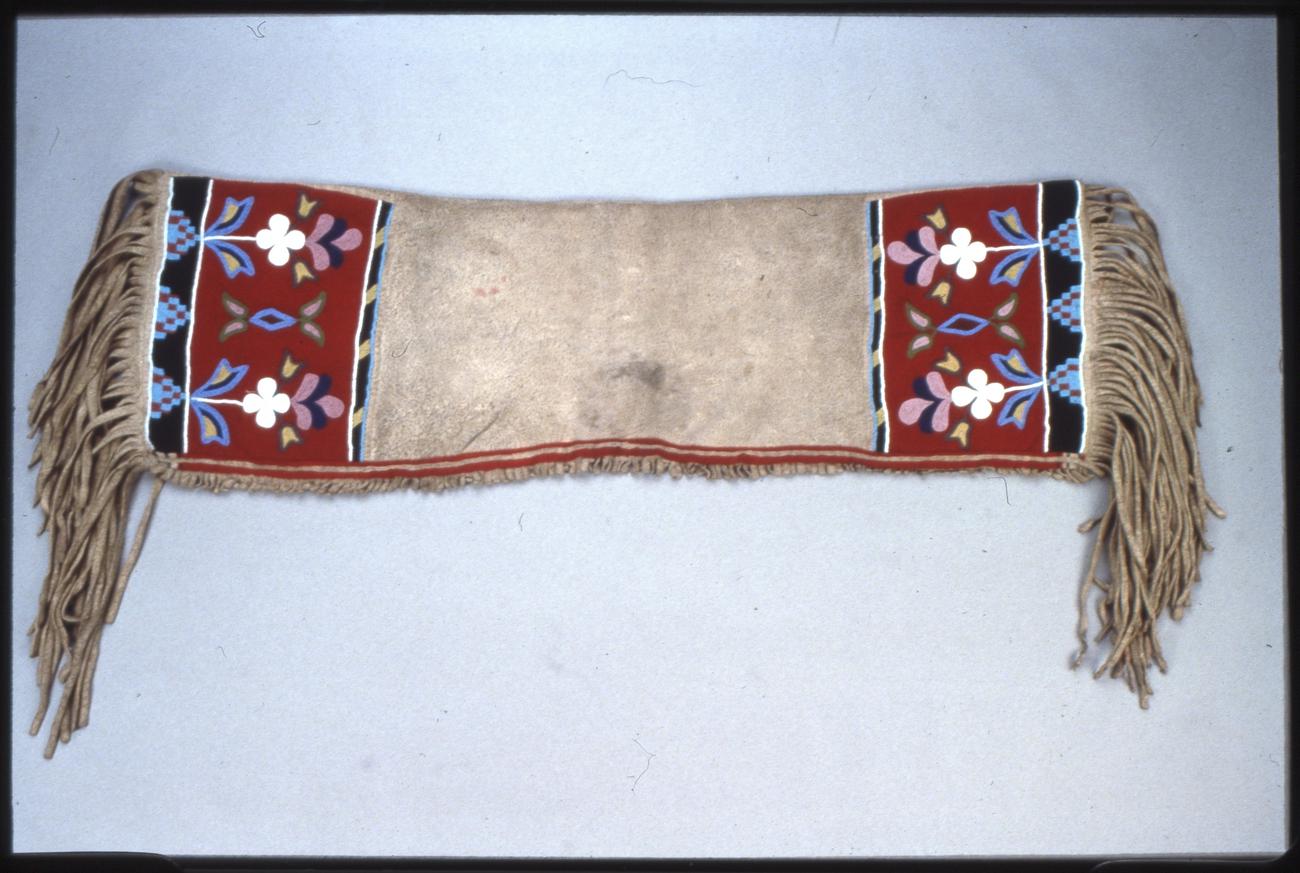
- Gallery: Room 26
- Date: 1903 (before)
- Object type: saddle-bag
- Materials: buckskin
- Museum number: Am1903,-.78
- Museum: The British Museum
- Collection record: British Museum website
- Image © The Trustees of the British Museum, shared under a CC BY-NC-SA 4.0 licence.
Listen to the free audio guide
About this object
This is a saddle-bag made of buckskin, cloth, and beads. Created by the Kainai people in North America, it dates to before 1903. The craftsmanship is extraordinary, featuring both traditional and European-influenced designs. On a woolen panel, you can see stepped triangles stitched in the traditional lazy stitch, while floral patterns were added using overlay stitch—showing how styles blended. This saddle-bag was part of a collection purchased through the Christy Fund from Frederick Deane-Freeman. Double saddlebags like this one were used by women and had a decorative role in this period. The piece is associated with Little Ears, a respected figure in his community known for his role in Indigenous life and history. As you look at it, consider the hands, heritage, and stories behind its creation.
See it in person
Saddle-bag is on display in Room 26 at the British Museum on Great Russell Street, Bloomsbury, London — free to enter. Choose British Museum on audioguide.london and take a photo of it to hear this free audio guide in six languages — no app download needed.
New, in beta. British Museum support has just launched and is still improving: over 1,000 objects so far, with more added all the time.