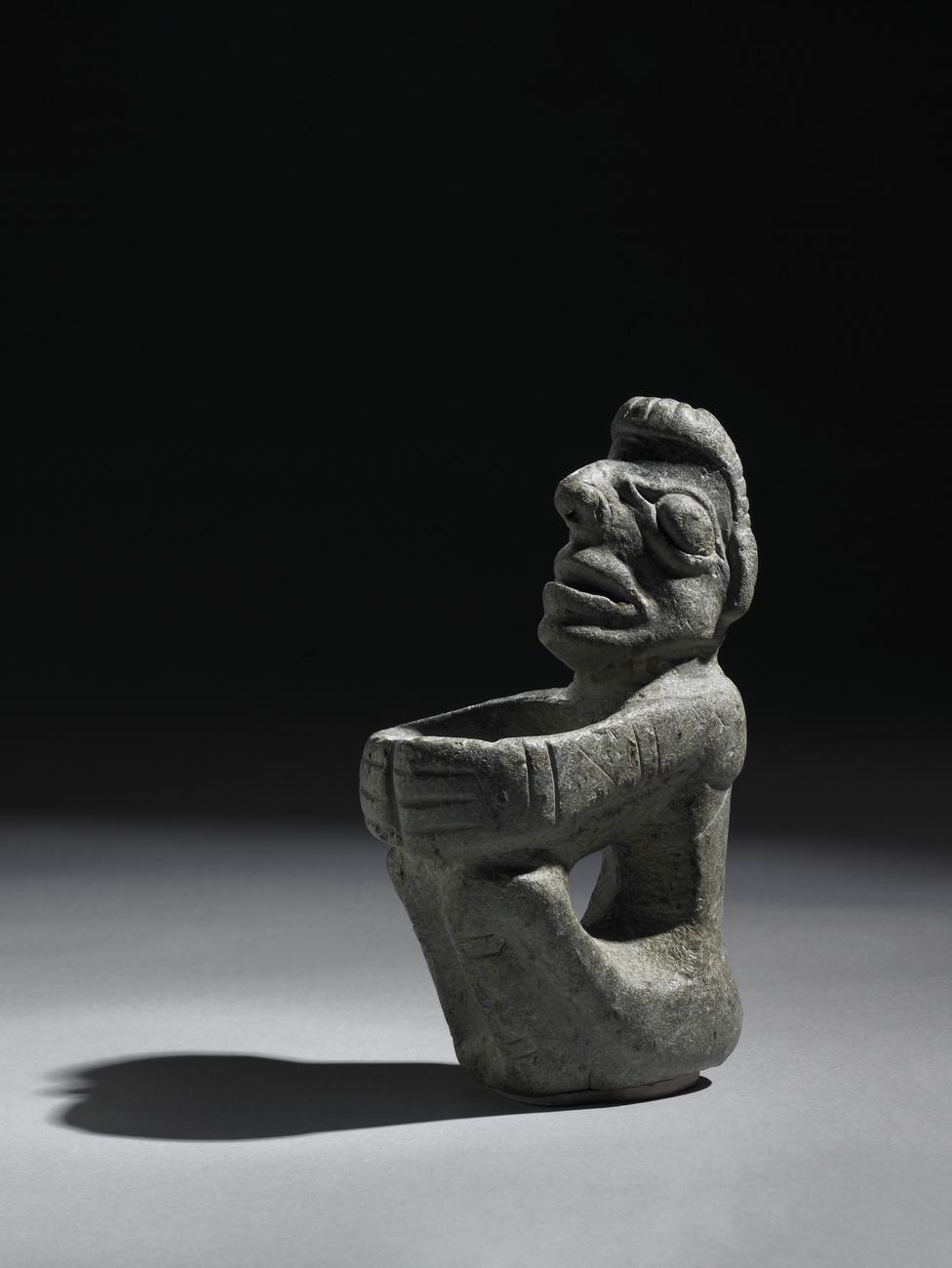
The Cowichan Bay Bowl
- Gallery: Room 26
- Date: 400BC-AD400 (Marpole Culture)
- Object type: figure, lamp, bowl
- Materials: steatite
- Museum number: Am1896,0125.1
- Museum: The British Museum
- Collection record: British Museum website
- Image © The Trustees of the British Museum, shared under a CC BY-NC-SA 4.0 licence.
Listen to the free audio guide
About this object
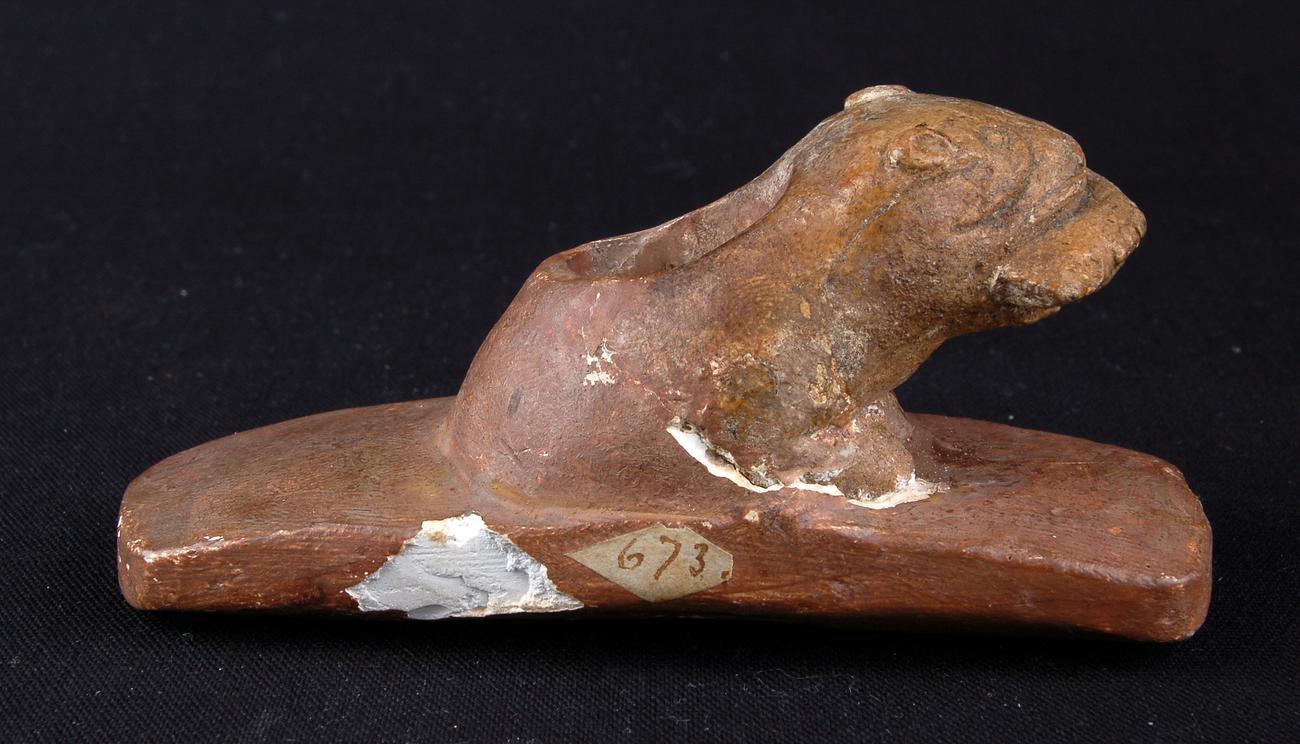
Before you is "The Cowichan Bay Bowl," a beautifully carved human figure made from soft stone called steatite. This figure, with encircling arms that create a shallow bowl, combines form and function in a striking way. Notice the delicately incised lines on the head and hands, suggesting careful attention to detail in its creation.
This kind of figure is one of around fifty known examples from British Columbia. Most were found along the Fraser River. While their exact use remains a mystery, they likely held ritual significance for the Salish peoples. Some suggest they may have been used in burial or water-related ceremonies.
Though little is known about when they were made, archaeological evidence points to use as early as around 1000 CE, with oral traditions suggesting continued use into the 1800s. It is one of only two such bowls in the British Museum collection.
See it in person
The Cowichan Bay Bowl is on display in Room 26 at the British Museum on Great Russell Street, Bloomsbury, London — free to enter. Choose British Museum on audioguide.london and take a photo of it to hear this free audio guide in six languages — no app download needed.
New, in beta. British Museum support has just launched and is still improving: over 1,000 objects so far, with more added all the time.