Turret clock
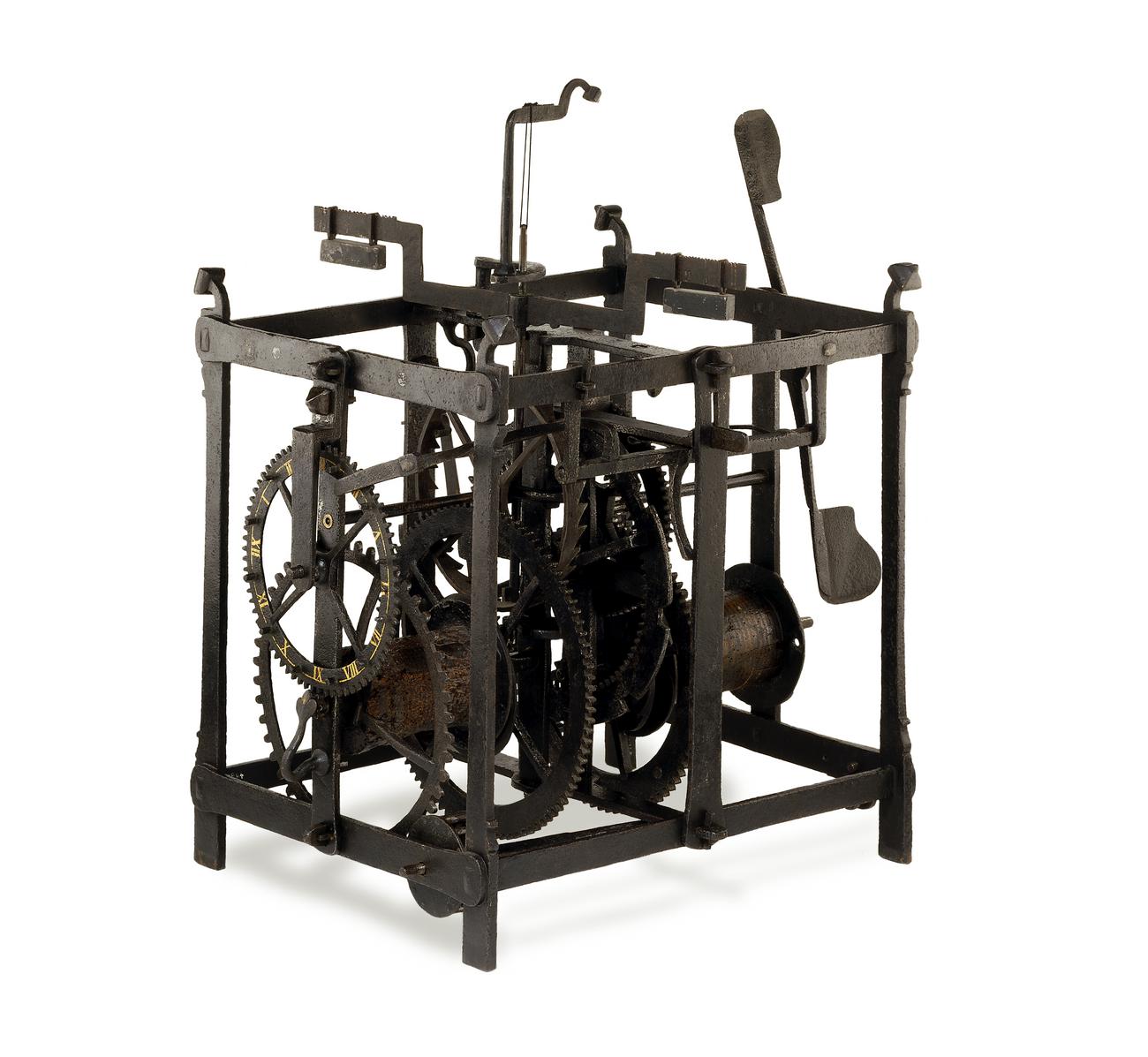
- Audio guide stop: 515
- Gallery: Room 38
- Maker: Attributed to Tennant, Leonard
- Made in: England
- Date: 1600-1620
- Object type: turret clock
- Materials: iron
- Museum number: 1964,0203.1
- Museum: The British Museum
- Collection record: British Museum website
- Image © The Trustees of the British Museum, shared under a CC BY-NC-SA 4.0 licence.
Listen to the free audio guide
About this object
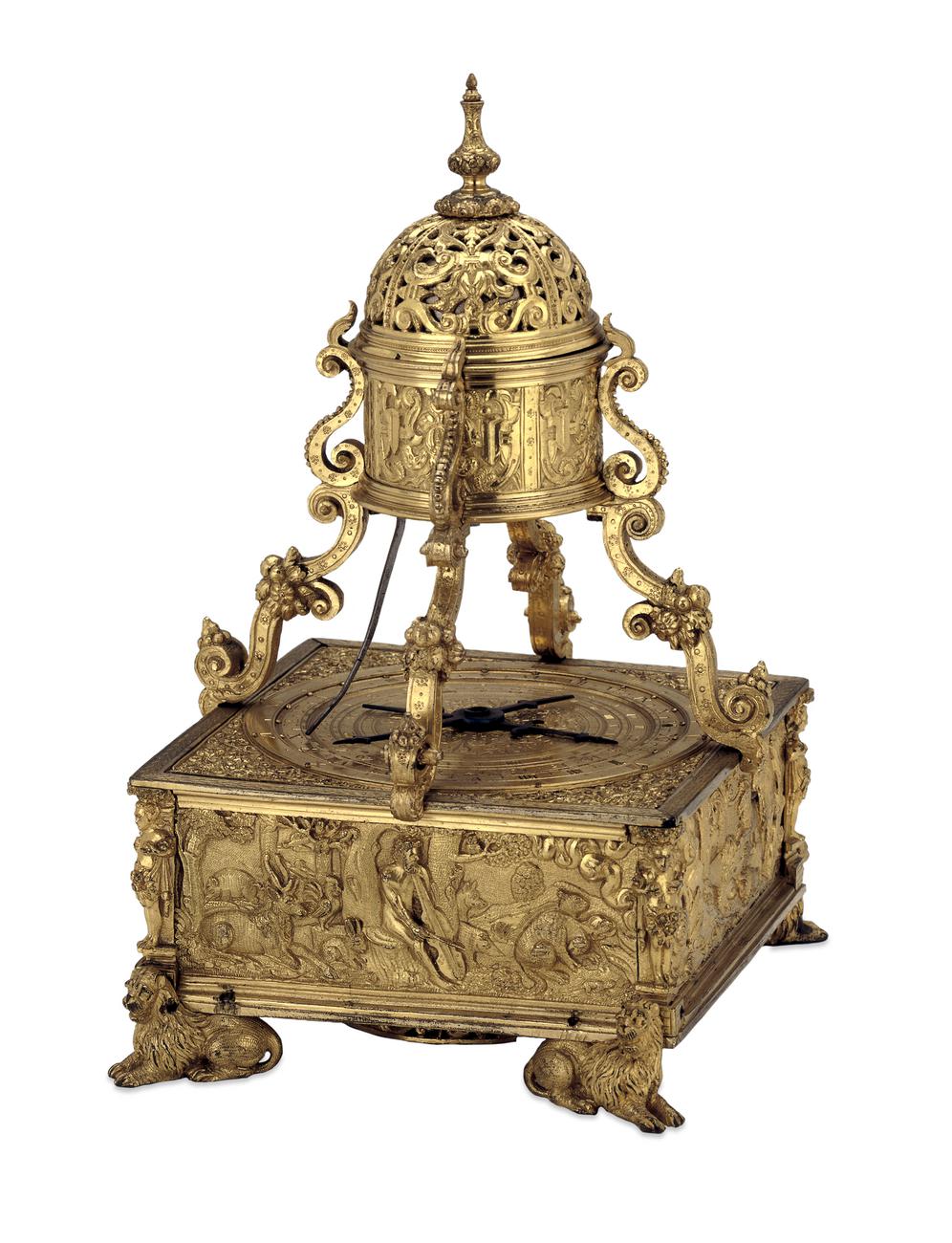
Before you is the "Cassiobury Park clock," an iron turret clock thought to be the work of Leonard Tennant of London. It dates to the early 1600s and is one of a small group of similar clocks marked with a scallop-shell design.
This clock has two gear trains working together— one for keeping time, the other for striking the hours. You can see riveted steel wheels and a detailed frame made of four vertical pillars and twelve horizontal bars. The top parts appear to have been modified in later years, likely for the addition of a pendulum.
It was originally discovered among old items at Cassiobury Park near Watford and later rebuilt and restored, most notably by Percy Webster in the 1920s. Its design reflects the long tradition of weight-driven tower clocks, with a verge escapement and hand-adjustable mechanisms.
The "Cassiobury Park clock" is a rare and historically significant example of early English clockwork, showing just how advanced clock designs had become by the time of its making.
See it in person
Turret clock is on display in Room 38 at the British Museum on Great Russell Street, Bloomsbury, London — free to enter. Choose British Museum on audioguide.london and type its audio guide stop number, 515, from the gallery label, or take a photo of it, to hear this free audio guide in six languages — no app download needed.
New, in beta. British Museum support has just launched and is still improving: over 1,000 objects so far, with more added all the time.