Orpheus Clock
- Gallery: Room 38
- Made in: Germany
- Date: 1575-1585
- Object type: alarm clock, table clock, hour-striking clock
- Materials: steel; brass
- Museum number: 1888,1201.102
- Museum: The British Museum
- Collection record: British Museum website
- Image © The Trustees of the British Museum, shared under a CC BY-NC-SA 4.0 licence.
Listen to the free audio guide
About this object
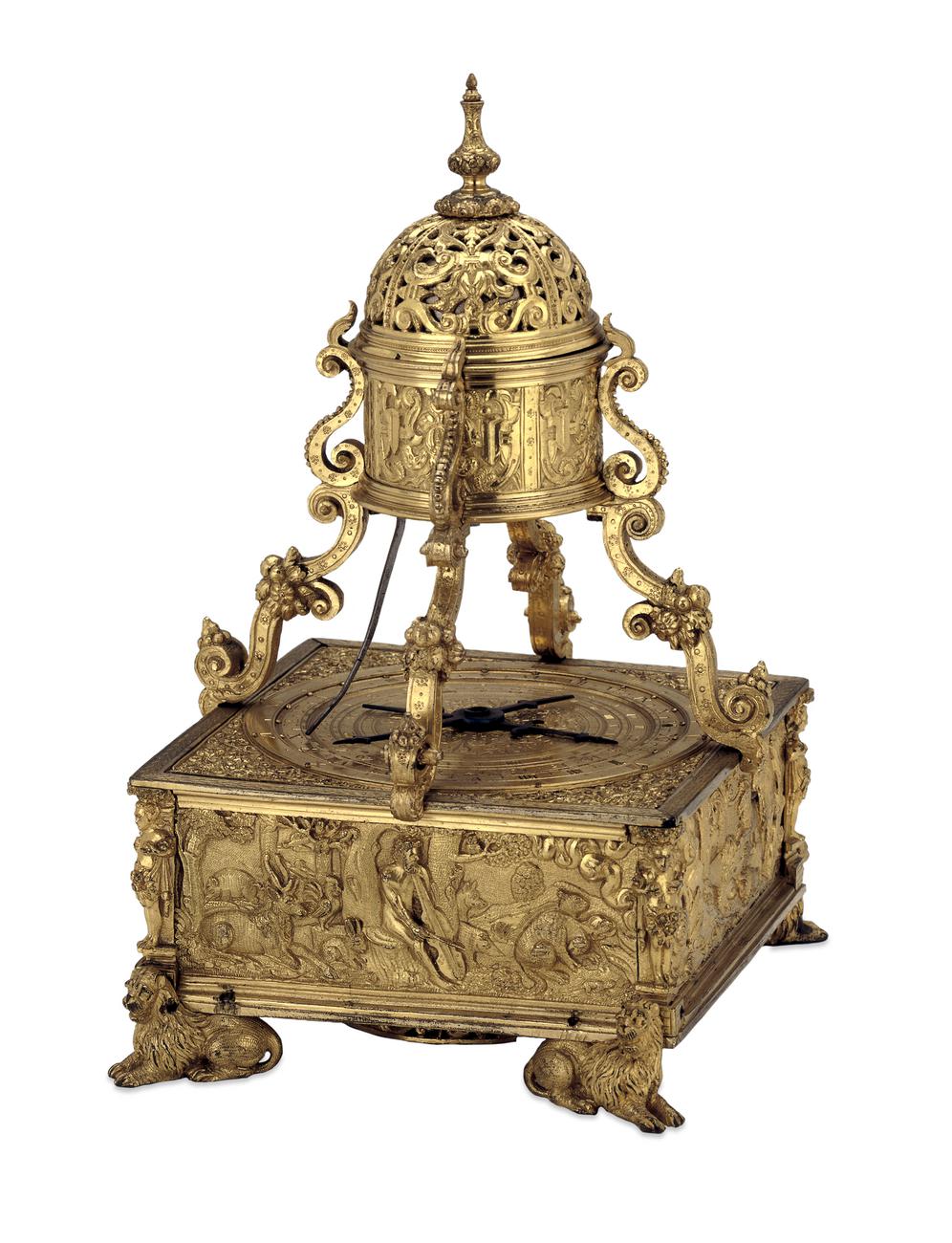
In front of you stands the "Orpheus Clock," a remarkable timepiece made in Germany between 1575 and 1585. This alarm clock is richly decorated and crafted with a combination of steel and brass. The square case features ornate scenes of Orpheus charming animals, and it rests on four lion feet that are detailed with gilding and visible markings from centuries of use.
The dial is a marvel of engineering with four separate rings, allowing the time to be shown in multiple contemporary styles. The central part of the dial appears to be a 19th-century replacement, though it retains the original design elegance.
Inside, the clock contains a finely made steel movement with a gilded brass overlay. It strikes the hour and features a complex alarm mechanism that shuts itself off automatically after a set period. Hand-wound and designed for precision, this clock is a glimpse into the mechanical artistry of Renaissance Europe.
This clock was bequeathed by Octavius Morgan, preserving a piece of horological history for future generations to admire.
See it in person
Orpheus Clock is on display in Room 38 at the British Museum on Great Russell Street, Bloomsbury, London — free to enter. Choose British Museum on audioguide.london and take a photo of it to hear this free audio guide in six languages — no app download needed.
New, in beta. British Museum support has just launched and is still improving: over 1,000 objects so far, with more added all the time.