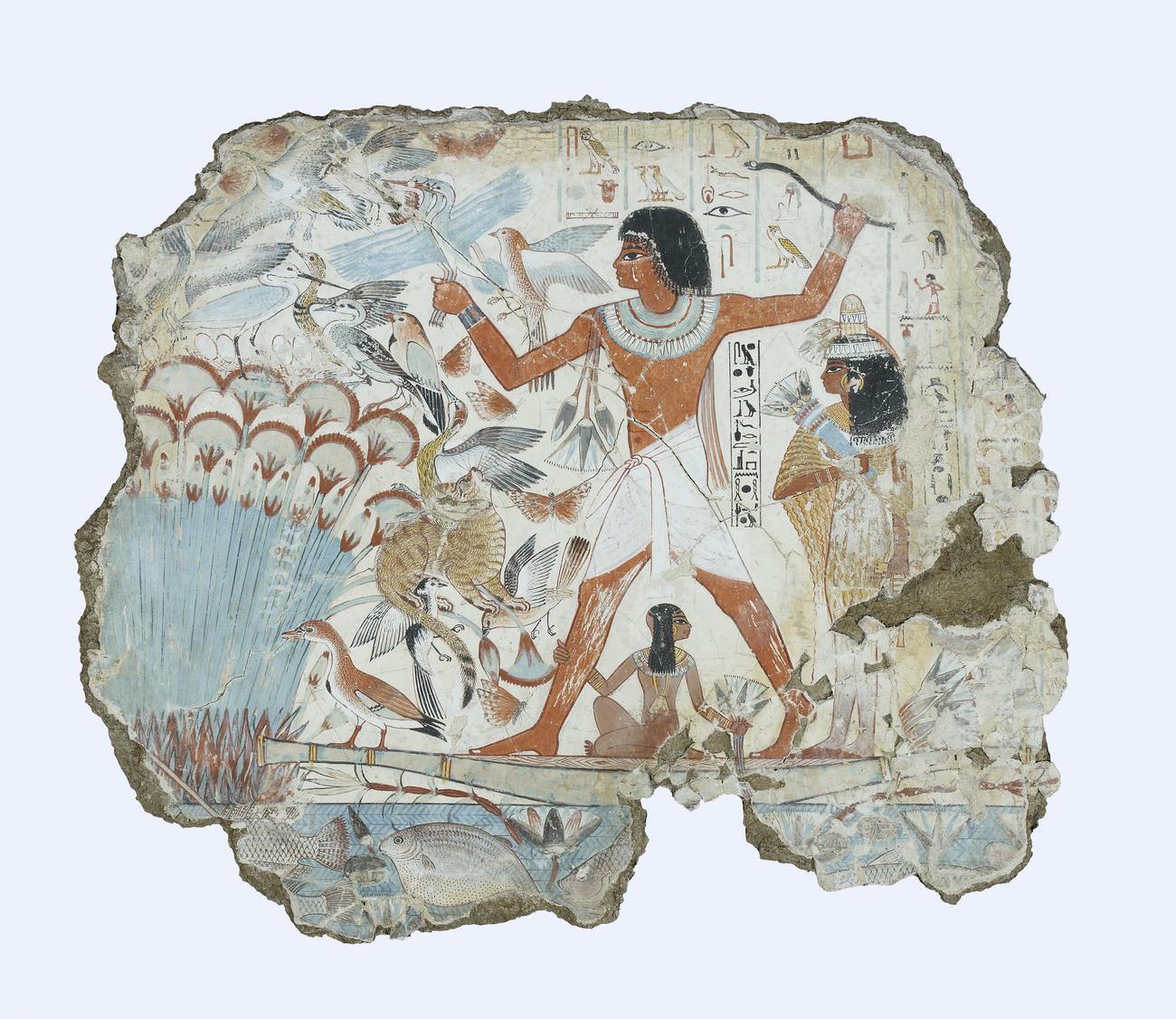
Tomb-painting of a hunt in the marshes
- Audio guide stop: 373
- Gallery: Room 61
- Culture: 18th Dynasty
- Date: 1350BC (circa)
- Object type: tomb-painting
- Materials: plaster
- Museum number: EA37977
- Museum: The British Museum
- Collection record: British Museum website
- Image © The Trustees of the British Museum, shared under a CC BY-NC-SA 4.0 licence.
Listen to the free audio guide
About this object
Before you is a fragment of a vivid tomb-painting from ancient Egypt, created during the 18th Dynasty around 1350 BCE. The scene captures Nebamun, a scribe, seated in a small boat in the marshes, engaged in fowling and fishing. His wife stands behind him and his daughter sits beneath, both adding a personal touch to the painting. Nebamun holds a throw-stick in one hand and three decoy herons in the other.
This fragment reflects life in the marshes through detailed naturalism: birds take flight from a papyrus thicket, fish appear beneath the waterline, and lotus flowers bloom nearby. The painting is rendered on plaster and displays rich use of color—white petals contrast with green and grey sepals in the lotus flowers.
The scene also includes hieroglyphic inscriptions in eight vertical registers, though only remnants remain. The painting was discovered in the Tomb of Nebamun at Thebes and eventually acquired through Henry Salt. It’s a striking example of tomb art that once surrounded and honored the deceased in daily life and eternity.
See it in person
Tomb-painting of a hunt in the marshes is on display in Room 61 at the British Museum on Great Russell Street, Bloomsbury, London — free to enter. Choose British Museum on audioguide.london and type its audio guide stop number, 373, from the gallery label, or take a photo of it, to hear this free audio guide in six languages — no app download needed.
New, in beta. British Museum support has just launched and is still improving: over 1,000 objects so far, with more added all the time.