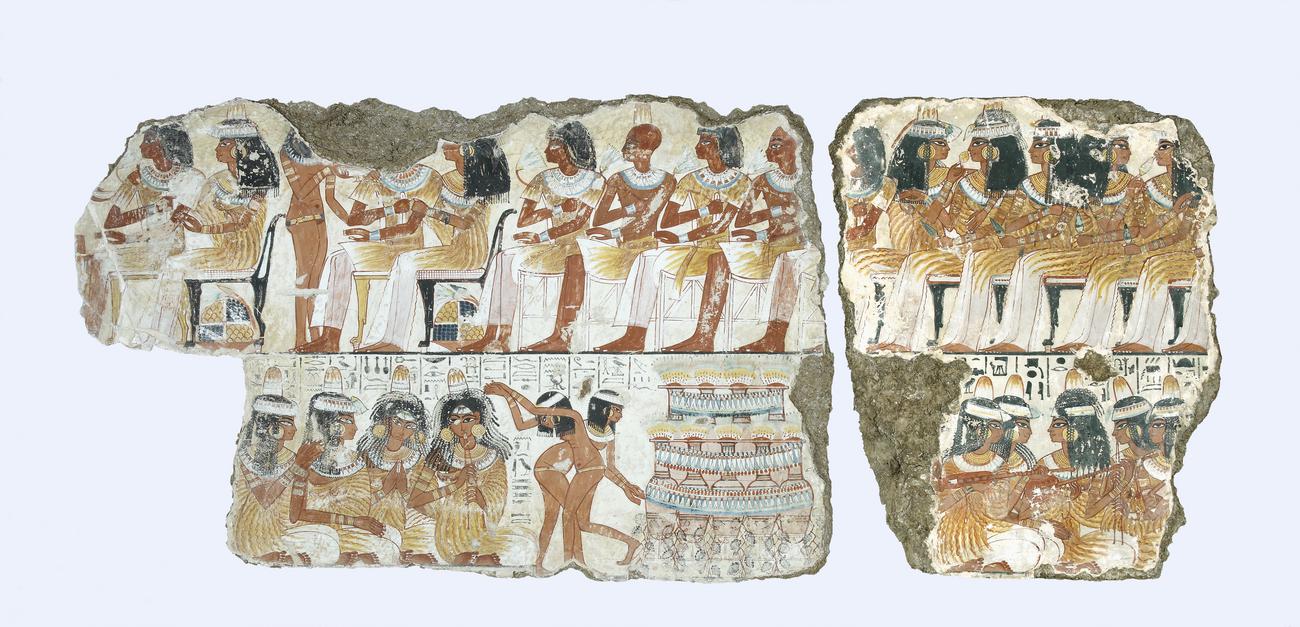
Tomb-painting of a feast
- Audio guide stop: 372
- Gallery: Room 61
- Audio guide: one commentary for a group of objects shown together
- Museum: The British Museum
- Image © The Trustees of the British Museum, shared under a CC BY-NC-SA 4.0 licence.
Listen to the free audio guide
About these objects
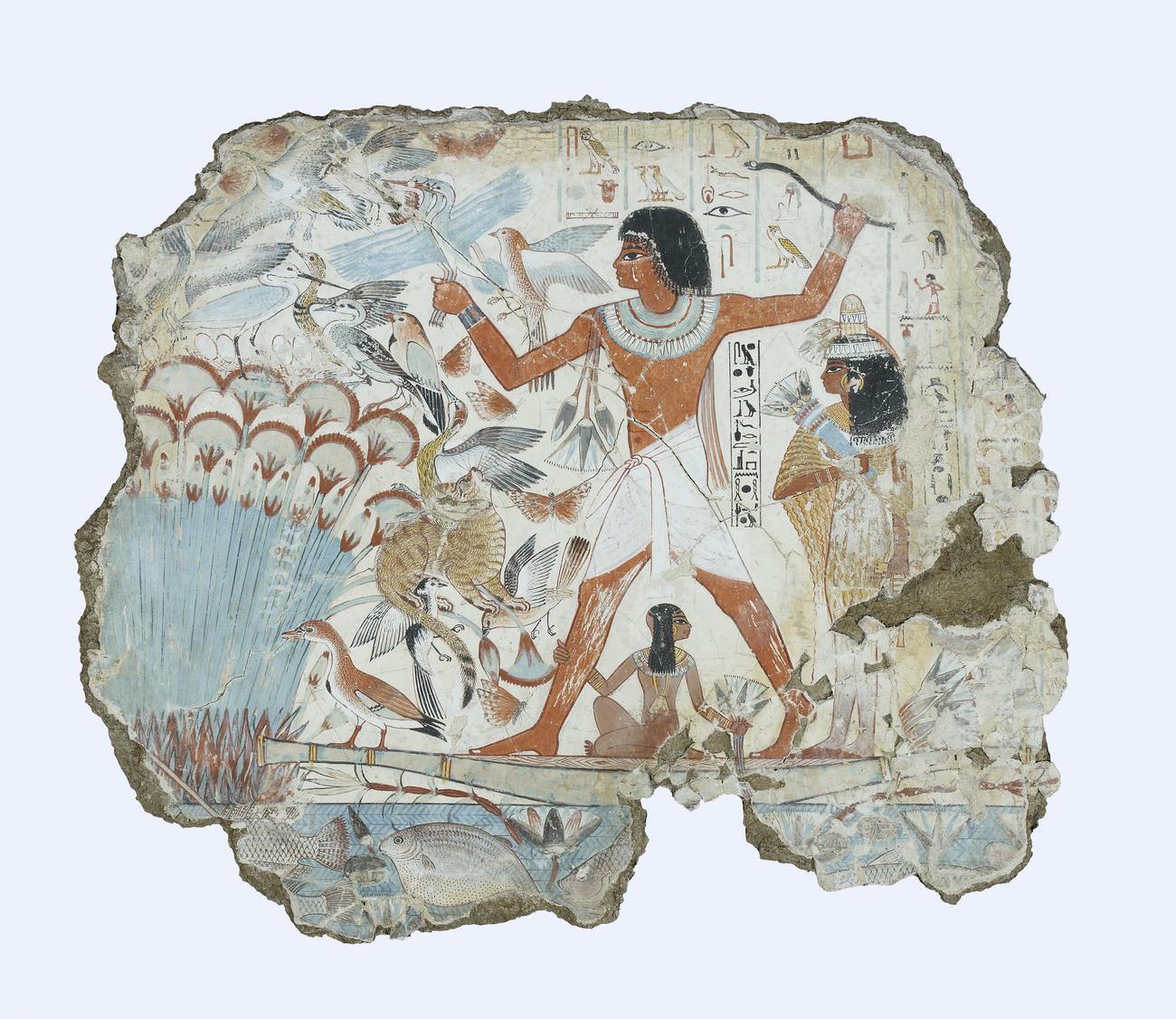
This is a tomb-painting fragment from an ancient Egyptian feast scene. These pieces come from the tomb of Nebamun, a high-ranking official from Thebes during the 18th Dynasty, around 1370–1350 BC. The paintings once decorated the walls of his tomb chapel and show how ancient Egyptians celebrated life even in their art.
Each fragment captures a lively banquet scene. In one, you’ll see men and women seated together while servants and musicians entertain the guests. Another shows three seated couples being served by attendants. Both fragments are painted in bright, vivid colors on plaster, preserved in remarkable detail.
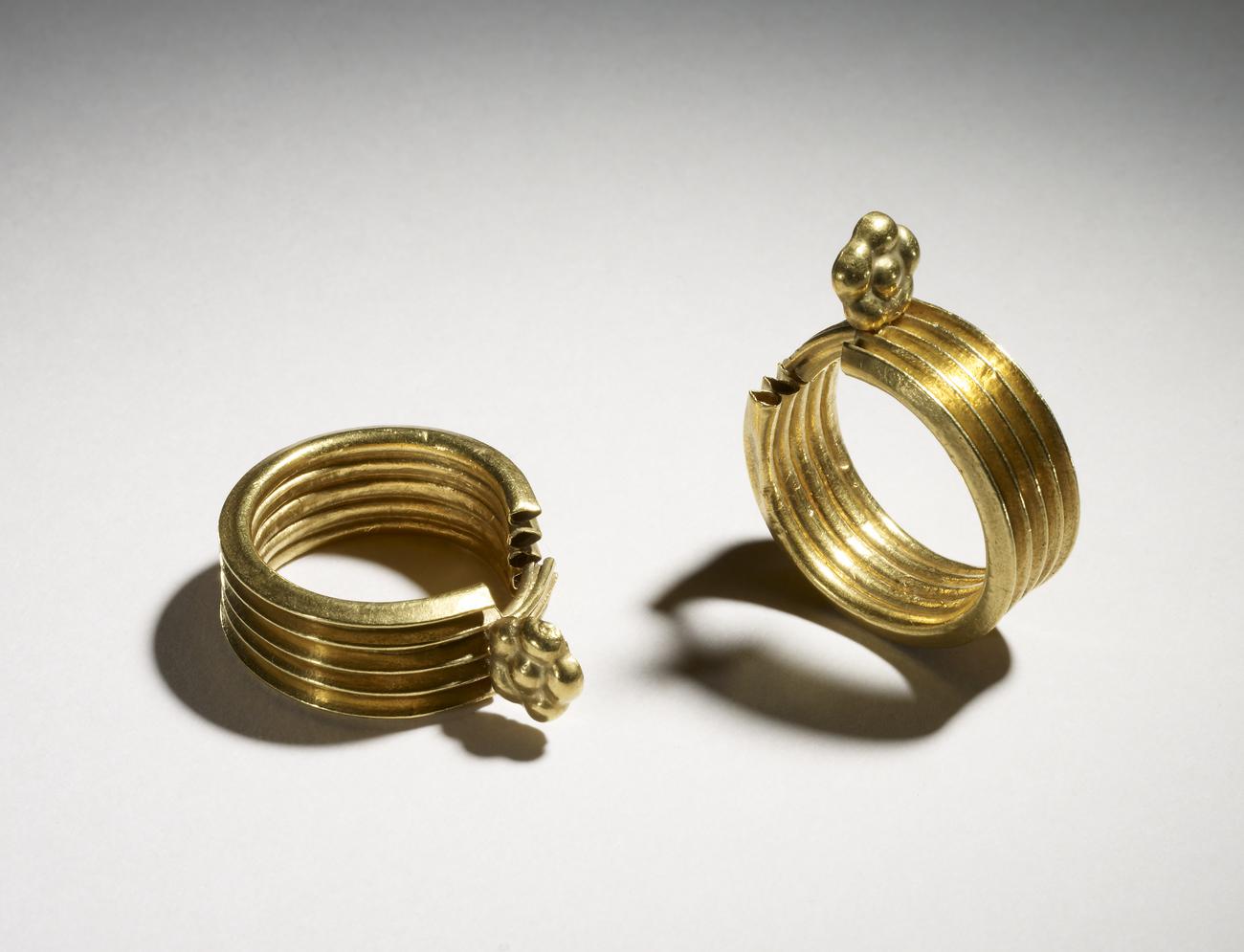
Look carefully for the figures of dancers adorned with jewelry like girdles, bracelets, and armlets, and the musicians wearing wide collars and rings. These figures not only bring the feast to life but also reflect the fashion of the time.
The tomb paintings were discovered in pieces and have been carefully restored. They offer a rare glimpse into the social customs and artistic mastery of Ancient Egypt.
See it in person
Tomb-painting of a feast is on display in Room 61 at the British Museum on Great Russell Street, Bloomsbury, London — free to enter. Choose British Museum on audioguide.london and type its audio guide stop number, 372, from the gallery label, or take a photo of it, to hear this free audio guide in six languages — no app download needed.
New, in beta. British Museum support has just launched and is still improving: over 1,000 objects so far, with more added all the time.