The Urchin Bijou, Bar de la Lune
- Artist: Brassaï
- Date: 1932, printed 1960–9
- Medium: Photograph, gelatin silver print on paper
- Dimensions: unconfirmed: 320 x 240 mm
- Museum: Tate Modern
- Collection record: Tate Modern website
Listen to the free audio guide
About this artwork
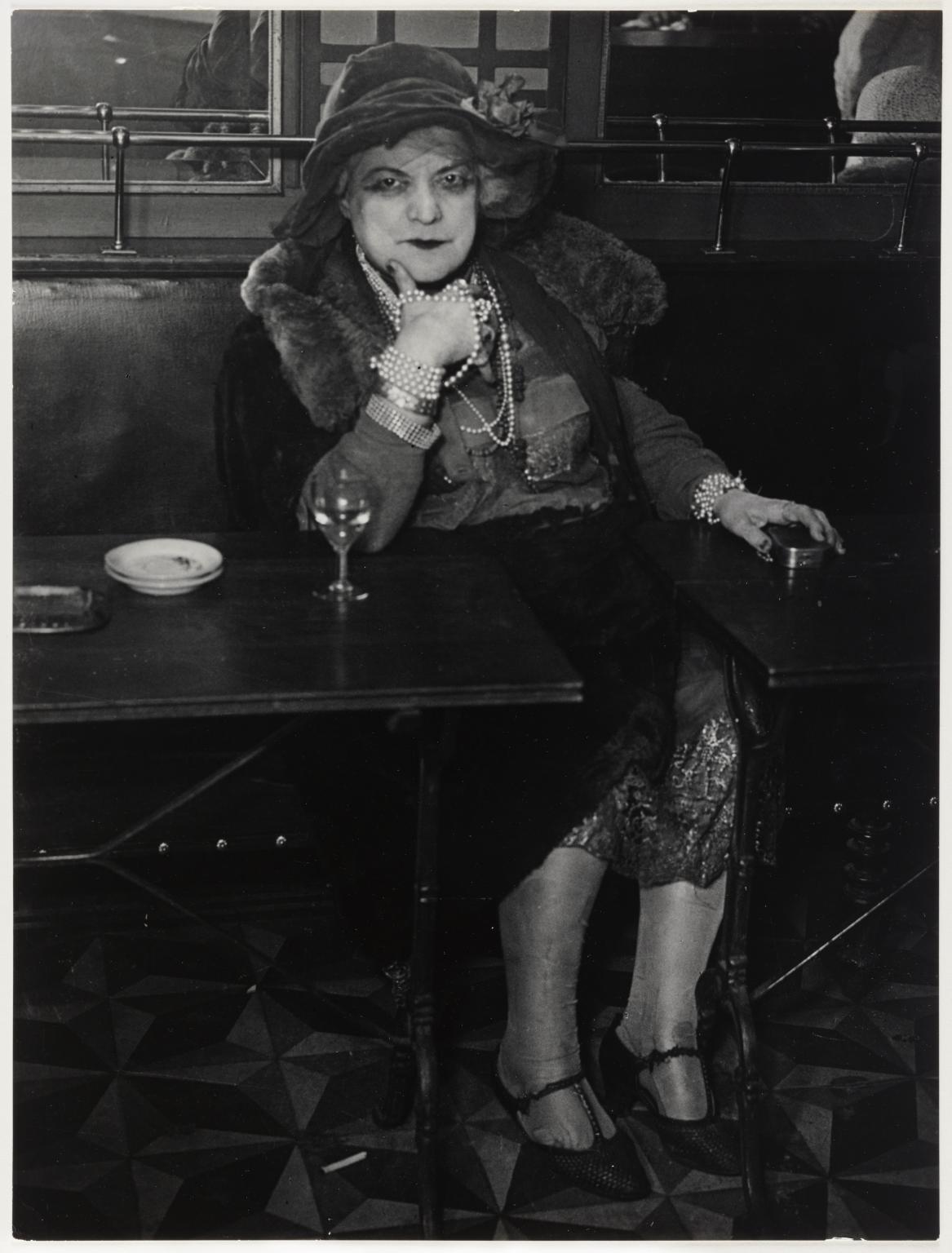
This is “The Urchin Bijou, Bar de la Lune” by Brassaï. It was taken in 1932, printed in the early 1960s, and is a gelatin silver print that captures a single, striking figure in the dim light of a Montmartre nightclub. The woman—known locally as La Môme Bijou or Miss Diamonds—sits alone on a padded bench, her pale face lit by shadows under the eyes and her lips painted dark. Her hat bears a flower, a fur‑collared coat and a patterned skirt that, while glamorous at first glance, show signs of wear. Around her neck, wrists and fingers, she wears strings of pearls, adding a touch of former elegance to her tattered attire.
The setting is a wooden‑table bar with a small wine glass, ashtrays, and a silver snuff box. Her right arm supports her chin, and she looks directly at the camera, giving the image a sense of intimacy and melancholy. Brassaï photographed this scene while roaming Paris at night, using a tripod and flash powder, and later developed the glass negatives in apartment kitchen. The portrait evokes the fading splendor of the Belle Époque and became one of the most celebrated images, inspiring a character in Giraudoux’s play.
See it in person
The Urchin Bijou, Bar de la Lune is in the collection of Tate Modern on Bankside, London — free to enter. Point your phone at any artwork there and audioguide.london plays a free audio guide in six languages — no app download needed.