The Uncertainty of the Poet
- Artist: Giorgio de Chirico
- Date: 1913
- Medium: Oil paint on canvas
- Dimensions: support: 1060 x 940 mm
- Museum: Tate Modern
- Collection record: Tate Modern website
Listen to the free audio guide
About this artwork
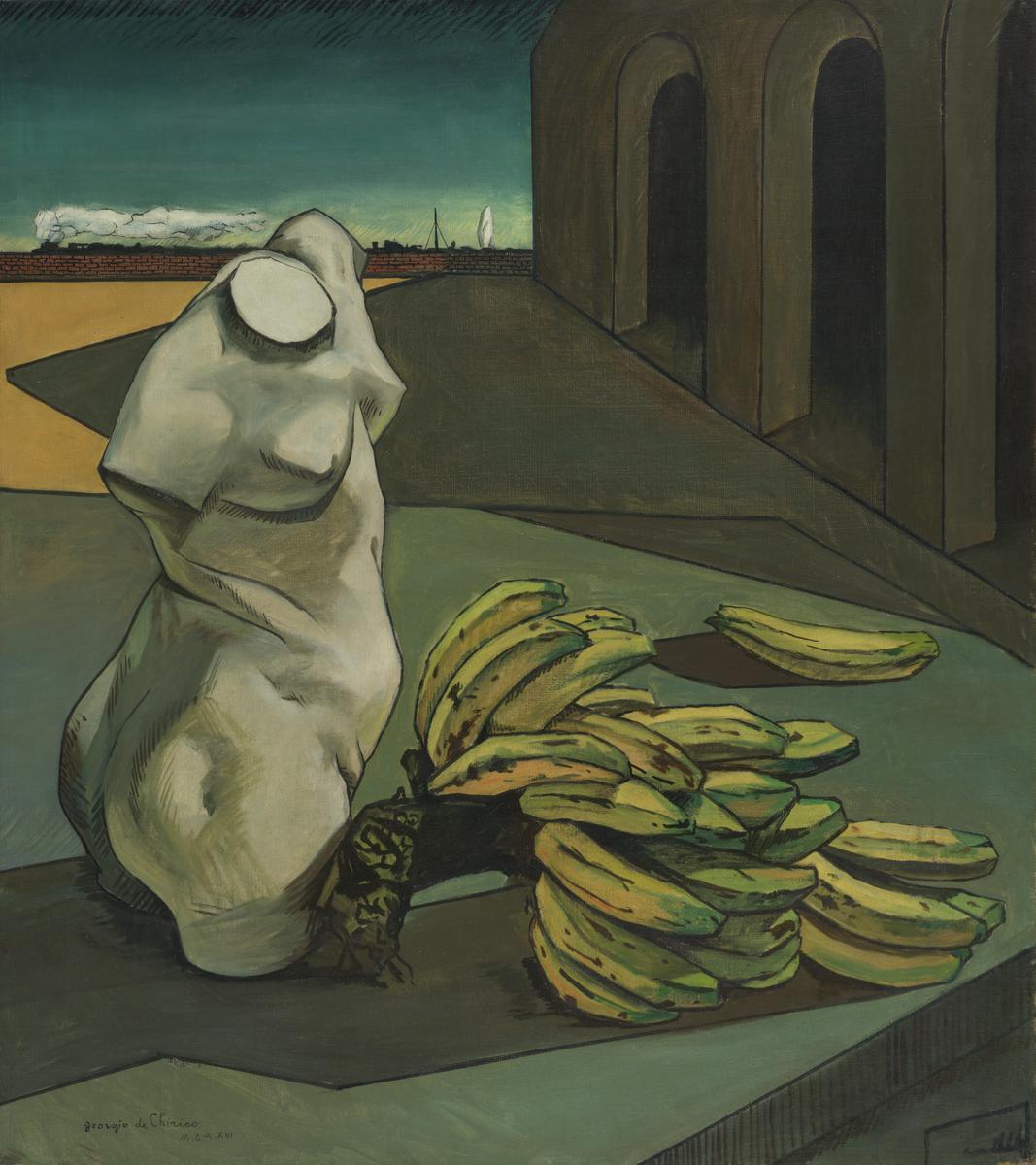
This is the “The Uncertainty of the Poet” by Giorgio de Chirico, painted in 1913. It’s a quiet square that feels like a classical arcade, with a plastered torso that hints at Aphrodite. In front of the stone, ripe bananas sit in a stark, almost surreal still‑life, while a passing train blurs in the distance. De Chirico throws the scene into a dream‑like disarray: the perspective bends, the shadows feel uncanny, and the overall sense of place is both familiar and mysterious.
The work is a key early example of his metaphysical style, a bridge between the orderly world of antiquity and the chaotic immediacy of modern life. Surrealists loved it for that very reason, seeing in the juxtaposition a parallel, dream‑like existence beyond ordinary perception. The painting’s subtle, almost theatrical architecture, combined with everyday objects, invites the viewer to question reality and memory. It’s a vivid snapshot of a time when de Chirico was redefining what a canvas could convey.
See it in person
The Uncertainty of the Poet is in the collection of Tate Modern on Bankside, London — free to enter. Point your phone at any artwork there and audioguide.london plays a free audio guide in six languages — no app download needed.