The Rosetta Stone
- Audio guide stop: 204
- Gallery: Room 4
- Culture: Ptolemaic
- Date: 196BC
- Object type: stela
- Materials: granodiorite
- Museum number: EA24
- Museum: The British Museum
- Collection record: British Museum website
- Image © The Trustees of the British Museum, shared under a CC BY-NC-SA 4.0 licence.
Listen to the free audio guide
About this object
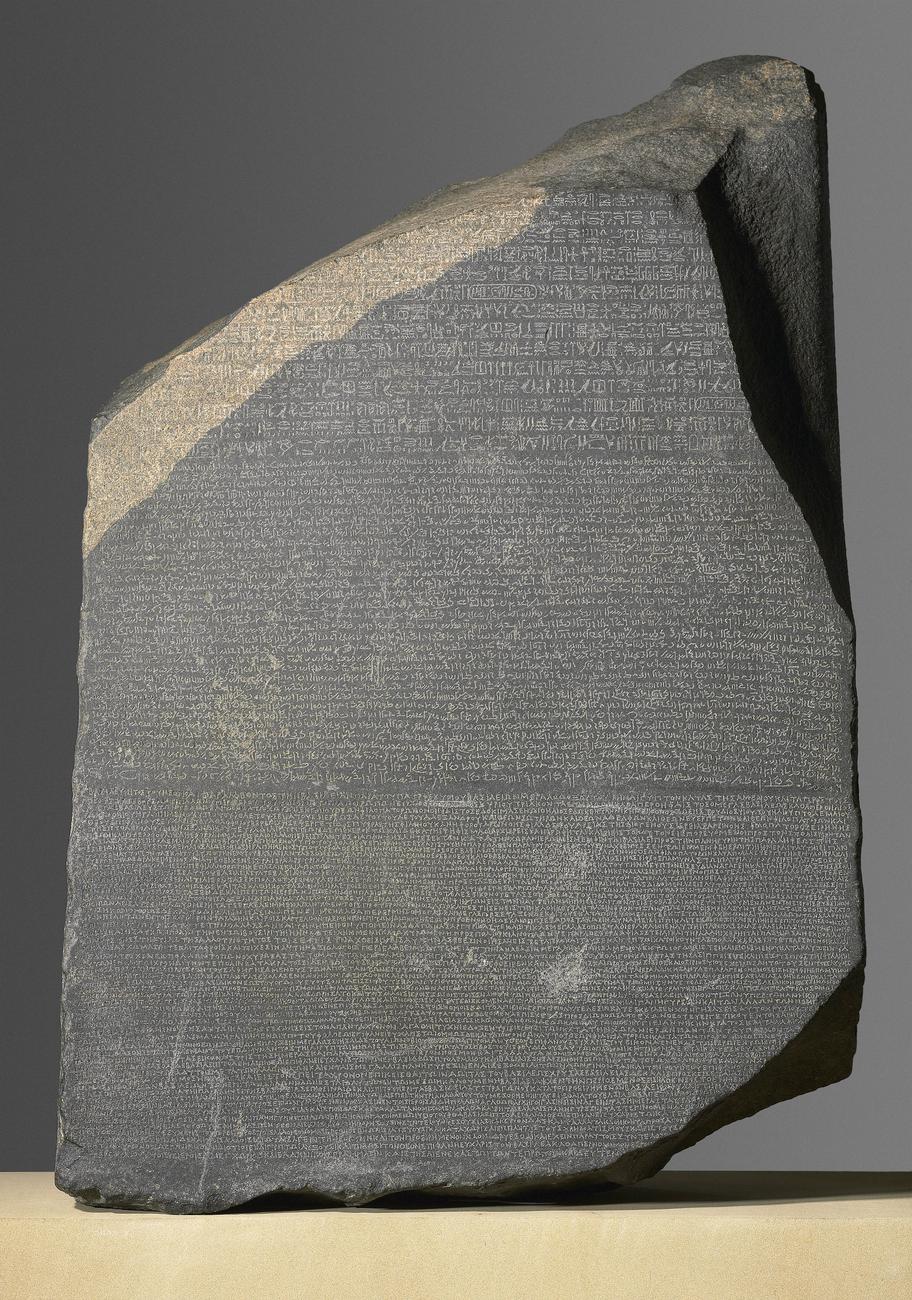
Before you is "The Rosetta Stone," a weathered granodiorite stela from the Ptolemaic Period in 196 BC. This sturdy stone comes from the town of el-Rashid in Egypt and is notable for its three parallel inscriptions.
The text appears first in sacred hieroglyphs, then in Demotic—the script used in daily life—and finally in Greek, the language of administration at the time. Each version contains the same decree from a group of priests, affirming the royal status of teenage king Ptolemy 5. Without this stone, we would still be decoding ancient Egyptian writing.
Though it may seem plain today, it was key to unlocking the meanings of hieroglyphs. In the early 1800s, scholars used the Greek portion of the text to break the code, thanks to early work by Thomas Young and the breakthrough by French scholar Jean-François Champollion.
Donated to the museum by King George III, the Rosetta Stone has spent most of its life here, only briefly hidden in wartime tunnels beneath London.
See it in person
The Rosetta Stone is on display in Room 4 at the British Museum on Great Russell Street, Bloomsbury, London — free to enter. Choose British Museum on audioguide.london and type its audio guide stop number, 204, from the gallery label, or take a photo of it, to hear this free audio guide in six languages — no app download needed.
New, in beta. British Museum support has just launched and is still improving: over 1,000 objects so far, with more added all the time.