The Ivory King
- Gallery: Room 64
- Culture: 1st Dynasty; 2nd Dynasty; Naqada II
- Date: 3000BC (circa)
- Object type: figure
- Materials: ivory
- Museum number: EA37996
- Museum: The British Museum
- Collection record: British Museum website
- Image © The Trustees of the British Museum, shared under a CC BY-NC-SA 4.0 licence.
Listen to the free audio guide
About this object
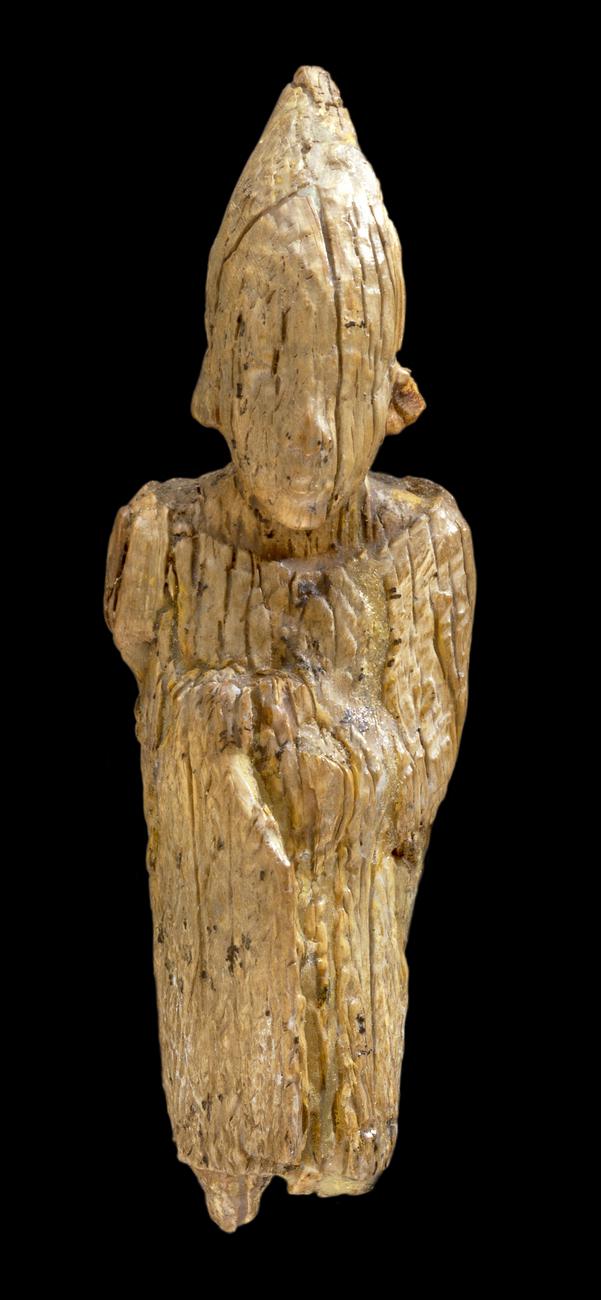
Before you stands a statuette titled "The Ivory King." Created during the 1st Dynasty, this small figure captures the image of a beardless king wearing a distinctive white crown. His ears appear pushed outward by the weight of the crown, and he moves forward as if in motion, one leg outstretched while wrapped in a short, stiff robe.
Notably, the king shows signs of age—his shoulders are stooped, his neck slightly forward, and his chin droops. The robe itself is richly patterned with diamond shapes and guilloche bands, carefully carved to look like woven fabric. Most unusual are the flaps hanging from the shoulders, possibly decorative “epaulets” with a scalloped edge, though their exact purpose remains a mystery.
This ivory masterpiece was carved with great skill and was found at Abydos, in a temple dedicated to Osiris. The artwork is a fine example of how artists in ancient Egypt blended tradition with a growing sense of realism even in the earliest days of their civilization.
See it in person
The Ivory King is on display in Room 64 at the British Museum on Great Russell Street, Bloomsbury, London — free to enter. Choose British Museum on audioguide.london and take a photo of it to hear this free audio guide in six languages — no app download needed.
New, in beta. British Museum support has just launched and is still improving: over 1,000 objects so far, with more added all the time.