The Battlefield Palette
- Gallery: Room 64
- Culture: Naqada III
- Made in: Egypt (Cast fragment)
- Date: 3100BC (circa)
- Object type: cosmetic-palette, cast
- Materials: mudstone
- Museum number: EA20791
- Museum: The British Museum
- Collection record: British Museum website
- Image © The Trustees of the British Museum, shared under a CC BY-NC-SA 4.0 licence.
Listen to the free audio guide
About this object
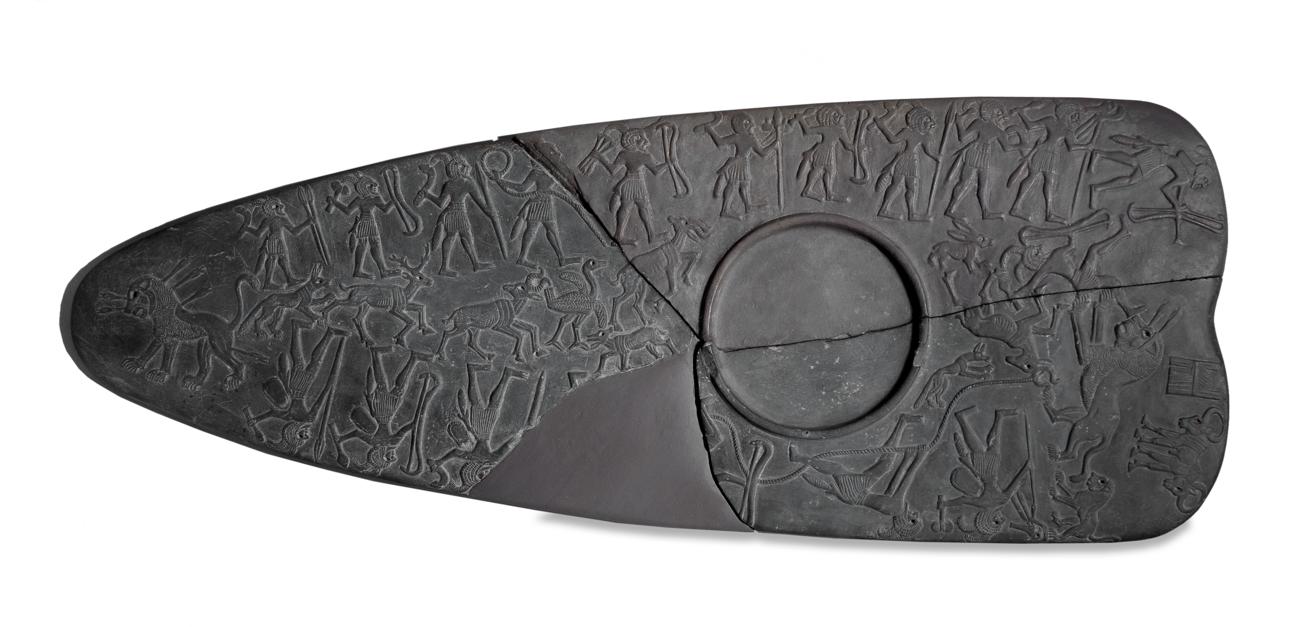
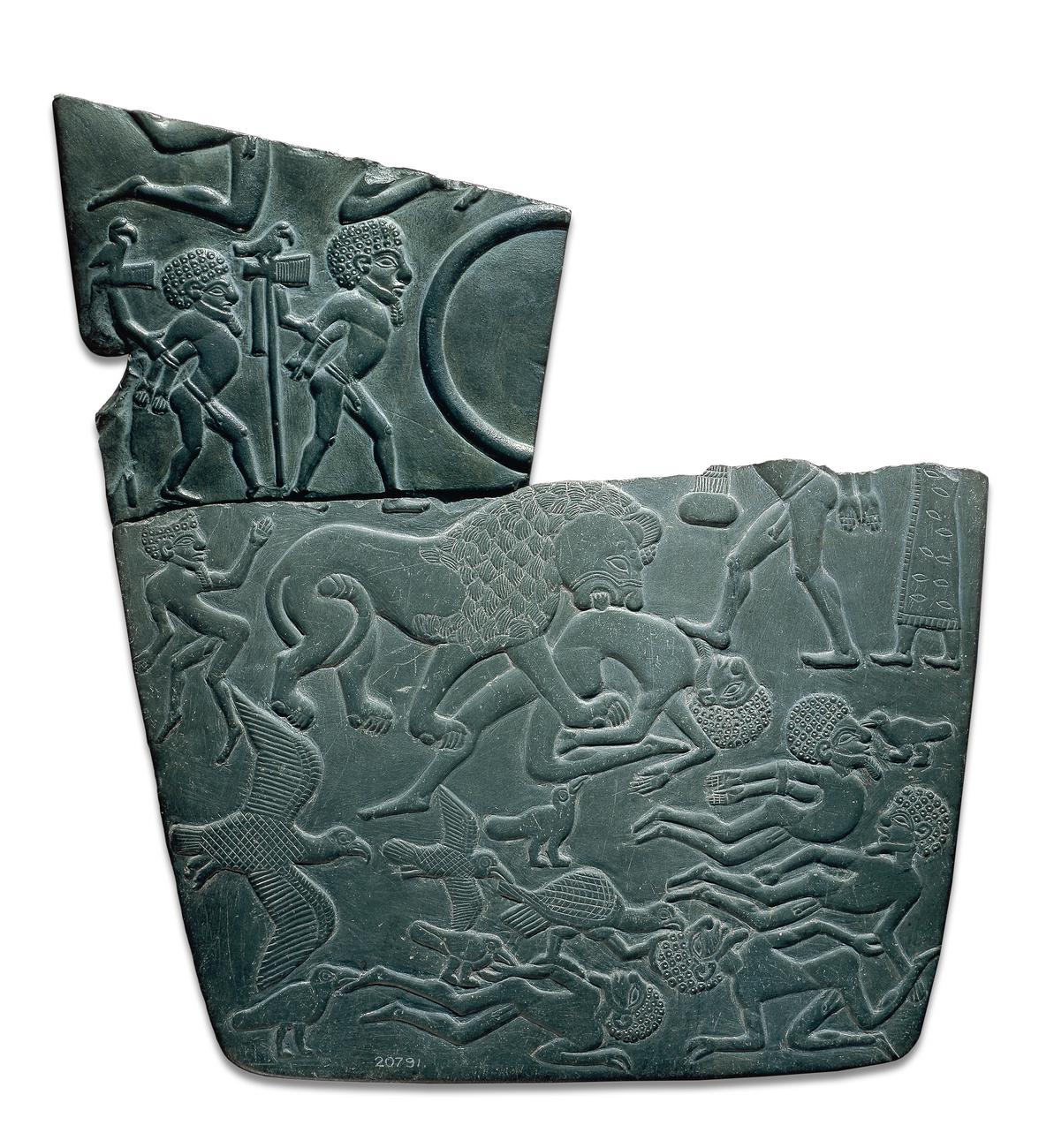
Before you is "The Battlefield Palette," a fragment of a cosmetic palette made of grey mudstone. It comes from ancient Egypt, dating back to around 3100 BCE. The piece is from the Naqada III culture and shows scenes carved in low relief.
One side features two gerenuk — long-necked gazelles — standing around a central date-palm, with a bird nearby that may be a guinea-fowl. Turn it over to see a dramatic battlefield scene. Here, you’ll notice prisoners and the dead, with vultures, ravens, and a lion feeding on the fallen. While some believe the lion symbolizes a victorious king, it could just as well be another scavenger.
This fragment is just part of a larger palette. When combined with a cast of another piece in Oxford, you get a fuller picture of a complex and detailed artistic tradition from one of Egypt’s earliest periods.
See it in person
The Battlefield Palette is on display in Room 64 at the British Museum on Great Russell Street, Bloomsbury, London — free to enter. Choose British Museum on audioguide.london and take a photo of it to hear this free audio guide in six languages — no app download needed.
New, in beta. British Museum support has just launched and is still improving: over 1,000 objects so far, with more added all the time.