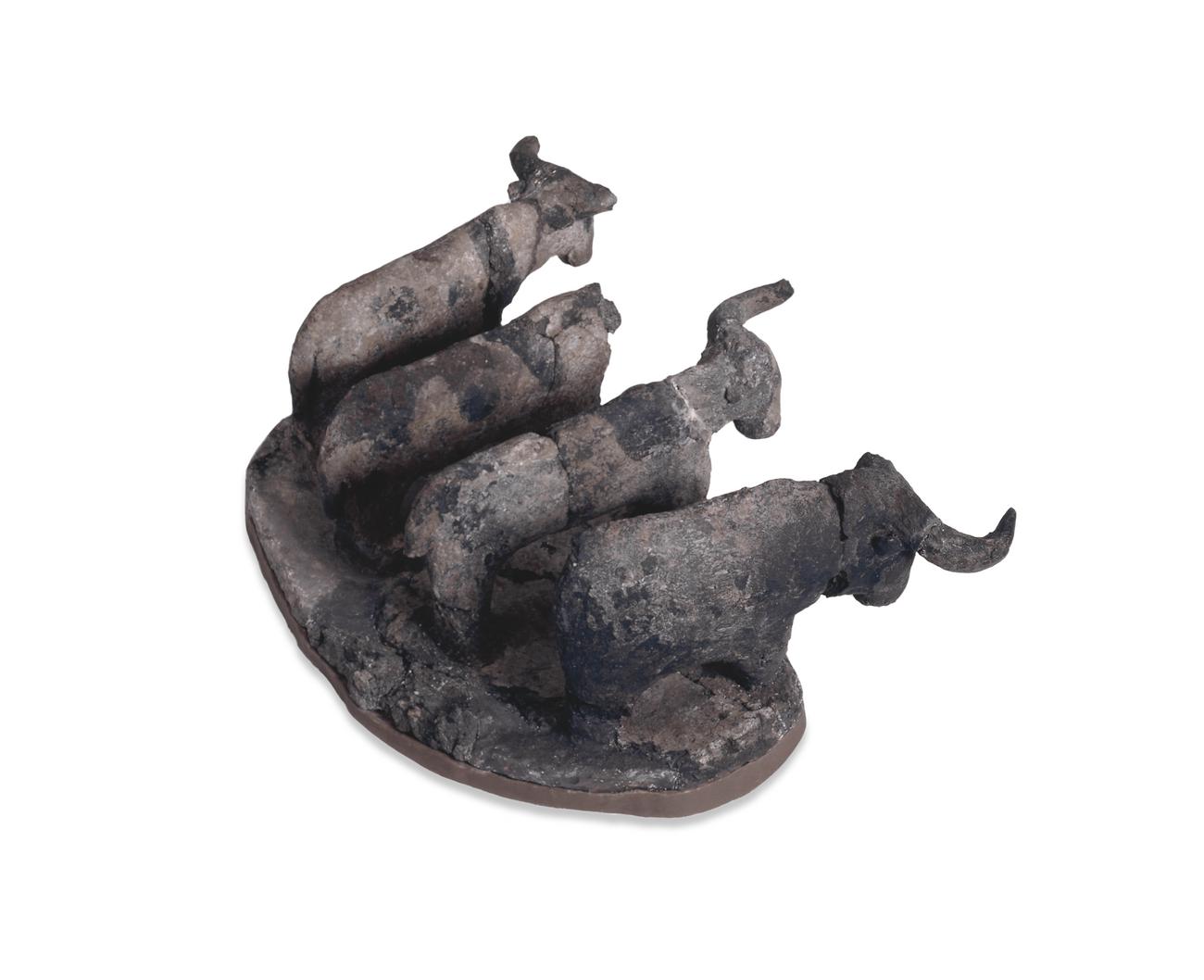
Model of cattle
- Audio guide stop: 355
- Gallery: Room 64
- Culture: Naqada I
- Date: 3500 BC (circa)
- Object type: figure, model
- Materials: fired clay
- Museum number: EA35506
- Museum: The British Museum
- Collection record: British Museum website
- Image © The Trustees of the British Museum, shared under a CC BY-NC-SA 4.0 licence.
Listen to the free audio guide
About this object
This is a clay model of four cattle, arranged in a row and all turned in the same direction. The artwork is made from low-fired clay, giving it a dull grey color and a fragile surface. You’ll notice that one head is missing, while two others are missing horns, and a third has only a small horn remaining. The legs are simplified—just two supports at the front and back of each animal. The model also shows faint traces of black and white paint, as well as bits of ancient linen. These figures were likely placed in graves and may have symbolized food for the dead in the afterlife. Created around 3500 BC in the Naqada I culture, this piece reveals early artistic and ceremonial practices in ancient Egypt.
See it in person
Model of cattle is on display in Room 64 at the British Museum on Great Russell Street, Bloomsbury, London — free to enter. Choose British Museum on audioguide.london and type its audio guide stop number, 355, from the gallery label, or take a photo of it, to hear this free audio guide in six languages — no app download needed.
New, in beta. British Museum support has just launched and is still improving: over 1,000 objects so far, with more added all the time.