The Hunt Krater
- Gallery: Room 1
- Maker: Attributed to The Andromeda Group
- Culture: Corinthian
- Made in: Corinth
- Date: 575BC-550BC (circa)
- Object type: column krater
- Materials: pottery
- Museum number: 1772,0320.6.+
- Museum: The British Museum
- Collection record: British Museum website
- Image © The Trustees of the British Museum, shared under a CC BY-NC-SA 4.0 licence.
Listen to the free audio guide
About this object
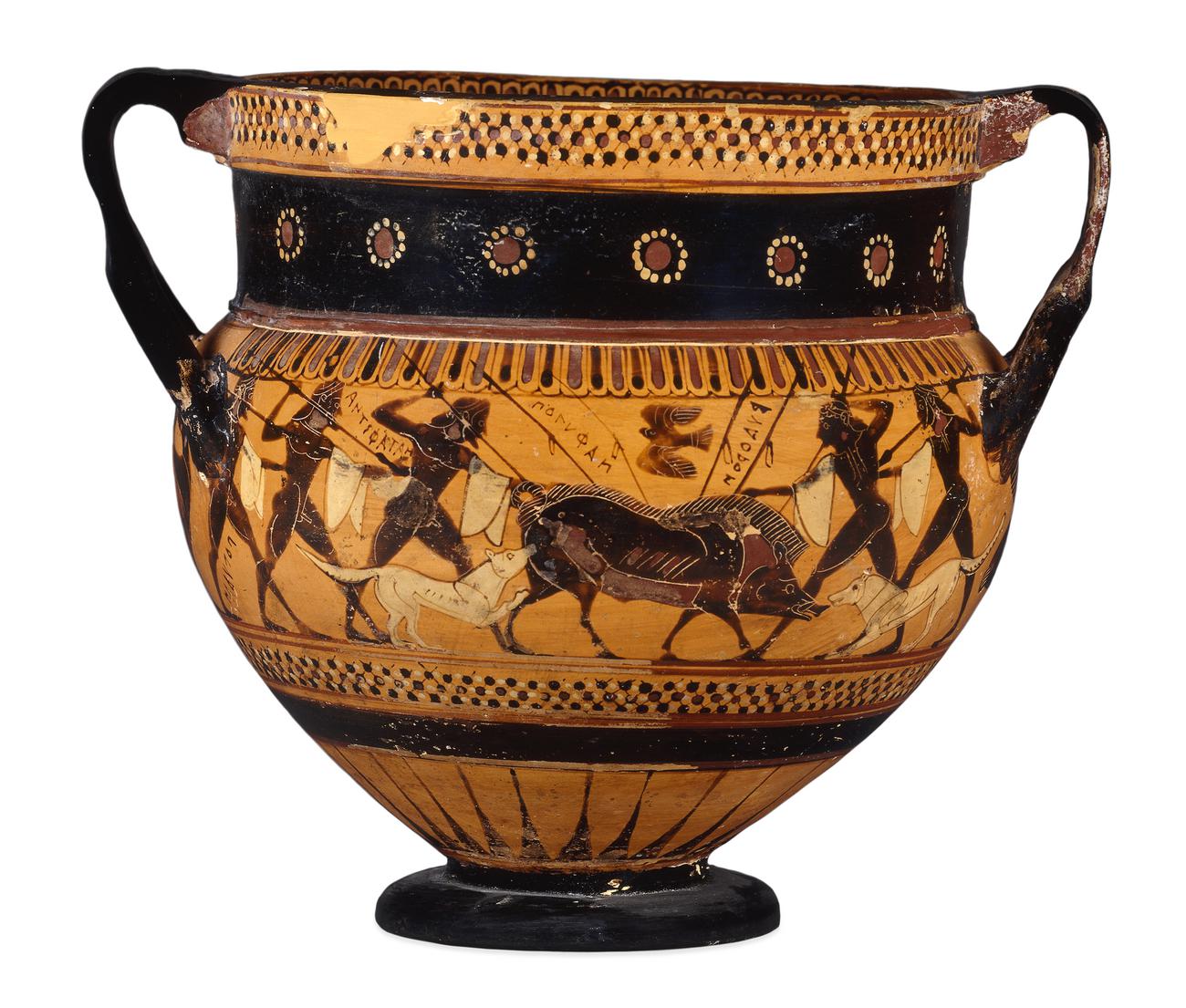
Before you stands a striking Corinthian column krater known as The Hunt Krater. Created around 575–550 BCE, it's painted in vivid black, purple, and white on a red clay background. You'll notice bold patterns along the rim and a vivid scene of a boar hunt on one side. The boar is central, flanked by dogs and bearded hunters armed with spears. Names of the hunters are carefully inscribed near their figures in an ancient Corinthian script.
On the opposite side, three beardless horsemen ride forward in rhythmic gallop. Above them and on other parts of the krater, birds—perhaps hawks or owls—add a layer of symbolic meaning still debated by scholars. These images may hint at themes of fate or myth.
This vase was made in Corinth and later collected by British diplomat Sir William Hamilton near Capua. The intricate storytelling found here reflects the early Greek artistic tradition, where every figure and element likely held deeper meaning.
See it in person
The Hunt Krater is on display in Room 1 at the British Museum on Great Russell Street, Bloomsbury, London — free to enter. Choose British Museum on audioguide.london and take a photo of it to hear this free audio guide in six languages — no app download needed.
New, in beta. British Museum support has just launched and is still improving: over 1,000 objects so far, with more added all the time.