The Entire City
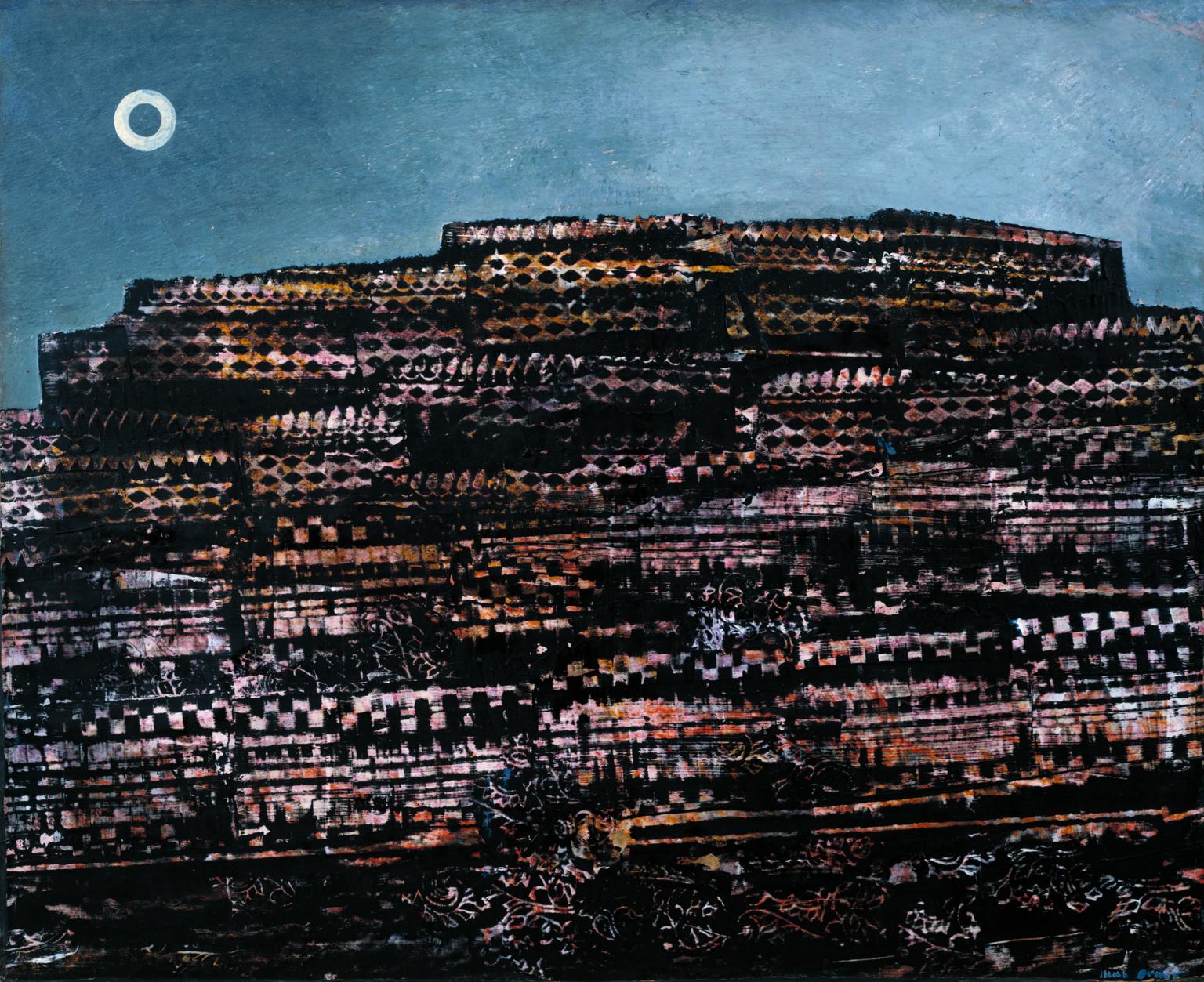
- Artist: Max Ernst
- Date: 1934
- Medium: Oil paint on paper on canvas
- Dimensions: support: 502 x 613 mm
- Museum: Tate Modern
- Collection record: Tate Modern website
Listen to the free audio guide
About this artwork
This is the “The Entire City” by Max Ernst, painted in 1934. Ernst was a German surrealist, and this piece shows a city of jagged, geometric blocks, half‑covered in shadow, beneath a small, ring‑shaped moon that looks almost like a scarred eye watching over the ruins. The whole surface is a result of his grattage technique – he laid the canvas over rough wood, then scraped paint across it, letting the texture and chance marks decide the forms. It gives the scene an almost dreamlike, almost apocalyptic feel, reflecting Ernst’s growing pessimism as Nazism rose in his homeland. This painting belongs to a dozen works he made on the same theme between 1933 and 1937, all exploring that fragile boundary between civilization and collapse.
See it in person
The Entire City is in the collection of Tate Modern on Bankside, London — free to enter. Point your phone at any artwork there and audioguide.london plays a free audio guide in six languages — no app download needed.