Pietà or Revolution by Night
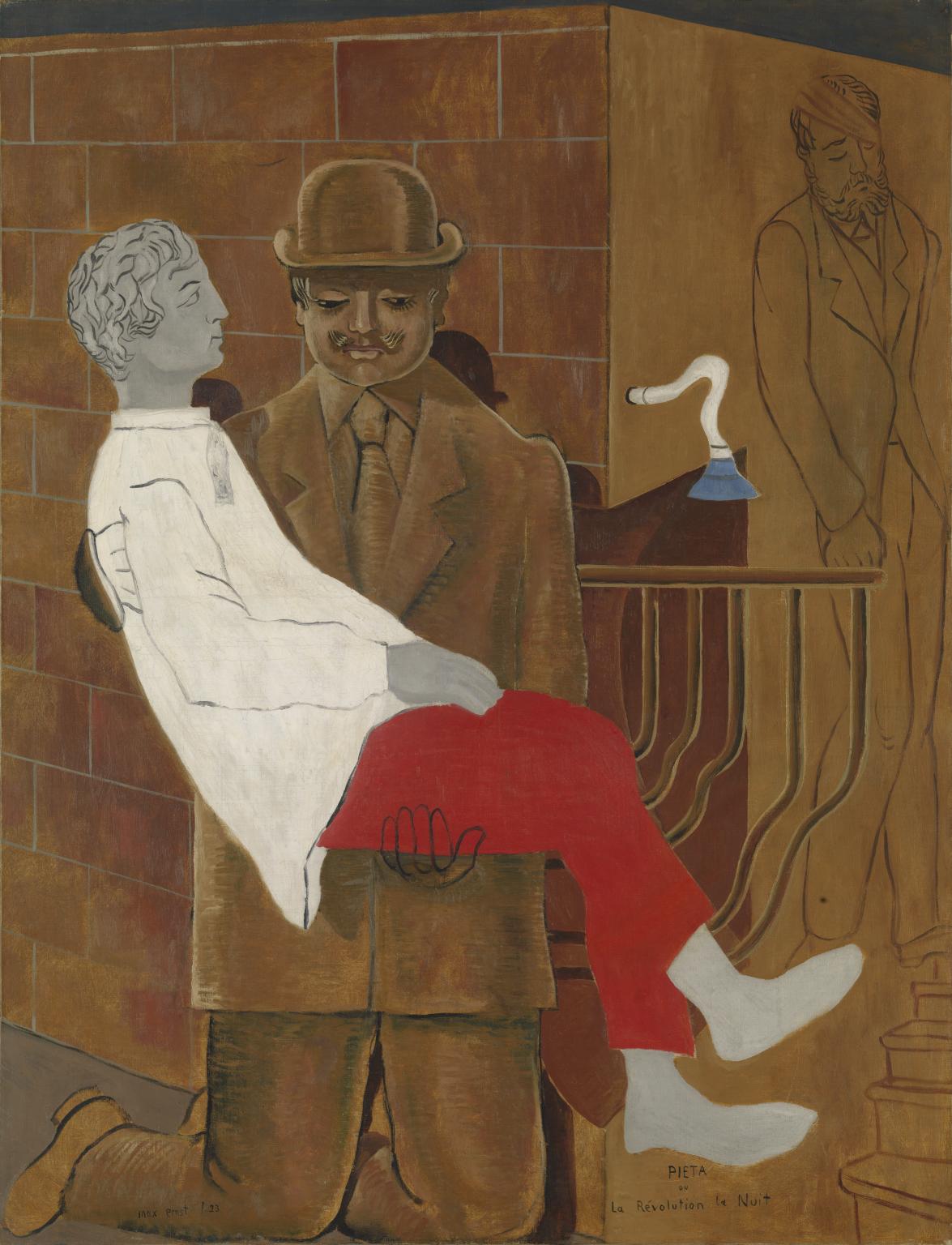
- Artist: Max Ernst
- Date: 1923
- Medium: Oil paint on canvas
- Dimensions: support: 1162 x 889 mm
- Museum: Tate Modern
- Collection record: Tate Modern website
Listen to the free audio guide
About this artwork
This is the *Pietà or Revolution by Night* by Max Ernst. Painted in 1923 in oil on canvas, it’s a key Surrealist work that flips the classic Renaissance Pietà. Instead of a Madonna cradling Christ, Ernst shows his own body in his father’s arms, with the father dressed as a Madonna. The scene is layered with Freud‑inspired symbolism: the father’s bandage hints at Oedipus‑style blindness, the shower‑head device echoes castration or impotence, and the bandaged figure in the wall suggests a mix of Freud and Dostoyevsky. Ernst was channeling his own conflicted relationship with his father while exploring the unconscious mind. The painting’s stark, dream‑like composition captures the surreal atmosphere of his late 1920s trance sessions. It remains a striking example of how surrealists used familiar religious imagery to probe deeper psychological truths.
See it in person
Pietà or Revolution by Night is in the collection of Tate Modern on Bankside, London — free to enter. Point your phone at any artwork there and audioguide.london plays a free audio guide in six languages — no app download needed.