The David Vases
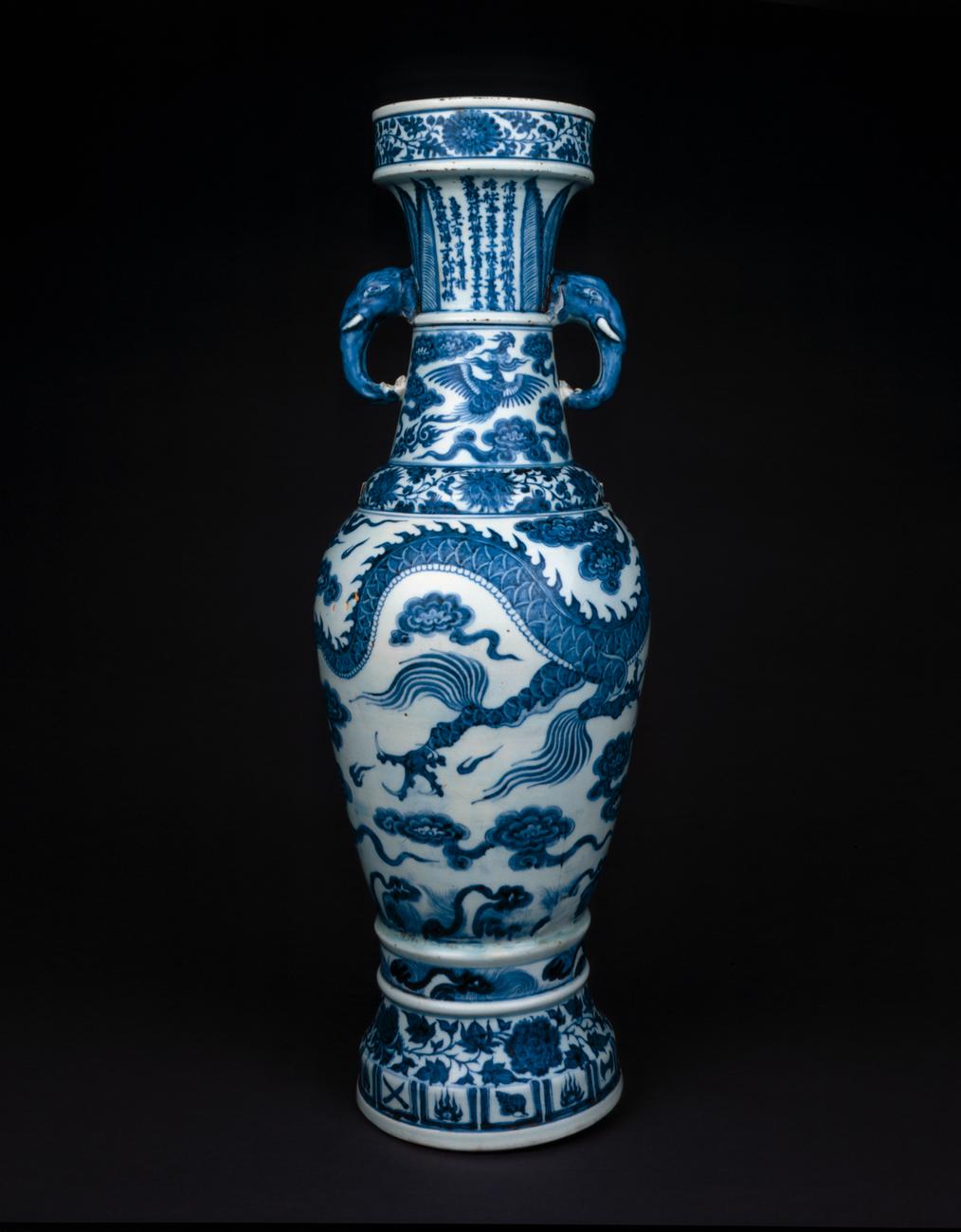
- Audio guide stop: 331
- Gallery: Room 95
- Audio guide: one commentary for a group of objects shown together
- Museum: The British Museum
- Image © The Trustees of the British Museum, shared under a CC BY-NC-SA 4.0 licence.
Listen to the free audio guide
About these objects
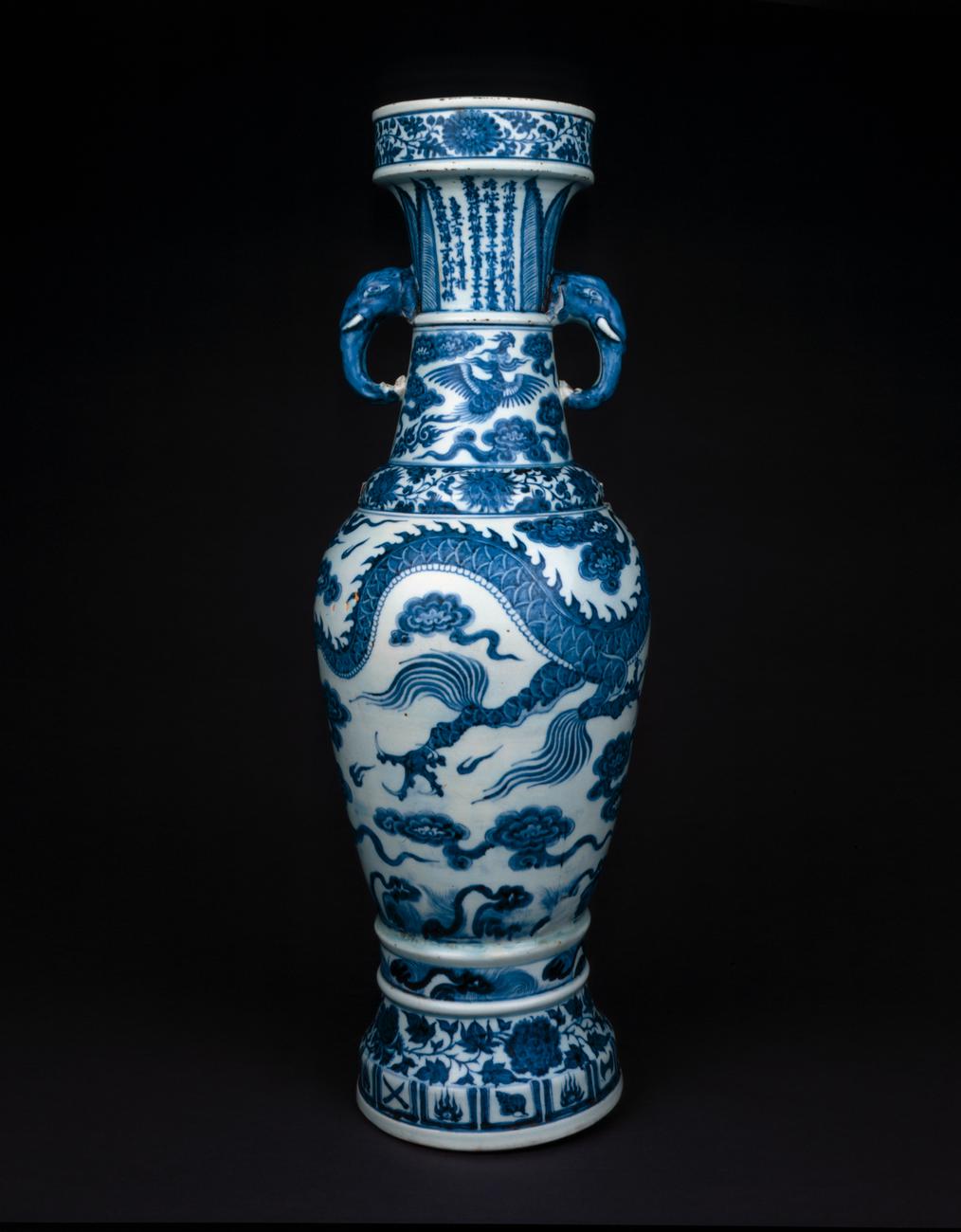
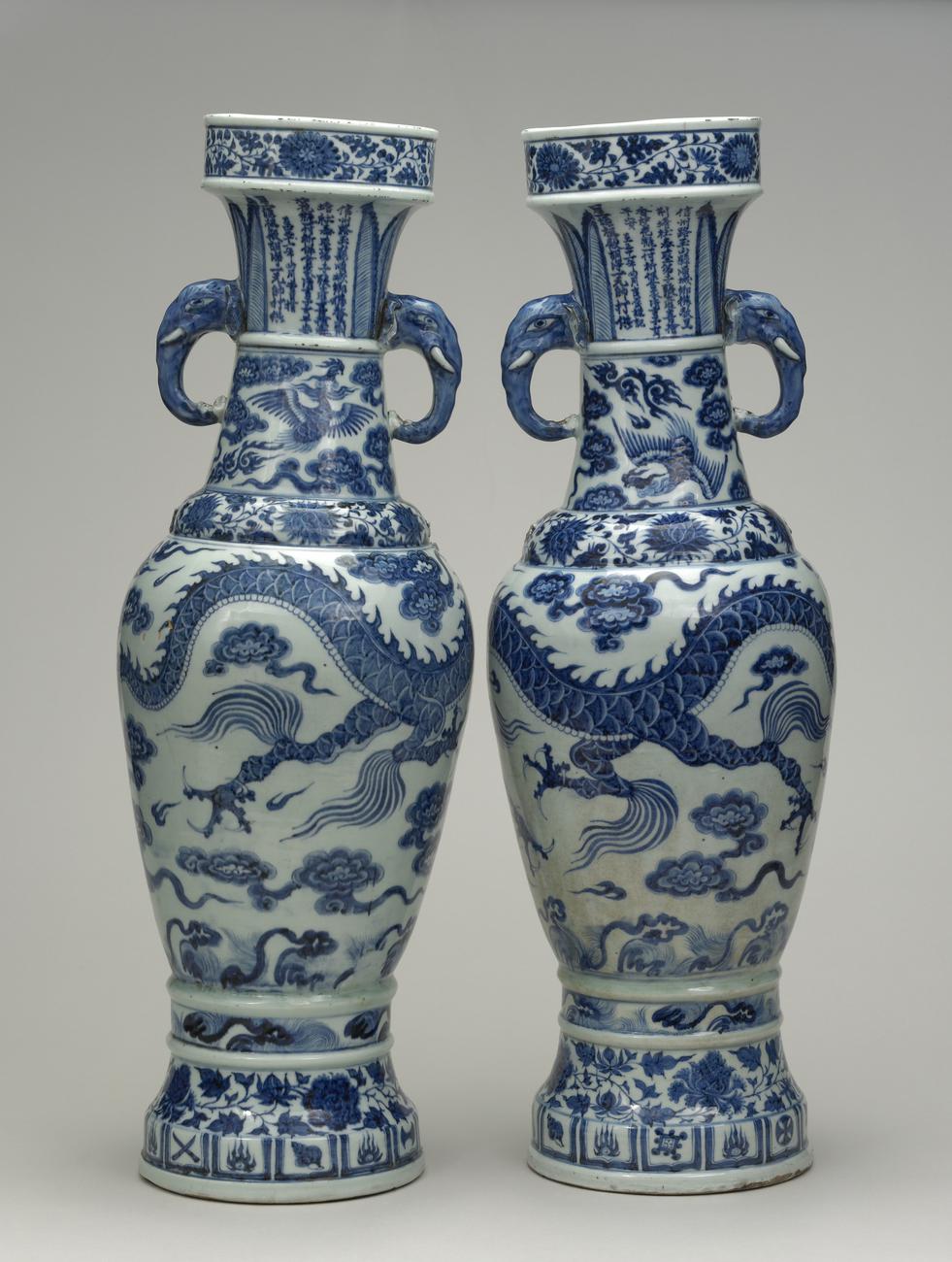
These two grand porcelain vases are known as "The David Vases," and they are among the most famous ceramics in the world. Created in 1351 during the Yuan dynasty in Jingdezhen, these vases were made in an ancient bronze ceremonial style, and they are decorated with elegant underglaze blue painting.
Each vase has striking dragon motifs and phoenixes in swirling clouds, and both bear long inscriptions in Chinese, detailing who made the donation and for what purpose. These inscriptions are the earliest known examples on blue-and-white porcelain. They tell us that a man named Zhang Wenjin gave the vases and an incense burner to a Daoist temple as a prayer for family safety and peace.
Look closely for the four-clawed dragons coiled in the clouds, and take note of the detailed peony bands and phoenixes at the base of each vase. The inscriptions include the donor's name and the exact date: April of the 11th Year of the Zhizheng reign.
These vases are a remarkable combination of artistry, history, and craftsmanship, and they stand as a fascinating example of Yuan dynasty porcelain.
See it in person
The David Vases is on display in Room 95 at the British Museum on Great Russell Street, Bloomsbury, London — free to enter. Choose British Museum on audioguide.london and type its audio guide stop number, 331, from the gallery label, or take a photo of it, to hear this free audio guide in six languages — no app download needed.
New, in beta. British Museum support has just launched and is still improving: over 1,000 objects so far, with more added all the time.